

Bangladesh election poised for transformative political turn
Kamran Khan says Bangladesh is experiencing a 'political rebirth', boosting BNP’s prospects

News Desk
The News Desk provides timely and factual coverage of national and international events, with an emphasis on accuracy and clarity.
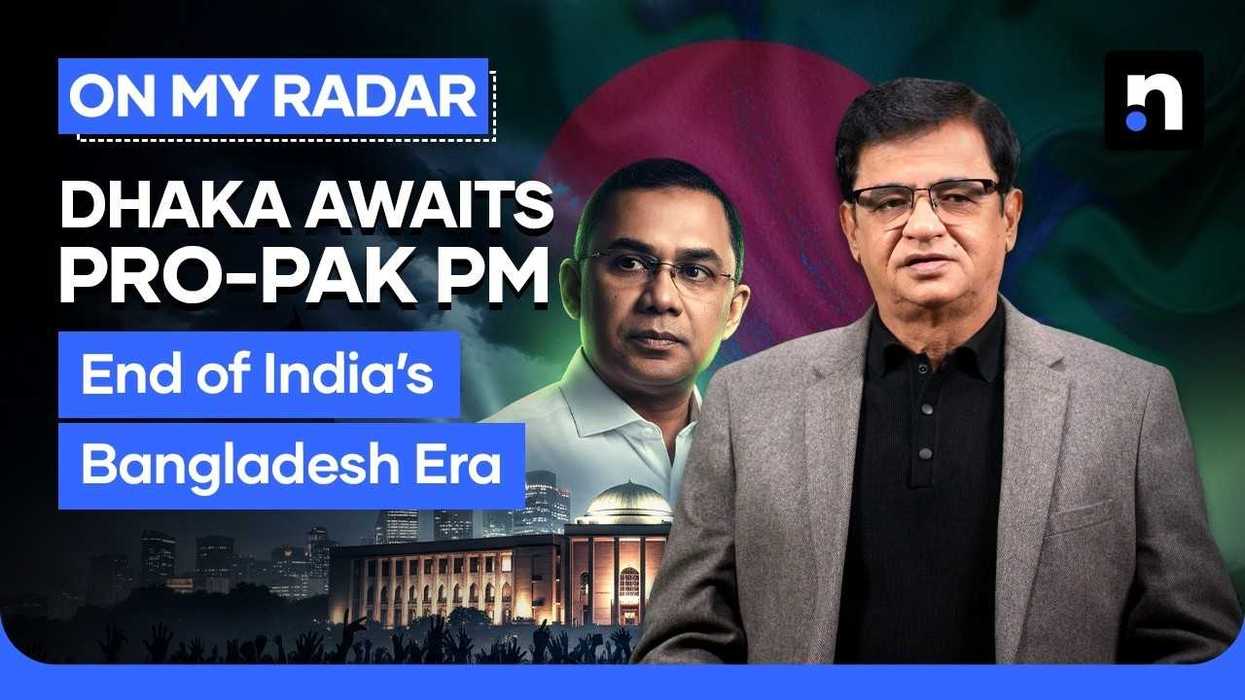
Bangladesh is witnessing a major political shift as the pro-India Awami League’s dominance ends, and the Pakistan-friendly Bangladesh Nationalist Party (BNP) positions itself for a potential return to power.
With general elections scheduled for February 12, 2026, the BNP, founded by the late former Prime Minister Begum Khaleda Zia, is widely seen as likely to regain influence, while the Jamaat-e-Islami and its eight-party alliance have also launched their campaigns. Analysts say the outcome could reshape the country’s domestic politics and regional dynamics in South Asia.
In the latest episode of On My Radar, Kamran Khan said Bangladesh is taking a “new political birth,” with the BNP’s prospects strengthened after the passing of Khaleda Zia on December 30, 2025.
Her death, after years of imprisonment, has intensified public sympathy, particularly for her eldest son Tarique Rahman, who now emerges as the party’s de facto leader. Rahman returned to Dhaka from London just five days before his mother’s death, ending a 17-year exile, and pledged to restore economic and democratic rights across Bangladesh in his first public rally.
The political shift reflects broader public frustration over corruption, economic pressure, and long-standing political deadlock. In August 2024, mass protests led by students and the younger generation had forced the Awami League out of power, compelling Sheikh Hasina Wajed to seek refuge in India.
Despite court convictions - including life and death sentences in absentia - Hasina remains in exile, reinforcing the BNP’s momentum.
Since May 2025, the Awami League has been barred from participating in elections, making the BNP the largest active political party in the country. The death of Khaleda Zia has energized the BNP’s campaign, particularly in major urban centers such as Dhaka, Chittagong, Khulna, Sylhet, and Rajshahi, and has generated strong grassroots support across rural areas.
Analysts note that Tarique Rahman has emerged not just as a hereditary political figure, but as a leader symbolizing resilience in exile, legal challenges, and sustained political pressure. His campaign emphasizes good governance, transparency, economic reform, and a fresh regional vision.
The elections are also expected to impact Bangladesh’s foreign relations. Global media coverage highlights that the outcome could significantly alter Dhaka-New Delhi ties. Following the fall of the Awami League in 2024, India’s political influence in Bangladesh has already declined, including in strategic, economic, and cultural domains. The BNP’s rise could strengthen Dhaka’s autonomy, limit India’s unilateral leverage, and open opportunities for regional partnerships, particularly with Pakistan and China.
Indeed, Pakistan-Bangladesh relations have improved in the wake of Awami League’s decline. Trade resumed in February 2025 after a 14-year hiatus, and direct flights were restored. High-level exchanges between officials - including Pakistani Prime Minister Shehbaz Sharif, Chief Advisor Dr. Muhammad Yunus, Deputy Prime Minister Ishaq Dar and military leadership - have enhanced bilateral ties.
Military cooperation has also expanded, with visits by Bangladeshi chiefs to Pakistan and expressions of interest in defense collaboration.
Experts argue that if Tarique Rahman assumes leadership, Bangladesh could play a stabilizing role in South Asia, balancing regional power dynamics while advancing domestic reforms.
For Pakistan, this political transition represents not a strategic victory, but a diplomatic and economic opportunity to engage a more autonomous and Pakistan-friendly Bangladesh. Analysts also caution that careful political management will be required to maximize the potential benefits for regional stability and cooperation.




Comments
See what people are discussing