

Businesses disappointed as SBP keeps policy rate unchanged
Kamran Khan says SBP decision shows Pakistan is not yet ready to stand without IMF-style constraints

News Desk
The News Desk provides timely and factual coverage of national and international events, with an emphasis on accuracy and clarity.
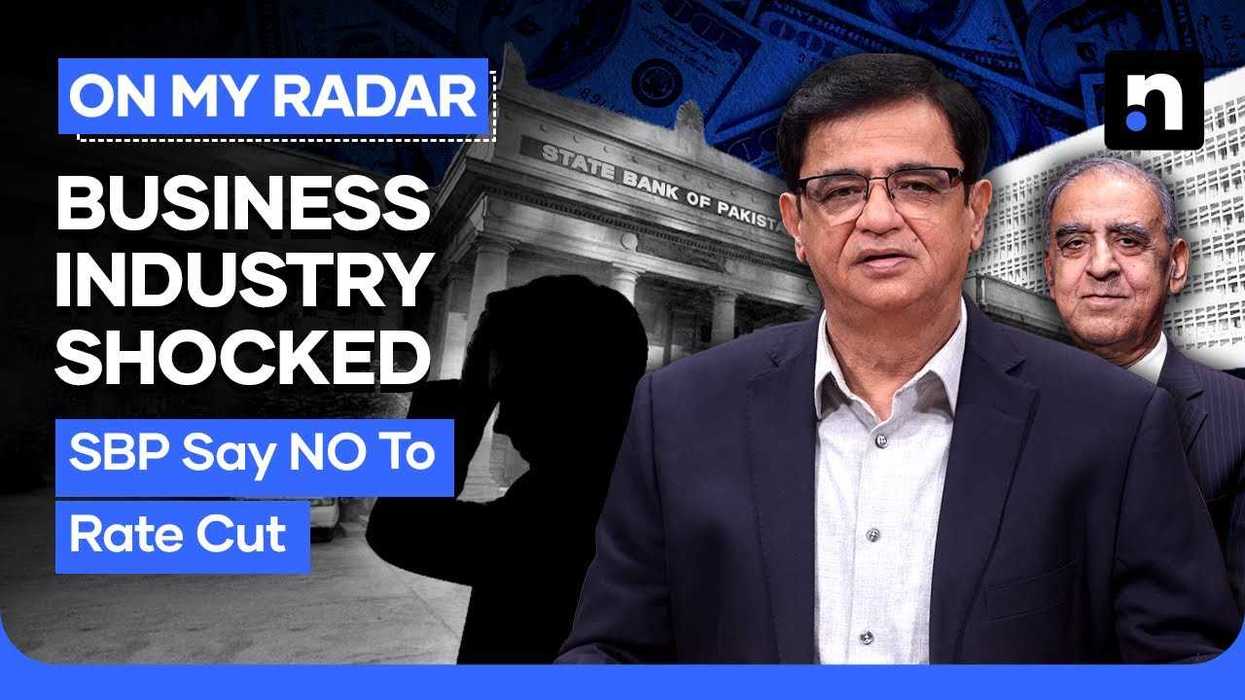
The State Bank of Pakistan (SBP) surprised market expectations by maintaining its policy rate at 10.5 percent, signaling that the country’s economic recovery remains fragile despite improving macroeconomic indicators.
The decision dampened hopes among businesses, industries, and exporters that were anticipating a meaningful reduction in borrowing costs. With the IMF program concluded, economic managers had been expected to pursue a more growth-oriented monetary stance. Instead, the central bank’s cautious approach suggests Pakistan is not yet ready to detach itself from IMF-style discipline.
In the latest episode of On My Radar, Kamran Khan said that the SBP’s decision reflects a broader uncertainty in the economy and underlines the fact that Pakistan is still not prepared to stand independently without IMF-style constraints.
He noted that while macroeconomic indicators are improving, the overall economic framework remains vulnerable to external shocks, limiting the central bank’s ability to ease monetary policy.
At a media briefing following the Monetary Policy Committee (MPC) meeting, SBP Governor Jamil Ahmed explained that the policy rate was kept unchanged because inflation remains elevated at 7.5 percent.
He added that the SBP expects GDP growth to remain within the range of 3.75 to 4.75 percent in 2026. Although the Governor expressed optimism about this forecast, there are currently no strong signals that such growth will materialize in the near term.
The monetary policy Statement further highlighted risks in the external sector. The SBP projected that over the next six months, imports would increase by 8 percent while exports would decline by 6 percent. This widening trade imbalance appears to be a key reason why the central bank chose not to reduce the policy rate. With the external account still vulnerable, the SBP appears reluctant to loosen monetary conditions.
On December 15, 2025, the SBP last cut the policy rate by 50 basis points, from 11 percent to 10.5 percent. The business community criticized that move as a “token cut,” arguing it was too small to stimulate economic activity.
Ahead of the MPC’s first meeting in 2026, many analysts anticipated a more substantial reduction, potentially into single digits with a cut of 75 to 100 basis points. The central bank’s decision, however, disappointed those expectations.
Economists had expected a rate cut because inflation has been falling steadily, the external account has stabilized, foreign exchange reserves have improved slightly, and yields in the secondary market for treasury bills and bonds have declined.
These indicators suggested that monetary policy could be eased without compromising macroeconomic stability. Despite this, the SBP maintained the policy rate at 10.5 percent.
Experts argue that a rate cut would have reduced the government’s interest burden on domestic debt, encouraged borrowing by the industrial sector, supported manufacturing expansion, and boosted private investment. Such a move could have accelerated economic activity and strengthened the case for a permanent exit from IMF conditionality.
However, the MPC’s decision indicates that the desired economic independence remains distant, and Pakistan may still need to adhere to IMF-style discipline to maintain stability.





Comments
See what people are discussing