


News Desk
The News Desk provides timely and factual coverage of national and international events, with an emphasis on accuracy and clarity.
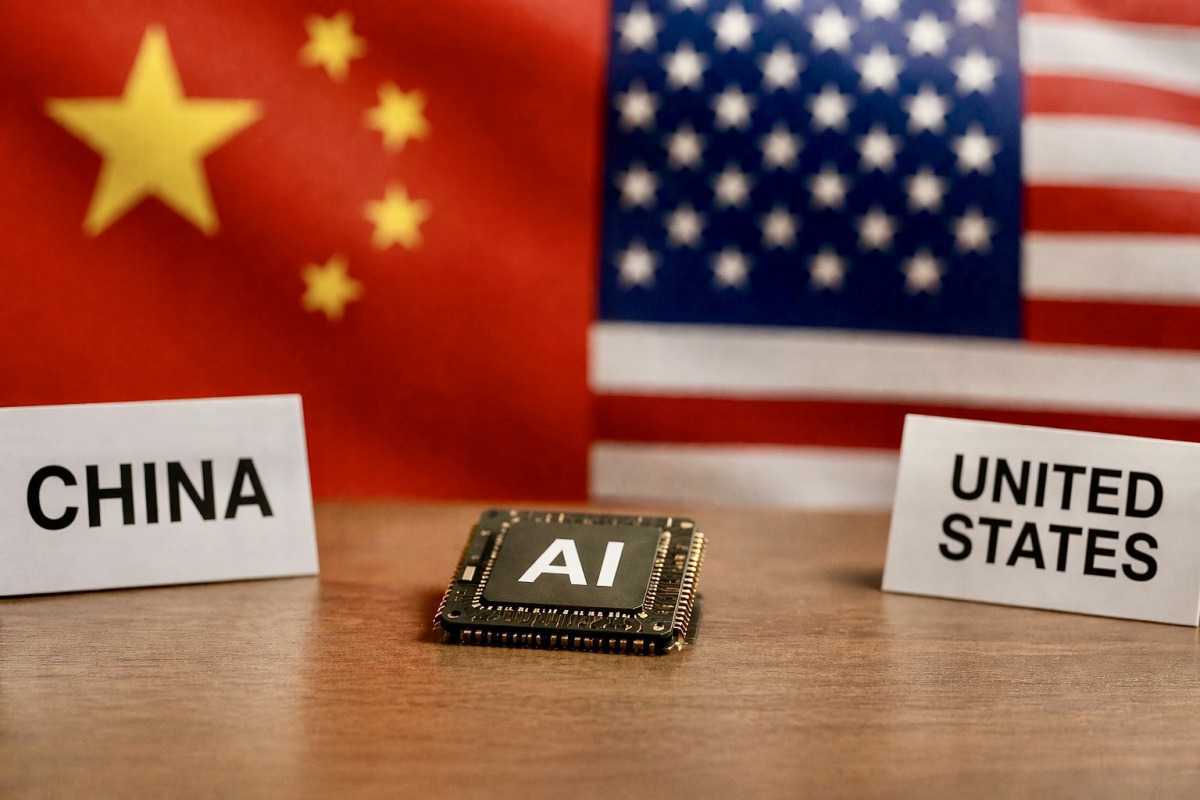
China has rejected US accusations of AI theft as groundless, as Washington and Beijing race for tech supremacy.
AI-generated image
China said on Wednesday that US accusations of Chinese AI labs stealing the capabilities of American models were groundless. The rebuttal came as the two countries continue to compete for technological supremacy.
What did the US accuse Chinese AI companies of doing?
The US cyber defense agency accused top Chinese AI labs, including DeepSeek and Moonshot AI, of systematically stealing American AI capabilities. The advisory, released Tuesday, said the firms used industrial-scale knowledge distillation campaigns to copy US systems. It came ahead of an expected meeting this month between President Donald Trump and Chinese President Xi Jinping.
China's Ministry of Commerce said on Wednesday that the US approach used a crackdown on distillation as a pretext to pursue industrial monopoly. It called the accusations a case of double standards. Distillation, a method where an AI model is trained to mimic a larger one's output, is widely used across the industry, though Washington says Chinese firms have deployed it at scale to illicitly copy American systems.
Which Chinese AI companies were named in the US advisory?
The advisory detailed how DeepSeek, Moonshot AI, Alibaba, MiniMax, StepFun and Z.AI allegedly used millions of exchanges and requests to extract capabilities from US models built by OpenAI, Anthropic, Google and xAI. Companies using this strategy see significantly shorter development timelines and reduced training costs, the advisory said. It added that these actions had occurred since at least late 2024, likely with Chinese government awareness.
AFP contacted the Chinese companies named, apart from StepFun, which was not immediately reachable. Moonshot AI declined to comment.
How has the US responded to Chinese AI competition?
Trump faces pressure to respond to the growing success of Chinese AI models, which many companies prefer over pricier US alternatives from Anthropic or OpenAI. In July, dozens of startups urged the Trump administration to avoid an outright ban or strict curbs on foreign-made AI models, arguing restrictions should apply only to government use. That same month, Beijing accused US AI firms of using Chinese examples to train their own models.
Asked about the accusations at a regular briefing on Wednesday, Chinese foreign ministry spokeswoman Mao Ning said the United States should refrain from making unfounded accusations against China. She said China's AI development reflects high-level self-reliance and technological strength, adding that both countries should strengthen cooperation as major AI powers.


Comments
See what people are discussing