

EU report raises alarm over disappearances, media freedom and minority rights in Pakistan
EU report raises alarm over Pakistan human rights, citing enforced disappearances, media freedom curbs and discrimination against minorities

News Desk
The News Desk provides timely and factual coverage of national and international events, with an emphasis on accuracy and clarity.
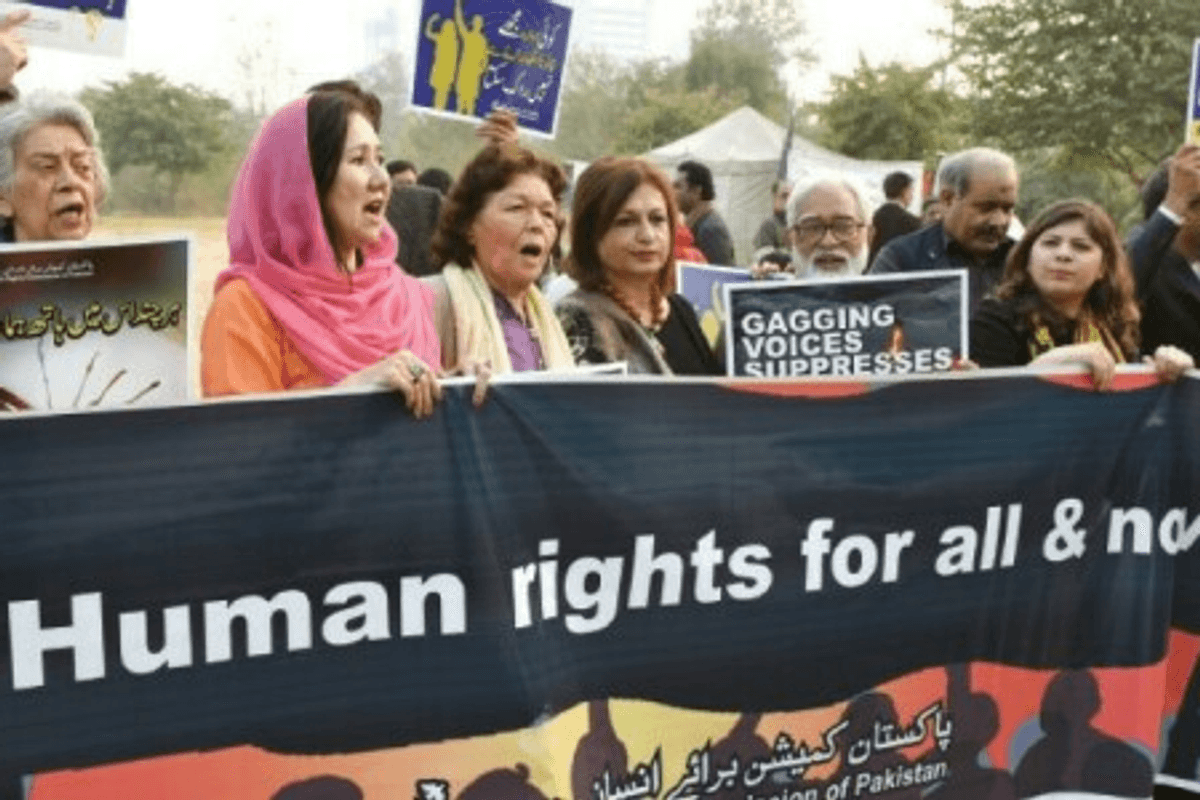
The European Commission found that Pakistan's human rights record remained troubling between 2023 and 2025, despite some legislative reforms.
File
Pakistan continues to face serious human rights concerns, including enforced disappearances, curbs on media freedom and discrimination against religious minorities, the European Commission said in a report published on Thursday.
The assessment is part of the EU's latest monitoring under its Generalized Scheme of Preferences Plus (GSP+) trade arrangement with Pakistan.
What did the EU report say about Pakistan's human rights record?
The European Commission found that Pakistan's human rights record remained troubling between 2023 and 2025, despite some legislative reforms.
It cited a high and growing number of enforced disappearances, deteriorating media freedom, and continued discrimination against religious minorities including Ahmadis and victims of blasphemy law misuse.
What is Pakistan's GSP+ trade scheme with the EU?
The GSP+ scheme grants developing countries preferential, tariff-free access to the EU market in return for implementing 27 international conventions on human rights, labor rights, environmental protection and good governance.
Pakistan remains the program's largest beneficiary, having exported 7.5 billion euros worth of GSP+-eligible goods to the EU in 2024 and saving an estimated 732 million euros in tariffs.
What did the report say about enforced disappearances in Pakistan?
The Commission said reports pointed to a high and growing number of enforced disappearances, particularly in Balochistan and Khyber Pakhtunkhwa, along with allegations of extrajudicial killings. It said Pakistan's Commission of Inquiry on Enforced Disappearances had been ineffective at locating missing persons or ensuring accountability, and noted that no prosecutions for enforced disappearances had taken place to date.
The report also warned that recent amendments to anti-terrorism legislation could allow preventive detention without meaningful judicial oversight. It said this risked disproportionate use against political dissidents, journalists, human rights defenders, minority groups and relatives of victims of enforced disappearances.
How does the report describe media freedom in Pakistan?
The Commission said Pakistan's media freedom had deteriorated despite legislation intended to protect journalists. It cited intimidation, violence, judicial harassment and strategic lawsuits against reporters covering sensitive issues.
Provisions under the Pakistan Electronic Crimes Act, along with blasphemy, sedition, criminal defamation and counterterrorism laws, had a chilling effect on journalists, activists and minority communities, the report said. Internet shutdowns around the 2024 elections and during protests further restricted access to information.
What does the report say about blasphemy laws and minorities?
The Commission said Pakistan's blasphemy laws continued to disproportionately affect religious minorities and remained vulnerable to misuse despite official safeguards. It referred to a so-called "blasphemy business group" that allegedly entrapped more than 800, mainly young, men through online scams, adding that more than 300 falsely accused people remained in prison as of April 2026.
The report also highlighted continued discrimination against Ahmadis, including criminal prosecutions under laws restricting their faith, attacks on mosques and graves, and targeted killings. It said religious and ethnic minorities continued to face discrimination, mob violence and attacks on places of worship, while prosecutions for hate crimes remained limited.
What did the report say about children and Afghan migrants?
The report described children's rights in Pakistan as "extremely fragile," noting around 26 million children aged five to 16 are out of school. It also cited persistent violence against children, uneven birth registration and unequal access to healthcare, along with concerns over the treatment of Afghan migrants returning under Pakistan's repatriation program, particularly risks facing vulnerable groups and children.
What did the EU recommend and acknowledge?
The Commission also raised concerns about judicial independence, military accountability and the rule of law following recent constitutional amendments.
It said civil society organizations working on human rights faced increasing restrictions through tighter registration requirements and curbs on foreign funding.
The report recommended that Pakistan prioritize reforms to address enforced disappearances, strengthen accountability for rights violations, protect freedom of expression, and amend or repeal laws on blasphemy, cybercrime, defamation, sedition and counterterrorism. It also called for stronger protections for minorities, women and children, and improved access to justice.
The Commission acknowledged some progress during the review period. This included strengthening Pakistan's human rights institutions, narrowing the scope of the death penalty, prison reform efforts, legislation against domestic violence and child marriage, and initiatives to tackle gender-based violence.



Comments
See what people are discussing