

EU trade chief arrives in Beijing for high-stakes talks to ease growing trade friction
European Trade Commissioner Maroš Šefčovič arrived in Beijing for two days of critical negotiations with Chinese Commerce Minister Wang Wentao, seeking to rebalance a daily €1 billion trade deficit and address raw material export controls amid joint warnings from France and Germany

News Desk
The News Desk provides timely and factual coverage of national and international events, with an emphasis on accuracy and clarity.
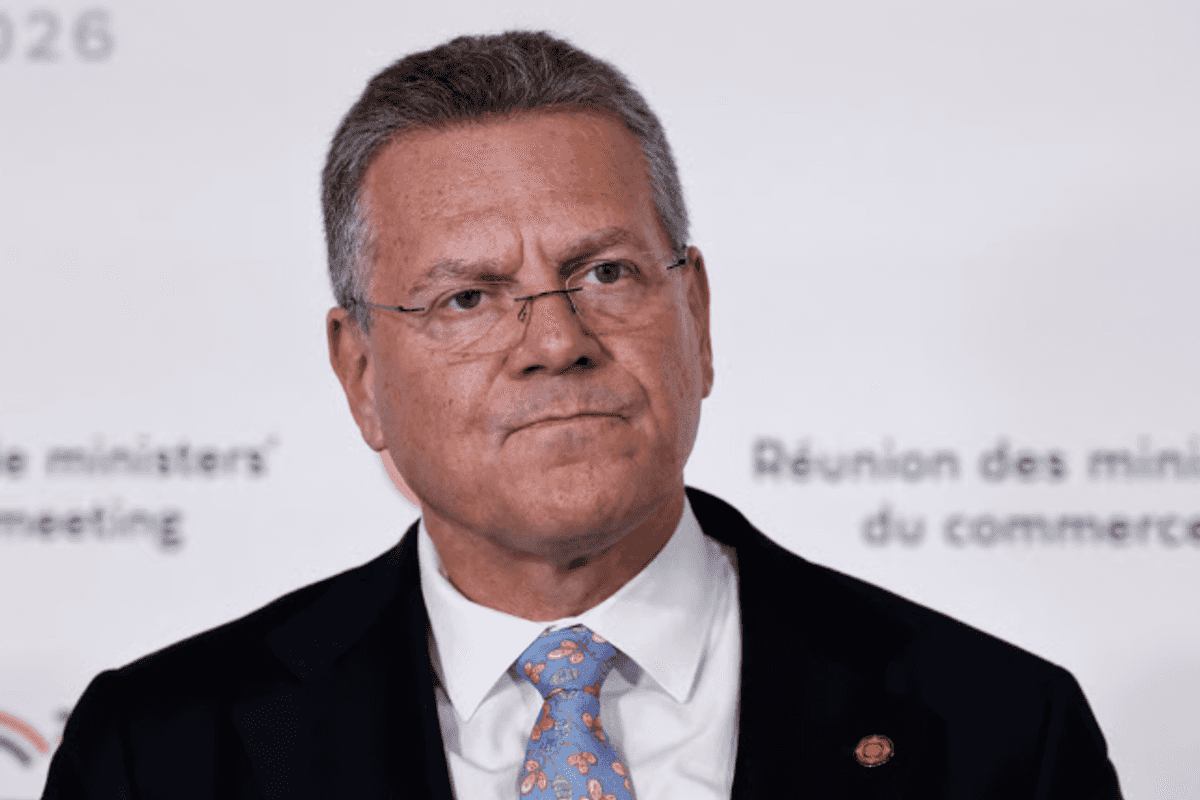
Maroš Šefčovič speaks to the media as he arrives for a meeting of G7 trade ministers in Évian-les-Bains, France on May 6, 2026.
AFP
European Union Trade Commissioner Maroš Šefčovič arrived in Beijing on Thursday for two days of make-or-break negotiations with Chinese Commerce Minister Wang Wentao aimed at averting a full-blown trade war and rebalancing bilateral economic relations.
What key objectives and trade imbalances drive the Beijing summit?
The high-level discussions arrive as Brussels seeks to address a massive bilateral trade deficit exceeding €1 billion per day, driven by surging Chinese industrial exports across strategic sectors like electric vehicles, hybrid automobiles, green technology, and advanced chemicals. Commissioner Šefčovič is pressing Chinese officials on three primary objectives: establishing voluntary export restraints on critical industrial goods, securing transparent and predictable export licensing for rare earth elements and critical minerals, and improving market access for European exporters.
European leaders increasingly cite the threat of a "China Shock 2.0," wherein heavily subsidized Chinese manufacturing overcapacity destabilizes core European manufacturing hubs. EU International Trade Committee Chairman Bernd Lange emphasized ahead of the trip that China's sluggish domestic consumption increases Beijing's reliance on European markets, granting Brussels meaningful leverage during talks to demand concrete structural concessions.
How are France, Germany, and Beijing positioning themselves as talks begin?
Pressure on the negotiations intensified following a joint letter from French President Emmanuel Macron and German Chancellor Friedrich Merz, calling on the European Commission to prepare a powerful trade enforcement tool capable of rapidly responding to economic coercion. European Union heads of state are scheduled to formally review the proposed mechanism at an upcoming summit next week.
In response, China's Ministry of Commerce warned Paris and Berlin against embarking on protectionist policies, urging European leaders to preserve open trade channels and respect mutual economic dependencies. Chinese officials reiterated that industrial supply chains between the two blocs remain deeply integrated, warning that unilateral trade barriers would ultimately harm European industrial stability.
According to reporting by Al Jazeera and EURACTIV, trade analysts expect the two-day summit to potentially yield targeted sectoral agreements rather than a comprehensive trade settlement.



Comments
See what people are discussing