

Modernizing the skies: How the US F-16 sale could shape Pakistan’s air power
Experts say the upgrades are a long-term boost to Pakistan’s air defense

Azhar Khan
Producer, Karachi Desk
Azhar Khan is a journalist with over 14 years of experience across print, electronic, and predominantly digital media. He has recently held key editorial roles at leading media organizations.
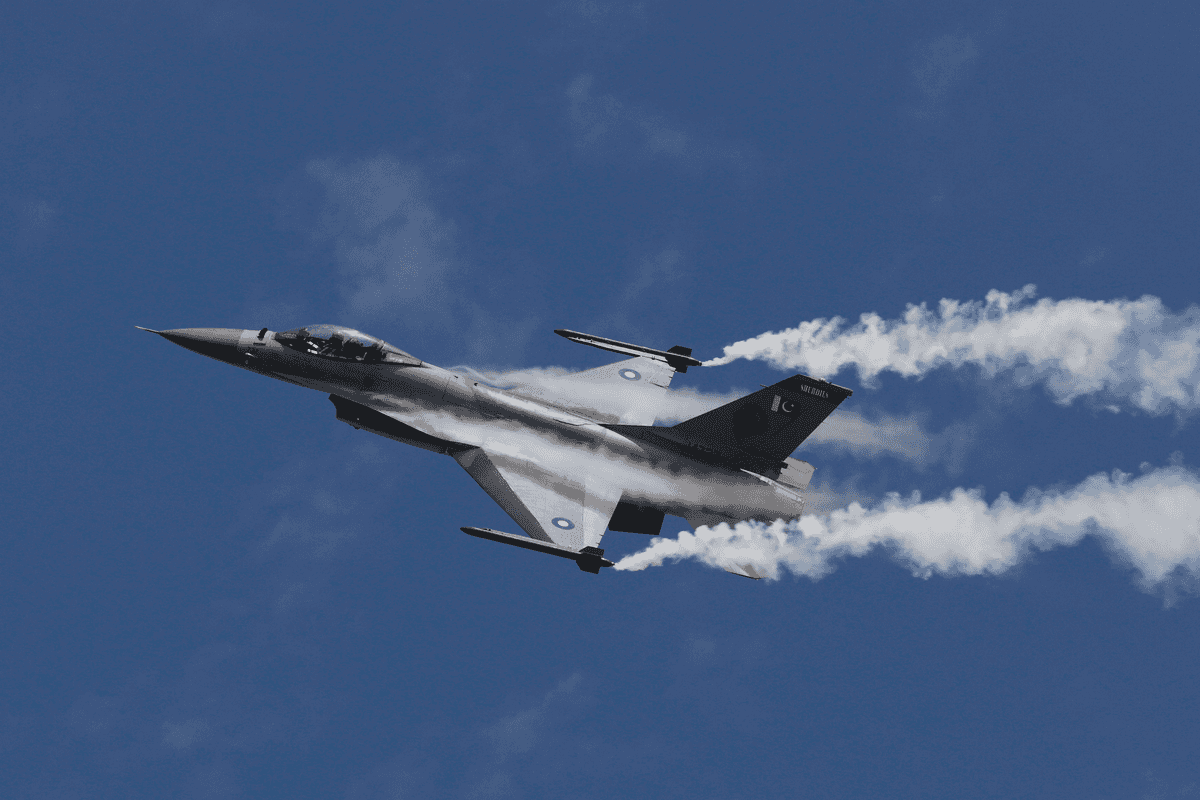
PAF F-16 flies in Karachi air show marking 2019 'Operation Swift Retort'.
Reuters/File
For Pakistan, the announcement that the United States has approved a $686 million package to upgrade its F-16 fighter jets represents more than just a transaction - it is a strategic lifeline that may redefine the contours of its aerial capabilities for the next two decades.
The deal, communicated through a December 8 letter from the U.S. Defense Security Cooperation Agency (DSCA) to Congress, comes at a moment when Pakistan has been quietly reshaping its air force, diversifying platforms and reassessing its dependence on American military hardware.
'A positive development for Pakistan'
Speaking to Nukta, Air Vice Marshal (retd) Ijaz Malik described the development as “very positive and significant” for Pakistan. He noted that Pakistan acquired F-16s in two distinct eras: the first batch in 1982, fitted with AIM-8P and AIM‑9L missiles and advanced radar for its time, and a second batch after 9/11, the Block‑52 aircraft, featuring the cutting-edge technology of that period.
Malik emphasized that keeping cutting-edge aircraft upgraded is a continuous requirement. Pakistan’s initial F-16s underwent mid-life upgrades, keeping them operational for decades and he said the new program would further enhance avionics, expand weapons range, improve visibility and survivability and enable the fleet to serve as a post-modern air force for another 15-20 years.
Technical upgrades to extend fleet life
At the heart of the package are technical upgrades designed to extend the service life of Pakistan’s Block-52 and Mid Life Upgrade F-16s through 2040. Link-16 systems, cryptographic modules, avionics enhancements and advanced training form the core of this offering, providing Pakistan with capabilities that mirror those of its U.S. and NATO counterparts.
The significance is not merely technical: it reflects a broader geopolitical calculus, allowing Pakistan to maintain interoperability with allied forces in counterterrorism operations and potential regional contingencies.
The sale is also positioned as a response to operational safety concerns that have shadowed the F-16 fleet in recent years. By refurbishing avionics and integrating secure communication networks, Pakistan Air Force pilots will benefit from enhanced situational awareness, real-time data sharing, and improved coordination across complex operational theatres.
According to the DSCA, these updates are intended to mitigate risks inherent in aging aircraft while ensuring that the fleet remains capable of meeting both current and future threats.
Strategic significance for Pakistan-US ties
From a strategic perspective, the deal signals an ongoing, if nuanced, partnership with Washington. While the U.S. emphasizes that the sale will not disrupt regional military balance or require additional American personnel on Pakistani soil, the implications for South Asian security dynamics are subtle but real. By reinforcing interoperability, the package ensures that Pakistan retains a technological edge in air operations, potentially affecting calculations in Islamabad’s broader defense posture.
The financial composition of the sale also underscores its dual nature as both equipment transfer and capability enhancement. Of the total $686 million, $37 million is allocated to major defense equipment - including inert bombs for weapons integration testing and 92 Link-16 data link systems - while the remaining $649 million covers cryptographic tools, navigation aids, avionics modifications, and comprehensive logistical and technical support. Each element, while technical in description, contributes to a larger strategic narrative: one in which Pakistan can modernize its fleet without overreliance on external personnel or compromising operational readiness.
Historically, Pakistan’s F-16 upgrades were delayed after a 2021 request amid bilateral tensions with Washington. Yet, recent developments - including Pakistan’s acquisition and co-development of other platforms that proved their effectiveness during the May 2025 conflict with India - have allowed Islamabad to negotiate this sale from a position of greater confidence.
Experts say the upgrades mark more than a technical improvement - they are a long-term boost to Pakistan’s air defense.
As Malik highlighted, these enhancements will not only modernize the fleet but also extend its operational relevance for another 15-20 years.
This agreement is less a routine arms purchase and more a deliberate reinforcement of Pakistan’s air strategy. By bridging the gap between legacy systems and modern operational demands, it enables Islamabad to maintain readiness, integrate contemporary capabilities, and project credible deterrence well into the next decade. It marks a strategic step forward for Pakistan’s air power and broader defense posture.




Comments
See what people are discussing