

FBR orders steel manufacturers to install digital monitoring by December 30
New system will track steel production, measure output and verify dispatches, with data sent directly to the tax authority

Business Desk
The Business Desk tracks economic trends, market movements, and business developments, offering analysis of both local and global financial news.
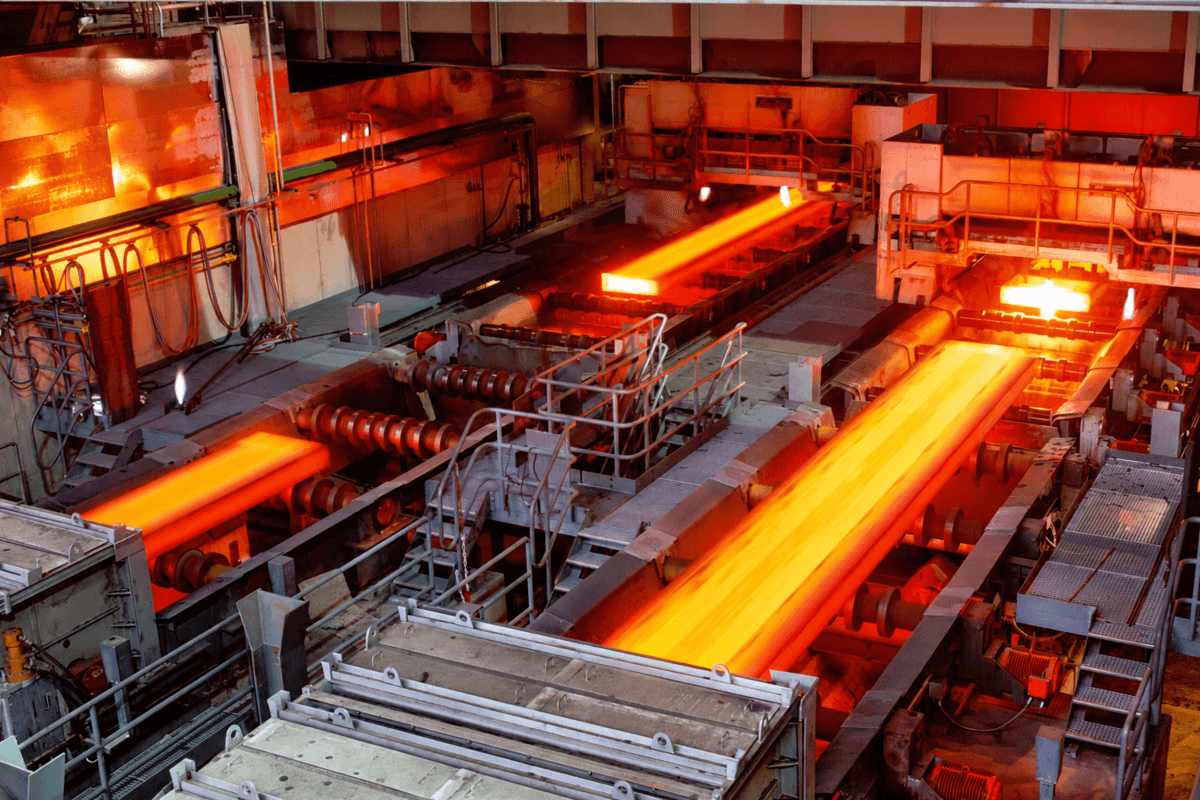
Glowing steel billets move along a production line at a steel rolling mill.
Otai Special Steel
Pakistan's Federal Board of Revenue (FBR) has directed registered iron and steel manufacturers to install electronic production monitoring systems at every manufacturing facility and active production line by December 30, 2026.
The directive, issued through Sales Tax General Order No. 29 of 2026, requires manufacturers to install, integrate, test and make the systems operational by the deadline.
The monitoring system will record steel production and dispatches, allowing the FBR to compare output with goods leaving factories and identify discrepancies in sales tax reporting.
Which steel manufacturers must install the system?
The requirement applies to steel melting units, re-rolling mills and factories that carry out both processes. These include manufacturers producing steel billets and ingots, as well as those converting semi-finished steel into bars, rods, reinforcing bars and other finished products.
The order covers registered manufacturers processing ferrous scrap, direct reduced iron, sponge iron and other iron-based materials.
Manufacturers must obtain and maintain the monitoring equipment and software through vendors authorized by the FBR. The order identifies ISSM Labelling Solutions and Obsidian as authorized vendors for the sector.
The directive was issued under Section 40C(2) of the Sales Tax Act, 1990, Rules 150ZQR and 150ZQT of the Sales Tax Rules, 2006, and SRO 880(I)/2026 dated May 20, 2026. It took effect immediately.
How will steel production be monitored?
The system will use cameras, sensors and electronic measuring equipment to track production from its initial stages to the dispatch of finished steel products.
At melting units, monitoring equipment will count individual billets and ingots and record available production details, including dimensions, timestamps, production lines and batch references.
At rolling mills, cameras and analytics software will verify product dimensions and count finished steel products before they are bundled for dispatch.
The system will also calculate estimated production weights using prescribed measurements.
At the final stage, factory weighbridges will be integrated with the monitoring system to record vehicle registration numbers, product categories, dispatch times and gross, tare and net weights.
The FBR will compare the actual weight of dispatched goods with earlier production estimates and flag discrepancies exceeding prescribed limits.
Melting-only and re-rolling-only factories will use monitoring arrangements suited to their operations, while composite units will require monitoring across four stages.
What equipment and reporting will be required?
Manufacturers must install industrial cameras, video recorders with at least one month of local storage, computing equipment for video analysis, production-line sensors and connections to dispatch weighbridges.
The systems must also have backup power and secure network connectivity.
Production and dispatch data must be transmitted in real time to the FBR's Central Control Unit. Information recorded during internet outages must be stored and transmitted when connectivity is restored.
The systems must detect production stoppages, missing data, equipment failures, camera obstruction, unauthorized modifications and suspected tampering.
Manufacturers must maintain records of equipment calibration, software settings and changes to production parameters.
The FBR also requires cameras, measuring devices, weighbridge connections and analytics software to be tested against controlled production and dispatch samples.
Weight calculations, product classifications and acceptable margins of difference must be approved or accepted by the board before the systems become operational.
What happens if manufacturers fail to comply?
Manufacturers must report equipment failures, damage, suspected tampering or inactive production lines to the FBR, its Central Control Unit and the relevant Commissioner Inland Revenue within one hour.
They must also provide 30 days' advance notice of changes to products, production lines, weighbridges or dispatch processes that could affect the monitoring system.
The order prohibits manufacturers from removing or supplying covered steel products unless production has been electronically monitored and relevant dispatches recorded and reconciled through the approved system.
Manual records, privately installed camera systems and standalone weighbridge records cannot replace the FBR-approved monitoring arrangement.
Manufacturers are responsible for protecting monitoring equipment, providing access for inspections and paying the prescribed vendor fees.
The FBR said noncompliance, including unauthorized dispatches, tampering or concealment of production lines, would be dealt with under the Sales Tax Act, 1990, and applicable rules, following the required legal procedures.
The directive is intended to strengthen oversight of steel production and sales tax reporting by allowing the FBR to compare factory output with recorded dispatches.





Comments
See what people are discussing