

Pakistan receives second Qatari LNG cargo of October as supplies stay far below last year
Two Qatari cargoes arrived this month against eight a year ago, as LNG-based power generation fell 56% in September

Business Desk
The Business Desk tracks economic trends, market movements, and business developments, offering analysis of both local and global financial news.
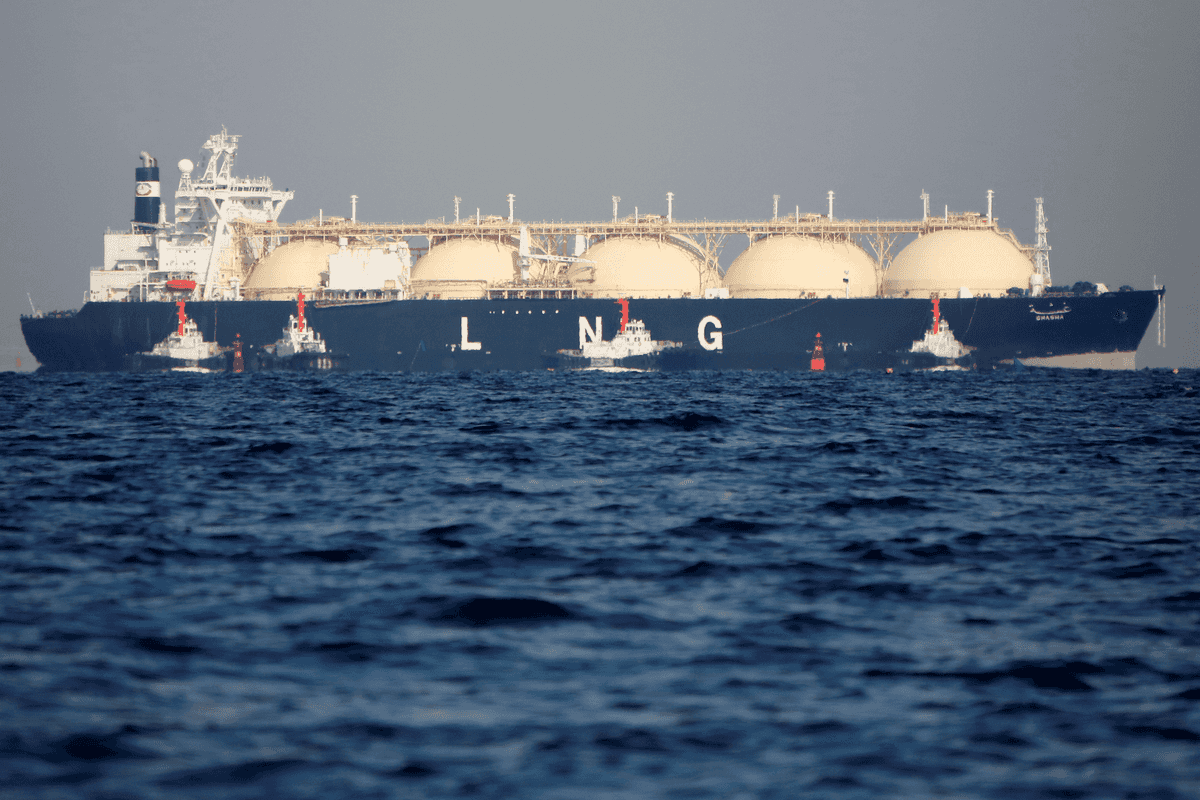
Pakistan receives second LNG cargo of October amid Middle East tensions
Pakistan received its second liquefied natural gas (LNG) cargo from Qatar in October under a long-term contract, as the country grapples with energy supply constraints and reduced LNG availability following the outbreak of war in the Middle East.
The LNG carrier EJNAN berthed at Pakistan GasPort Terminal on October 20 after arriving from Qatar, a terminal executive said on October 21, speaking on condition of anonymity.
The first Qatari LNG vessel of the month arrived at Engro Elengy Terminal at Port Qasim on October 13, a Port Qasim Authority spokesperson said.
Pakistan received two LNG cargoes from Qatar in October 2026, compared with eight in the same month last year, according to data from the Oil and Gas Regulatory Authority (OGRA).
Sharp drop in imports
The country imported 20 LNG cargoes between March and October following the outbreak of war in the Middle East, including 13 shipments under long-term contracts with Qatar and seven purchased on the spot market, said Bazif Memon, a research analyst at Optimus Capital Management Ltd., on October 21.
That compares with about 72 cargoes received during the same period last year, Memon said, highlighting the sharp decline in LNG supplies to Pakistan.
Under its agreements with Qatar, Pakistan typically receives eight to 10 LNG cargoes a month through two long-term contracts linked to Brent crude oil, with pricing slopes of 13.37% and 10.2%.
Import bill and power generation fall
The reduction in imports has eased pressure on Pakistan’s energy import bill but has also coincided with a decline in LNG-based power generation as electricity producers increasingly turn to alternative fuels.
Pakistan’s LNG import bill fell to USD 418 million in the first three months of the current fiscal year, which began July 1, from USD 716 million in the corresponding period last year, according to Pakistan Bureau of Statistics data released on October 19.
Electricity generation from regasified LNG fell 56% year-on-year to 804 gigawatt-hours (GWh) in September, according to data from the National Electric Power Regulatory Authority (NEPRA). Power producers have increasingly relied on cheaper fuels such as coal amid disruptions to international LNG supplies and elevated costs of oil-linked gas imports.
During the first three months of the fiscal year, electricity generation from regasified LNG declined to 3,744 GWh from 6,433 GWh a year earlier, NEPRA data showed.





Comments
See what people are discussing