

Gold prices could hit new records within two years as central banks keep buying
Fund managers and mining executives see central-bank demand, government debt concerns and reserve diversification supporting bullion despite recent price volatility

Business Desk
The Business Desk tracks economic trends, market movements, and business developments, offering analysis of both local and global financial news.
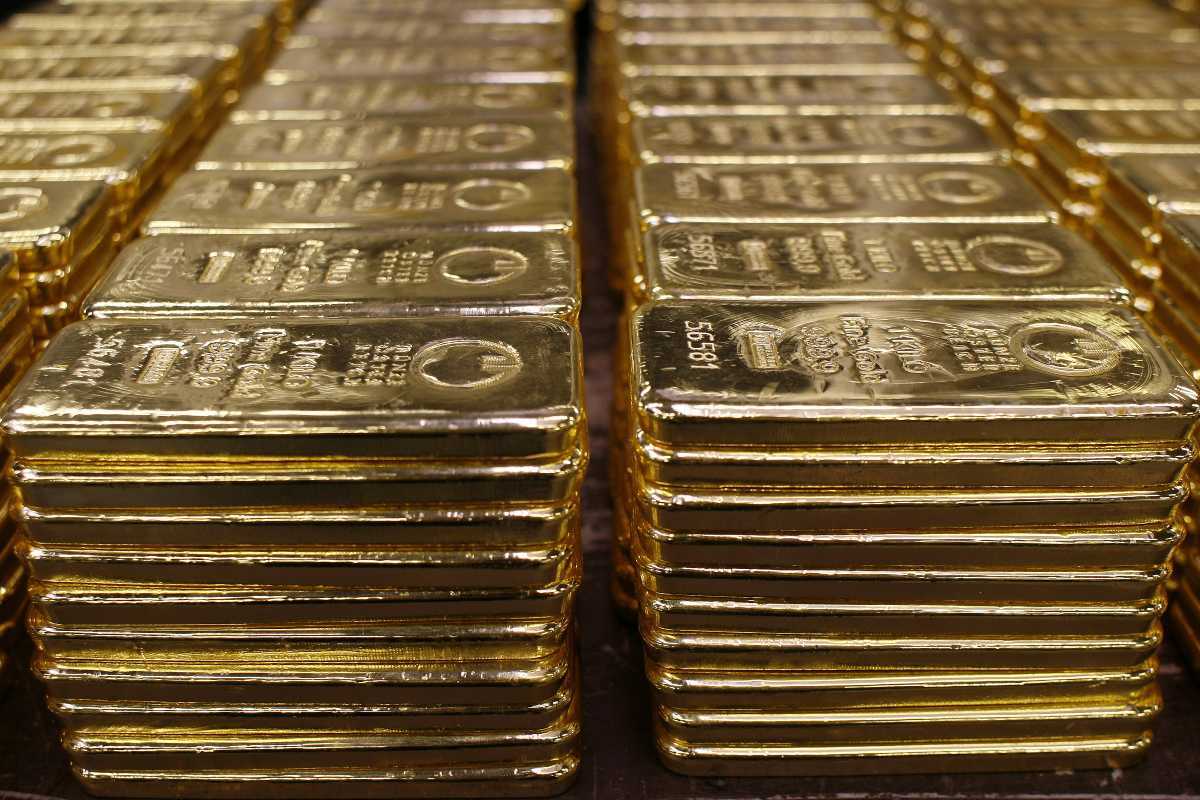
Bars of 250 gram fine gold are stored at a plant of gold refiner and bar manufacturer Argor-Heraeus SA in the southern Swiss town of Mendrisio.
Reuters
Gold prices could reach fresh record highs within the next two years as central banks continue accumulating bullion and investors seek protection from geopolitical tensions, rising government debt and uncertainty in financial markets, according to the Financial Times.
Fund managers and industry executives at the Financial Times’ Precious Metals Symposium forecast further gains despite a recent pullback from record levels.
Spot gold rebounded 1% to USD 4,146.74 per troy ounce by 0501 GMT on Thursday after falling to around USD 4,075 a day earlier as stronger-than-expected US inflation increased expectations of further Federal Reserve rate hikes.
Gold climbed above USD 5,500 per troy ounce to a record high in January before retreating.
Why could gold prices reach new records?
Fund managers at the symposium pointed to persistent central-bank buying, concerns over government debt and efforts to diversify reserves away from the US dollar. They argue that gold could benefit if fiscal strains, geopolitical uncertainty and doubts about major currencies continue to support demand for alternative reserve assets.
Charlotte Yonge, a fund manager at Troy Asset Management, expects gold to reach a fresh record within 12 to 18 months, according to the Financial Times.
She cited deteriorating government finances and expectations that central banks could create more money during the next recession as reasons for holding gold as a hedge.
“Gold can’t be printed in that same way,” Yonge said.
Paul Carne, delegated chief investment officer for Europe, the Middle East and Africa at Aon Investments, forecast a new record within two years.
He argued that the use of the US dollar as a geopolitical tool could encourage countries to seek alternative reserve assets, including gold.
Central banks bought about 63 metric tons of gold in September, their highest monthly total since November 2024, according to provisional World Gold Council data.
The World Gold Council’s latest published monthly figures showed 39 tons of reported net purchases in August, taking reported central-bank buying to 170 tons in the first eight months of 2026.
Investors seek protection from financial uncertainty
Peter Marrone, chair and chief executive of Allied Gold, said investors should consider the possibility of a broader financial shock.
He said family offices were increasing their gold allocations as the macroeconomic outlook became more uncertain and diversifying away from government bonds.
Ian Cockerill, chief executive of Endeavour Mining, said concerns about fiat currencies and central banks’ efforts to preserve the value of their reserves continued to support gold.
Suki Cooper, global head of commodities research at Standard Chartered, said central-bank demand remained strong, although some official institutions had sold bullion this year to raise funds amid geopolitical turmoil.
Yonge said emerging-market central banks were increasingly looking for alternatives to the US dollar as reserve assets, with gold potentially more attractive than currencies such as the euro or yen.
China continues adding to gold reserves
China’s central bank increased its gold holdings for a 23rd consecutive month in September.
The People’s Bank of China held 77.47 million fine troy ounces at the end of September, up from 76.73 million ounces in August, according to official Chinese data.
That represents an increase of about 23 metric tons and takes China’s holdings to approximately 2,410 tons. Gold accounts for about 9% of its total reserves.
The longer-term outlook for bullion remains sensitive to US monetary policy.
Higher interest rates generally reduce gold’s appeal because the metal pays no interest. After stronger-than-expected US inflation data on Wednesday, traders increased bets on another Federal Reserve rate hike, although Fed officials have signaled there is no urgency to move at the October meeting.





Comments
See what people are discussing