

Pakistan court jails lawyers Mazari, Chatha for 17 years over controversial social media posts
Judge Afzal Majoka issues verdict after the couple boycotts proceedings citing custodial torture; court imposes a combined fine of PKR 36 million

Ali Hamza
Correspondent
Ali; a journalist with 3 years of experience, working in Newspaper. Worked in Field, covered Big Legal Constitutional and Political Events in Pakistan since 2022. Graduate of DePaul University, Chicago.
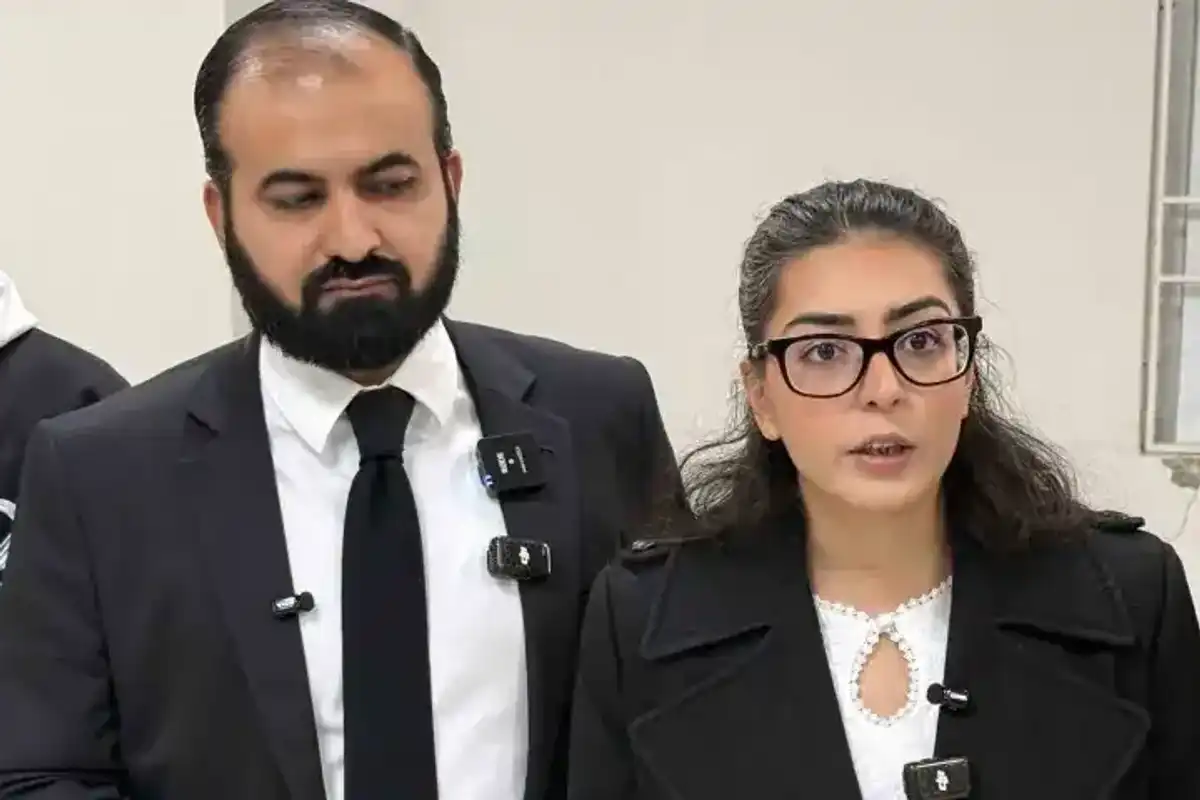
A file photo of Imaan Mazari and Hadi Ali Chatha.
Via X
A court in Islamabad on Saturday convicted two prominent human rights advocates of spreading anti-state content on social media, sentencing them to 17 years in prison for allegedly glorifying banned groups and undermining state institutions, according to a judgment seen by Nukta.
Additional Sessions Judge Muhammad Afzal Majoka found Imaan Zainab Mazari Hazir, a human rights advocate and daughter of former federal minister Shireen Mazari, and her husband, Hadi Ali Chattha, guilty under sections 9, 10 and 26-A of the Prevention of Electronic Crimes Act (PECA), 2016.
The court handed the couple five years’ rigorous imprisonment and a PKR 5 million fine each under section 9, 10 years and PKR 30 million under section 10, and two years and PKR 1 million under section 26-A. In default of payment, the fines will be converted into additional simple imprisonment. The total fine imposed on the couple amounts to PKR 36 million.
The judgment said the pair, appearing via video link from Central Jail Rawalpindi, boycotted proceedings, refused to testify or present defense evidence, and did not cross-examine key witnesses despite opportunities granted by the Islamabad High Court.
The case relates to posts on X, formerly Twitter, where the pair operated verified accounts @ImaanZHazir and @AdvHadiali. Prosecutors alleged the content aligned with banned groups such as the Balochistan Liberation Army (BLA), Tehreek-e-Taliban Pakistan (TTP) and Pashtun Tahafuz Movement (PTM), as well as proscribed individuals including Mahrang Baloch, Ali Wazir and Manzoor Pashteen.
The judgment said both advocates admitted owning the accounts during the investigation and that the posts remained publicly accessible.
Judgment and sentencing
The 22-page judgment cited specific tweets, including calls for protests demanding the release of Mahrang Baloch and other activists from the Baloch Yakjehti Committee (BYC). One post reposted by Chattha quoted Mahrang Baloch as saying “no imprisonment can crush a movement” and that “suppression can [not] break our fight against human rights violations in Balochistan.” The post demanded the release of Mahrang Baloch, Imran Baloch, Sabgatullah Shahji, Beebow Baloch, Gulzadi Baloch and other BYC activists, claiming they were “illegally detained or imprisoned.”
Mazari posted a tweet showing Mahrang Baloch making a victory sign, which Chattha retweeted. In another post, she urged people to “Join us on 7 May from 6pm till midnight to demand justice for Dr. Mahrang Baloch & all other illegally detained BYC leaders. Raise your voice against fake encounters, enforced disappearances & killings in Balochistan.” She also tweeted that “Dr. Mahrang Baloch remains incarcerated with the State giving a clear message to those who engage in peaceful resistance.”
Other posts accused the state of operating “torture cells,” blamed it for enforced disappearances, and portrayed the armed forces as responsible for terrorism. One tweet by Mazari Hazir stated: “The forced disappearance of Ghazi Amanullah, brother of PTM leader Manzoor Pashteen, is yet another attack on PTM by this terrorist State which continues to target those who engage in dialogue and peaceful resistance (as well as their family members).”
Another claimed: “Nobody believes Pak Army's claim that it killed 'BLA terrorists' in an encounter. There is a message in the dead bodies; 1000s of Baloch missing persons are in the army's torture cells & this is what will be done to them.”
The court ruled that the posts constituted glorification under PECA, which includes “any form of praise or celebration in a desirable manner,” and propagated false information by labelling legal detentions under anti-terrorism laws as illegal or forced disappearances. It said the advocates, both professionals aware that Pakistan is not designated a terrorist state, intentionally advanced the agenda of proscribed entities such as the BLA and TTP by describing Pakistan as a “terrorist state.”
The ruling cited domestic and international precedents, including India’s Supreme Court in Basavaraj R. Patil v. State of Karnataka and the European Court of Human Rights in Colozza v. Italy, to justify proceeding in absentia due to the accused’s disruptive behavior and waiver of rights. It said freedom of speech under Pakistan’s constitution is subject to reasonable restrictions for national security and public order, drawing from cases such as Kedar Nath Singh v. State of Bihar.
The case originated from a complaint by Sub-Inspector Sharooz Riaz on Aug. 12, 2025, during web browsing, leading to an inquiry and FIR No. 234/2025 registered on Aug. 22, 2025.
Official notifications from Pakistan’s interior ministry and the provincial home departments of Khyber Pakhtunkhwa and Balochistan confirmed the proscribed status of the groups and individuals. A supplementary report was submitted on Oct. 24, 2025, incorporating additional evidence including a video and transcript.




Comments
See what people are discussing