


News Desk
The News Desk provides timely and factual coverage of national and international events, with an emphasis on accuracy and clarity.
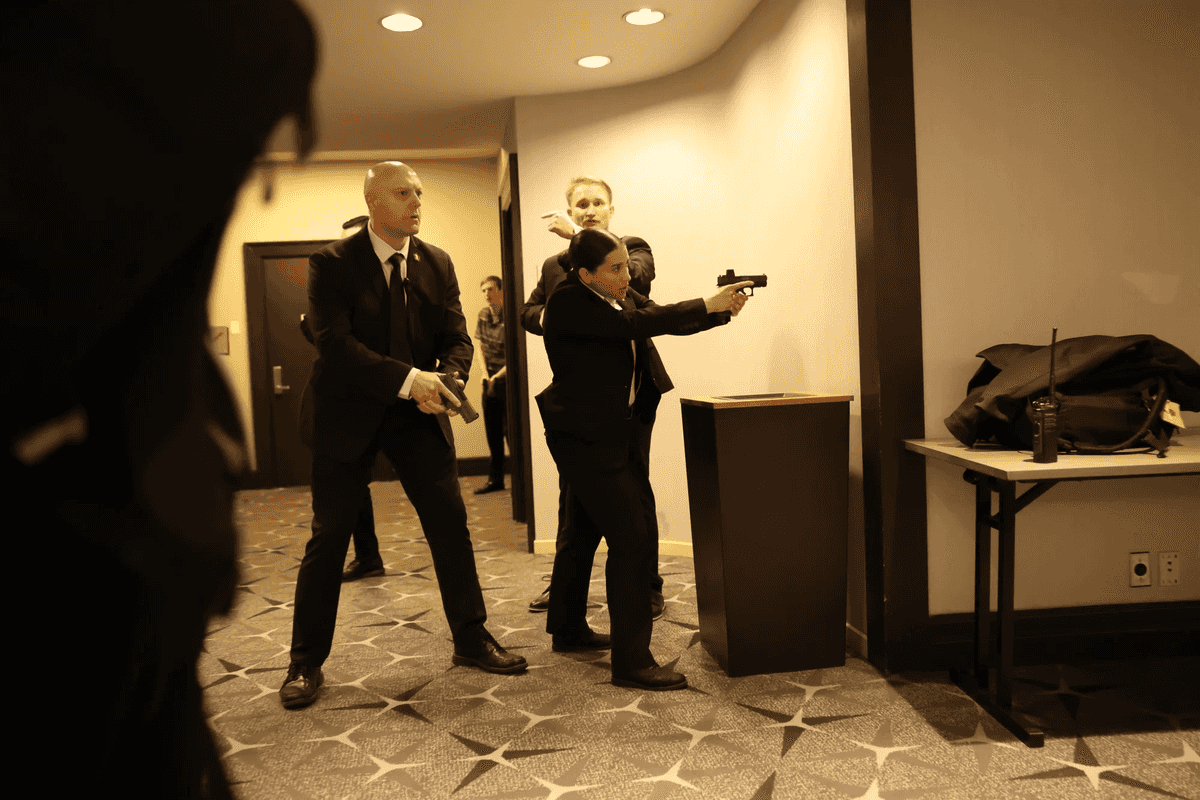
The FBI has been conducting a detailed examination of Allen's social media activity and digital footprint to establish a motive.
AFP/File
The US Department of Homeland Security identified the US-Israeli war with Iran as a potential motive for Cole Allen, the man accused of attempting to assassinate President Donald Trump at the White House Correspondents' Dinner on April 25.
A preliminary DHS intelligence report dated April 27 assessed that Allen had "multiple social and political grievances" and that the Iran conflict "may have contributed to his decision to conduct the attack." The report was obtained through open records requests and shared with Reuters.
What did the DHS report find about the Trump dinner shooting suspect?
The DHS assessment concluded that the Iran conflict may have contributed to Allen's decision to carry out the attack, citing his social media posts criticising US actions in the war.
The report, marked as a "Critical Incident Note," offers the most definitive evidence to date that the conflict could have been a trigger. Its conclusions remain preliminary, and Allen has not yet entered a plea.
What charges does Cole Allen face?
The US Justice Department added a charge of assault on a federal officer on Tuesday, accusing Allen of firing at a Secret Service agent at a security checkpoint. He already faced charges of attempted assassination, discharge of a firearm during a crime of violence, and illegal transportation of a firearm and ammunition across state lines.
A DHS spokesperson declined to comment on the intelligence assessment's contents, and the FBI also declined to comment.
What has the FBI found in Allen's social media activity?
The FBI has been conducting a detailed examination of Allen's social media activity and digital footprint to establish a motive, a senior law enforcement official told Reuters on condition of anonymity. That review includes posts on a Bluesky account linked to Allen that shared anti-Trump messages in the weeks before the attack.
The posts included criticism of US actions in Iran, as well as attacks on the administration over immigration enforcement, Elon Musk and Russia's war in Ukraine.
The account shared a post calling for Trump's impeachment over his April 7 threat to destroy Iranian civilisation, which came hours before Trump agreed to a ceasefire. It also shared criticism of reporters who planned to attend the press dinner. The FBI separately reviewed a 2024 post in which an account connected to Allen appeared to call Trump "the devil," quoting a Bible verse in response to a message from Trump's daughter Tiffany.
Why is the FBI focusing on Allen's online activity?
Officials said the focus on Allen's digital footprint was partly intended to pre-empt conspiracy theories about his motivations. A senior law enforcement official noted that speculation about the online activity of the man who fired at Trump during a 2024 campaign rally in Butler, Pennsylvania, had previously fueled widely spread conspiracy theories.
The FBI's review aims to build a clear and documented account of Allen's stated grievances before and after the attack.
US officials had previously said little about Allen's alleged motive, pointing only to an email he sent to relatives on the night of the attack. Prosecutors described the message as a manifesto expressing anger at the administration and a desire to target the "traitor" giving a speech, without naming Trump.
Court documents allege Allen "disagreed" with Trump politically and wanted to "fight back" against government policies he found morally objectionable.



Comments
See what people are discussing