

SBP report flags Pakistan banks' growing reliance on govt securities
Banking sector grew 15.1% in 2025, capital adequacy improved to 20.8%

Business Desk
The Business Desk tracks economic trends, market movements, and business developments, offering analysis of both local and global financial news.
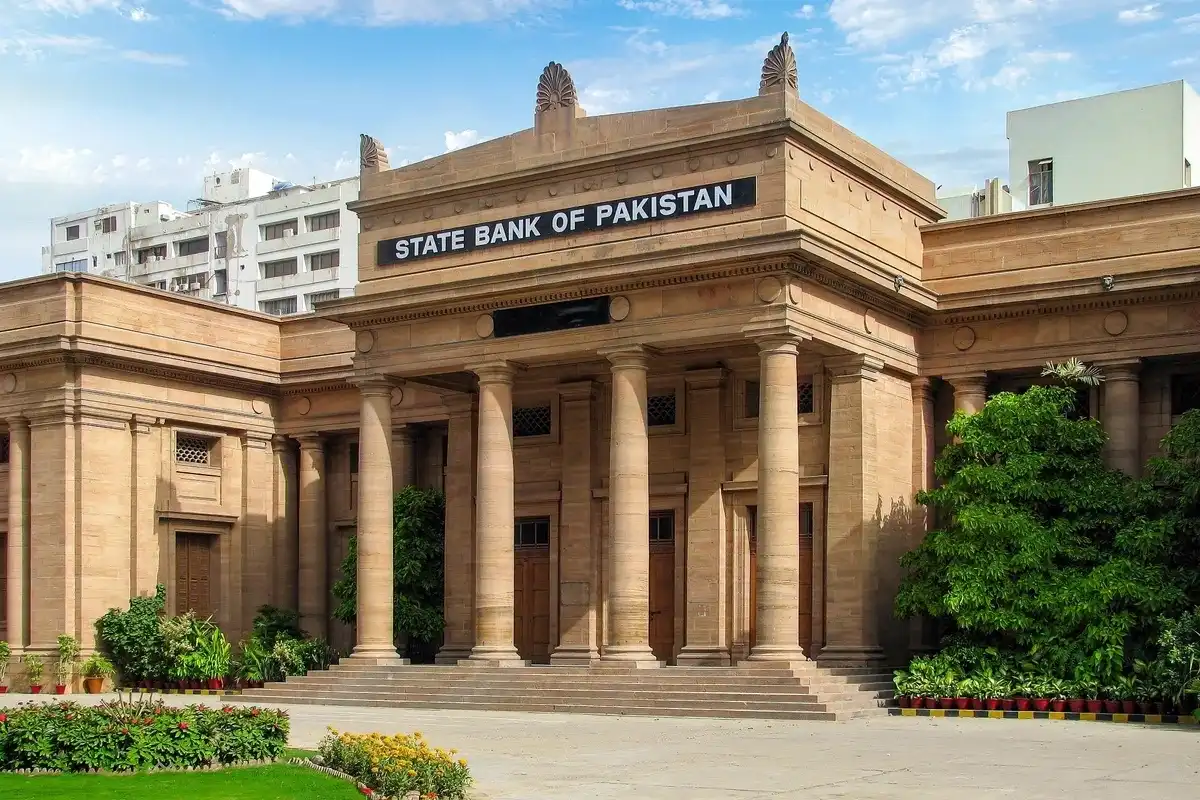
Pakistan's banking sector remained steady and resilient in 2025, but the State Bank of Pakistan has warned of a deepening structural imbalance; heavy lending to the government.
The Financial Stability Review 2025 has said banks are increasingly functioning as financiers of the government rather than lenders to businesses and households.
What does the SBP review say about Pakistan's banking sector?
The financial sector grew 15.1% in 2025 and maintained operational and financial resilience. Capital adequacy improved to 20.8%, non-performing loans fell to 6.1% of gross loans, and after-tax earnings grew 11.2%. Deposits accelerated 24.7%, reversing a sharp slowdown from the previous year.
How much of Pakistan's banking sector is exposed to government debt?
Investments in government securities now account for roughly 62% of the banking sector's total assets, up from 55.5% the previous year. The government's overall share of banking sector exposure rose to 64.6% from 59.1%. At the same time, advances to businesses and households fell 6% during the year.
The SBP attributes part of the lending decline to a base effect from its advance-to-deposit ratio linked to the tax policy. In the final quarter of 2024, that policy had incentivized banks to aggressively expand their loan books to avoid a higher tax burden. Once the incentive lapsed, lending contracted sharply, flattening the year-on-year decline.
Adjusting for this distortion, the SBP says advances showed a decent underlying recovery, with year-on-year growth of 11.2% recorded in the third quarter of 2025.
Has the SBP's rate cut cycle helped private sector borrowing?
The SBP cut its policy rate by a cumulative 1,150 basis points since June 2024, including 250 bps during 2025 alone, bringing it to 10.5%. The cuts were intended in part to stimulate private sector borrowing. But as long as fiscal pressures keep the government a dominant borrower, the incentive for banks to shift meaningfully toward private credit remains limited.
Comfortable, low-risk returns on sovereign securities are difficult to compete with. The sector's overall soundness is largely a function of its deep entrenchment in government paper rather than productive lending.
Liquidity metrics remained comfortably above Basel III minimums, with the liquidity coverage ratio at 215% and the net stable funding ratio at 174.3%. Provisioning coverage rose to 107.7% of non-performing loans.
What are risks to Pakistan's financial stability?
The SBP warned that a prolonged Middle East conflict could keep global oil prices elevated, disrupt supply chains, and intensify inflationary pressures while straining the external account. The central bank said risks remain tilted to the downside globally, driven by geopolitical tensions, trade frictions, and uncertainty around returns on artificial intelligence investments.
The SBP's Systemic Risk Survey, conducted in January 2026, identified geopolitical risk as the top threat in both the near and medium term. The survey, its 17th wave, drew responses from senior executives at banks, non-bank financial institutions, and financial journalists, with a response rate of 47%.
The SBP said it remains vigilant and ready to take necessary measures to address emerging risks and support financial stability, credit provision, and efficient financial services. It emphasized that maintaining policy consistency, continuing structural reforms, and preserving recent stability gains will be critical to sustaining economic growth and long-term macro-financial stability.



Comments
See what people are discussing