

Iran expands 'prohibited zone' into Gulf of Oman and strikes 20 ships as oil surges past $100
Iran's Revolutionary Guards launched strikes against 20 vessels, extended their maritime no-go zone into the Gulf of Oman and Arabian Sea, and struck a US base in Jordan, as the IAEA Board of Governors voted to refer Tehran to the UN Security Council

News Desk
The News Desk provides timely and factual coverage of national and international events, with an emphasis on accuracy and clarity.
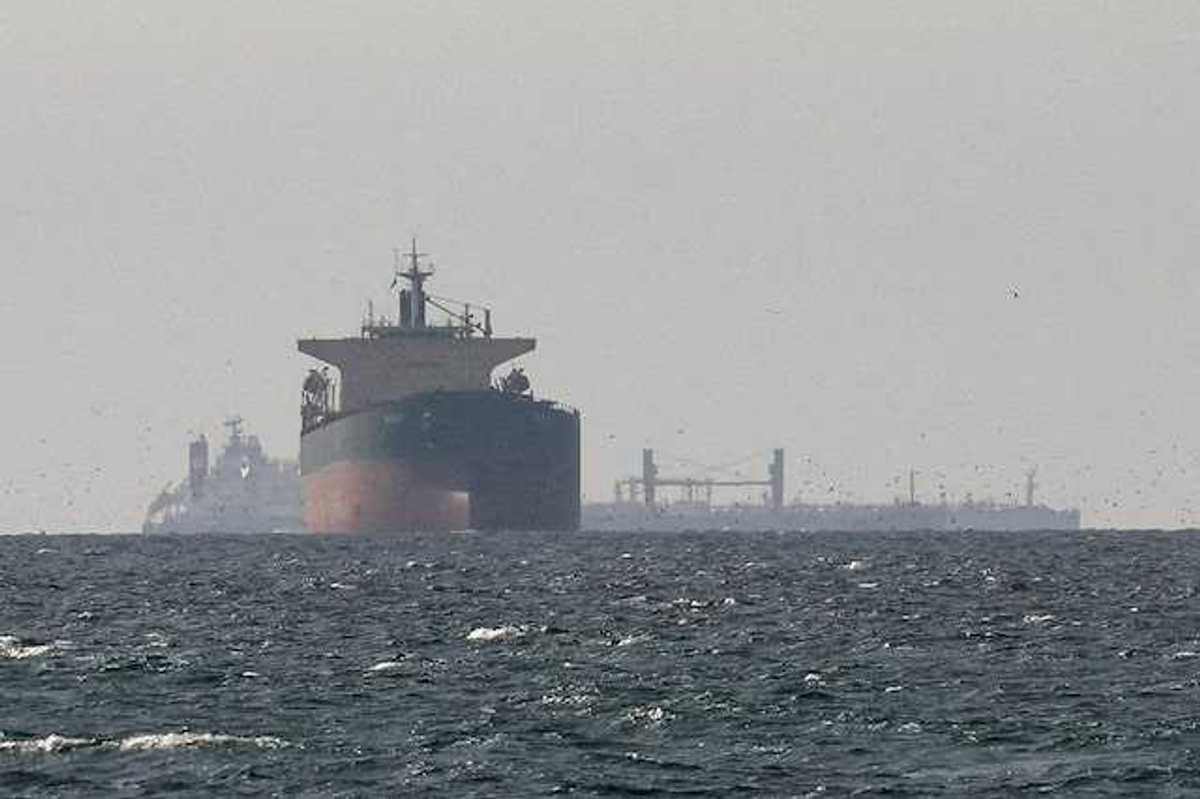
Iran’s Islamic Revolutionary Guard Corps (IRGC) attacked 20 vessels attempting to navigate the Strait of Hormuz on Wednesday, while expanding its maritime "prohibited zone" into the Gulf of Oman and the Arabian Sea.
The escalation pushed global oil prices above $101 per barrel as Tehran intensified its blockade in response to U.S. strikes on Iranian oil tankers.
How is Iran expanding its maritime blockade into the Gulf of Oman?
According to official statements carried by Iranian state media, the IRGC targeted two U.S. vessels, eight oil tankers, and ten non-compliant commercial ships attempting to cross the Strait of Hormuz. The United Kingdom Maritime Trade Operations (UKMTO) confirmed that multiple vessels across the Gulf and the Gulf of Oman were subjected to disabling fire during military engagements.
Simultaneously, the IRGC added portions of the Gulf of Oman and the Arabian Sea to its declared "prohibited zone". IRGC spokesman Hossein Mohebi warned on state television that any vessel entering the expanded boundary without Iranian coordination would face military targeting and sanctions.
In direct retaliation for the U.S. military destroying five Iranian crude oil carriers a day earlier, the IRGC also launched a ballistic missile attack against a U.S. military facility near Al Azraq in Jordan. However, Jordanian defense forces intercepted 18 incoming projectiles.
What are the diplomatic and political ramifications of the latest escalation?
Concurrently in Vienna, the International Atomic Energy Agency (IAEA) Board of Governors voted 23–3 to formally refer Iran to the United Nations Security Council over its nuclear non-compliance—marking the first such referral in two decades.
Supported by the United States, Britain, France, and Germany, the resolution cited Tehran's refusal to allow international inspectors access to enriched uranium stockpiles. Iranian IAEA representative Reza Najafi dismissed the resolution as a political maneuver dictated by Washington, while Russia, China, and Niger voted against the measure.
In Washington, U.S. President Donald Trump claimed that the conflict would end "immediately after" the November midterm elections, arguing that Tehran is attempting to influence US domestic politics. However, reporting by The Wall Street Journal revealed that senior advisers are privately warning the White House that the conflict could drag on for the remaining two years of Trump's term.
Meanwhile, Israeli Prime Minister Benjamin Netanyahu asserted during a visit to troops in occupied southern Syria that military pressure is bringing the Iranian regime close to collapse.





Comments
See what people are discussing