

Iran tells US there is no military solution to Middle East war
Iran's foreign minister says there is no military solution to the war with the US, as talks stall over the Strait of Hormuz and another tanker is struck.

News Desk
The News Desk provides timely and factual coverage of national and international events, with an emphasis on accuracy and clarity.
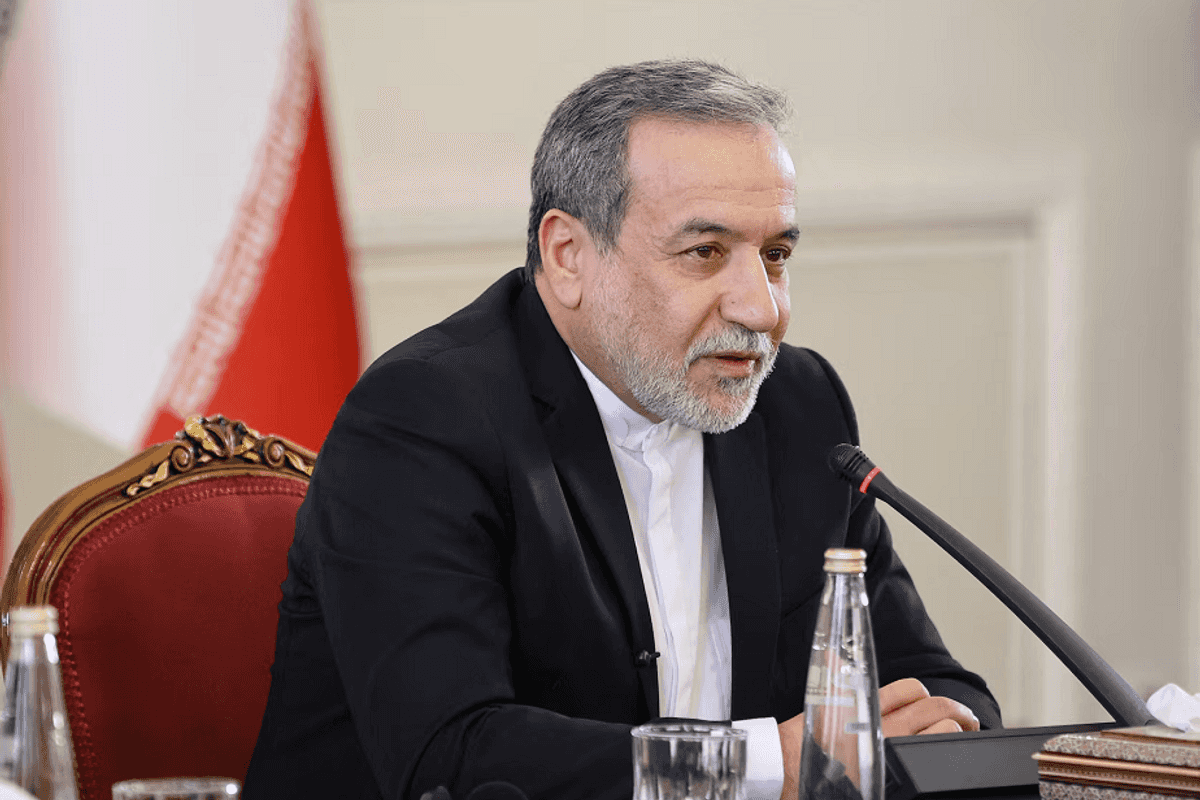
Iranian Foreign Minister Abbas Araghchi said on Sunday that there is no military solution to the Middle East war with the United States, rejecting further sanctions as well. Speaking to foreign ambassadors, he said only negotiations could end the conflict, as talks appear to be at an impasse over Iran's blockade of the Strait of Hormuz.
Is there a military solution to the Iran war?
Araghchi says no. A campaign of heavy bombardment failed to bring a decisive end to the war that the US and Israel launched in late February. Washington in recent weeks has dialed back military operations in favor of economic pressure, while Tehran insists only negotiations based on justice and fairness can end the conflict.
"If our enemies again choose the path of military confrontation, our response will be stronger than before, and we will defend ourselves with even more force," Araghchi said at the gathering of foreign ambassadors.
"There is no military solution, nor any solution based on new sanctions," he continued. He added that "only negotiations based on justice and fairness" could end the conflict.
Why is the Strait of Hormuz the main point of contention?
The main point of contention remains Iran's attempt to blockade the Strait of Hormuz, a vital conduit for Gulf oil and gas. Iran has sought to impose its control over the shipping lane since the start of the war, striking vessels that attempt to transit without its authorization. The US has imposed its own counter blockade of Iranian ports and has also struck vessels it accuses of violating it.
On Sunday, the British maritime security agency UKMTO said a tanker in the Hormuz "reported being struck by an unknown projectile, causing damage to the engine room". The crew were reported safe and no environmental impact was recorded. The agency did not specify the date of the incident, the vessel's origin or destination, or whether it was an oil tanker or LNG carrier.
The two sides agreed a memorandum of understanding in June that spelled out a framework for a permanent resolution. Iranian attacks on vessels in the Hormuz then prompted a return to US military operations.
What did Iran demand in the latest talks with the US?
Iranian and US officials held indirect talks last week on the sidelines of the UN General Assembly, with Tehran saying it presented seven conditions for reopening the strait. Iran has demanded, among other things, a ceasefire across the Middle East, the unfreezing of its assets abroad, the lifting of sanctions on its oil sector and an end to the US naval blockade. Trump rejected the proposal, while leaving the door open to both further talks and renewed military operations.
Iranian foreign ministry spokesman Esmaeil Baqaei on Sunday characterized the latest US counterproposal as being "in line with their previous proposals concerning nuclear issues". "We have clearly indicated that we are focusing on the issue of the Strait of Hormuz," he said. He added that reopening the waterway required "an end to the disruptions to Iranian commercial maritime traffic and the lifting of sanctions".
The United States and Israel have characterized the war as necessary to prevent Iran from acquiring nuclear weapons, a goal Iran has long denied pursuing. The focus soon shifted to reopening the Hormuz, however, after its closure sent shockwaves through world energy markets.
Is the US building up its military presence in the Middle East?
The United States has not struck Iran since September 1, but it has recently pursued a fresh military buildup in the region. US media outlet Axios reported that Washington has deployed additional Patriot missile batteries to Saudi Arabia and Qatar to help protect key energy facilities from possible Iranian retaliation.
Axios also reported that the USS Theodore Roosevelt aircraft carrier and its strike group were heading to the Middle East, where they could join two other US carrier strike groups already in the region. It added that top Trump cabinet members met Friday to discuss the war in Iran, as well as the conflict in Yemen, where the Tehran-backed Houthis have been fighting government forces and attacking Saudi Arabia.





Comments
See what people are discussing