

IRSA approves 22% Rabi water shortage for Punjab, Sindh
Regulator projects river inflows of 21.268 million acre-feet for Rabi 2026-27 as available water storage remains below anticipated levels

Business Desk
The Business Desk tracks economic trends, market movements, and business developments, offering analysis of both local and global financial news.
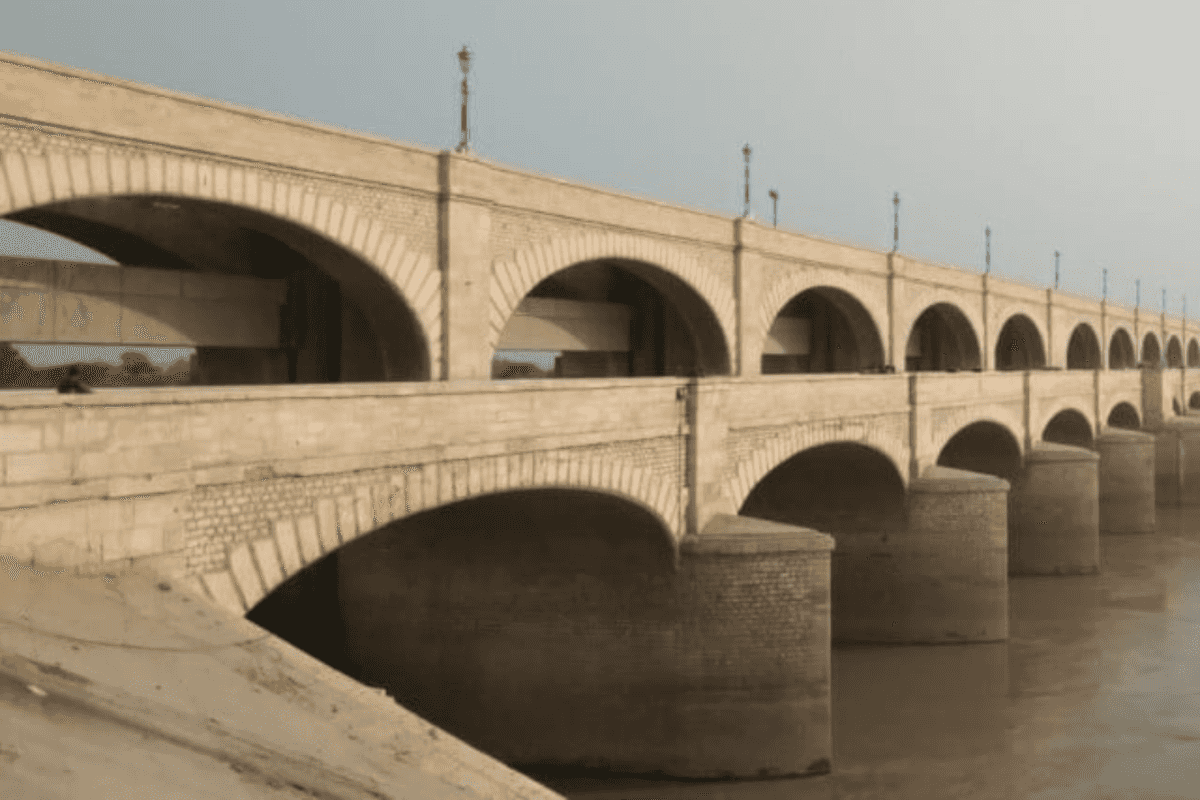
IRSA approved anticipated provincial withdrawals of 29.183 million acre-feet for Rabi 2026-27.
APP
Pakistan’s water regulator has approved a projected 22% water shortage for Punjab and Sindh during the Rabi 2026-27 season, citing anticipated river inflows of 21.268 million acre-feet, according to an official statement Tuesday.
The decision was taken by the Indus River System Authority’s Advisory Committee, or IAC, at a meeting chaired by Amjad Saeed, IRSA member from Punjab and chairman of the authority.
The committee reviewed anticipated water availability for the six-month Rabi season from October 1, 2026, through March 31, 2027, based on recommendations from the IRSA Technical Committee.
The IAC unanimously approved likely rim-station inflows of 21.268 million acre-feet after considering different inflow scenarios using the WAA-Tool, which IRSA said was jointly developed by CSIRO Australia, the University of British Columbia Watershed Model and stakeholders.
The calculations assumed conveyance losses of 4% for the Indus zone and 0% for the JC zone.
Based on the approved inflow estimates and other operational parameters, the overall system shortage was calculated at 22% for both Punjab and Sindh. The shortage will be subject to periodic review by IRSA.
How much water has IRSA allocated for Rabi 2026-27?
IRSA approved anticipated provincial withdrawals of 29.183 million acre-feet for Rabi 2026-27, slightly above the 10-year average of 28.73 million acre-feet. Punjab was allocated 15.564 million acre-feet and Sindh 11.748 million acre-feet, while Khyber Pakhtunkhwa and Balochistan were allocated 0.701 million acre-feet and 1.171 million acre-feet, respectively.
Khyber Pakhtunkhwa’s allocation will be supplied through the Chashma Right Bank Canal.
Kharif inflows and water storage fall below benchmarks
The committee also reviewed water availability during the Kharif 2026 season, saying actual river inflows totaled 95.44 million acre-feet.
That was 8% below initial expectations, 7% below the 10-year average and 22% lower than inflows in the previous year.
During the late Kharif period, Punjab and Sindh also utilized 0.077 million acre-feet and 1.262 million acre-feet, respectively, as flood supplies under Para 4 of the Water Accord 1991, the statement said.
Provincial utilization during the April-September Kharif season remained below their respective Water Accord shares.
Punjab’s utilization was 11% below its share, Sindh’s 7% lower, Khyber Pakhtunkhwa’s 28% lower and Balochistan’s 58% lower.
Total water storage available on September 30 stood at 9.343 million acre-feet, below the anticipated 12.014 million acre-feet, the 10-year average of 9.938 million acre-feet and the 13.214 million acre-feet recorded a year earlier.
Water flowing downstream of Kotri during Kharif 2026 totaled 10.40 million acre-feet, compared with the IAC’s anticipated 13.05 million acre-feet, a 10-year average of 15.43 million acre-feet and 30.85 million acre-feet recorded the previous year.
IRSA flags Tarbela delays, approves Chashma closure
The committee expressed concern over delays in work on WAPDA’s T4 low-level outlet and T5 Hydropower Project and urged that the works be completed as early as possible.
The works have already faced substantial delays and are causing water shortages for provinces during Kharif seasons, according to the statement.
The IAC also approved the tentative closure of Chashma Barrage from December 26, 2026, to January 14, 2027, aligning the dates with provincial annual canal closure programs.
The meeting was attended by IRSA members, the chief engineering advisor of the Ministry of Water Resources, representatives of WAPDA’s water and power wings, secretaries of the Punjab and Sindh irrigation departments and senior officials from Khyber Pakhtunkhwa and other relevant departments.




Comments
See what people are discussing