

Israel election results show deadlock as Netanyahu faces calls to quit
Exit polls show a parliamentary deadlock after turnout topped 77%, leaving rival political blocs facing difficult coalition talks

News Desk
The News Desk provides timely and factual coverage of national and international events, with an emphasis on accuracy and clarity.
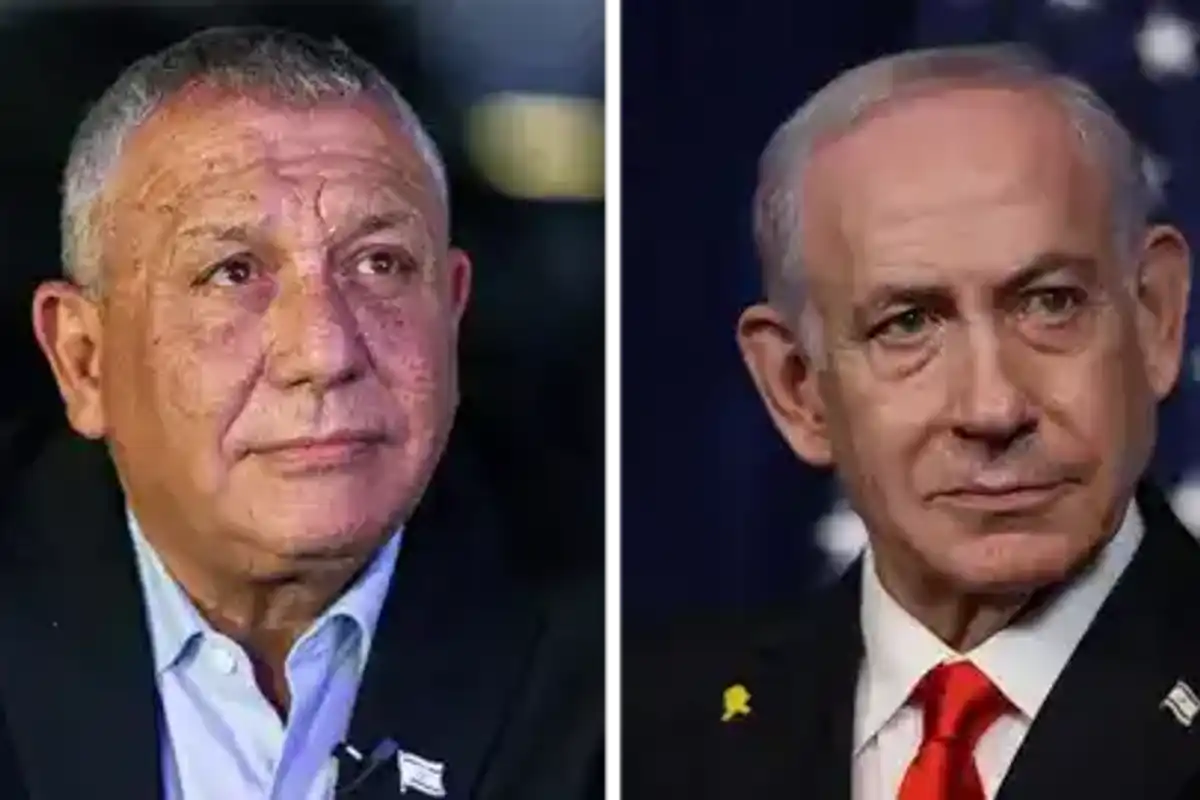
43 percent of respondents said that Eisenkot (right) was better suited to serve as prime minister, compared with 39 percent who favoured Netanyahu.
Courtesy: Reuters
Israeli Prime Minister Benjamin Netanyahu faced calls to resign Wednesday after exit polls projected that neither his Likud-led bloc nor the opposition had secured the 61 seats needed for a parliamentary majority, leaving Israel facing coalition negotiations after high voter turnout.
Why did the Israel election results produce a deadlock?
The Israel election results show no clear path to a governing majority for either Netanyahu's bloc or the opposition led by Gadi Eisenkot. Revised television projections put the two camps level in some estimates, while another showed Netanyahu's bloc narrowly ahead. Both sides must now seek support from smaller parties to form a government.
Kan 11 and Channel 13 projected both major political camps at 51 seats each, while Channel 12 projected 52 seats for Netanyahu's bloc and 49 for the opposition. These figures remain preliminary as vote counting continues.
Data attributed to Israel's Central Elections Committee showed turnout reaching 77.7%, the highest in more than two decades. Preliminary figures put Netanyahu's Likud party first among individual parties with 20.72% of the vote, followed by Eisenkot's newly formed Yashar! party with 16.98%.
What did Netanyahu and Eisenkot say after the election?
Eisenkot addressed thousands of cheering opposition supporters at an election headquarters rally in Tel Aviv. The former military chief of staff said voters had clearly chosen political change and a new direction for the government. He argued that a worthy leader would accept the public's vote of no confidence and retire from political life.
Netanyahu addressed supporters at an early morning rally in Jerusalem, insisting that the final official count would show Likud remained the largest party. He rejected forming a partnership with Arab factions and called for a strong, right-wing national government.
Can Netanyahu remain prime minister without a majority?
Netanyahu faces pressure to step aside, but the projected results do not establish an immediate alternative government. His bloc must secure additional support to reach the 61-seat threshold, while Eisenkot must overcome resistance among potential Jewish partners to relying on Arab parties.
If coalition negotiations fail, Netanyahu could remain prime minister in a caretaker capacity while political leaders try to form a government. If no coalition can be assembled, Israel could face another national election.
Which smaller parties could decide who forms Israel's government?
Smaller parties are positioned to wield significant influence during coalition negotiations. Far-right religious parties within Netanyahu's bloc are projected to win a combined 13 seats, while Arab-led parties outside the two main blocs are projected to secure 17 to 19 seats.
Those projected seats could affect whether either camp can assemble a parliamentary majority. However, Eisenkot faces a difficult path because potential Jewish coalition partners oppose relying on Arab parties.
The central question is whether Netanyahu or Eisenkot can win enough support to govern. Until a coalition secures the required seats, Israel's political future remains uncertain.





Comments
See what people are discussing