

11-year-old among six charged over Karachi's deadly Gul Plaza fire
Police have submitted the final charge sheet against six suspects, including an 11-year-old boy, following the catastrophic Karachi shopping mall fire

News Desk
The News Desk provides timely and factual coverage of national and international events, with an emphasis on accuracy and clarity.
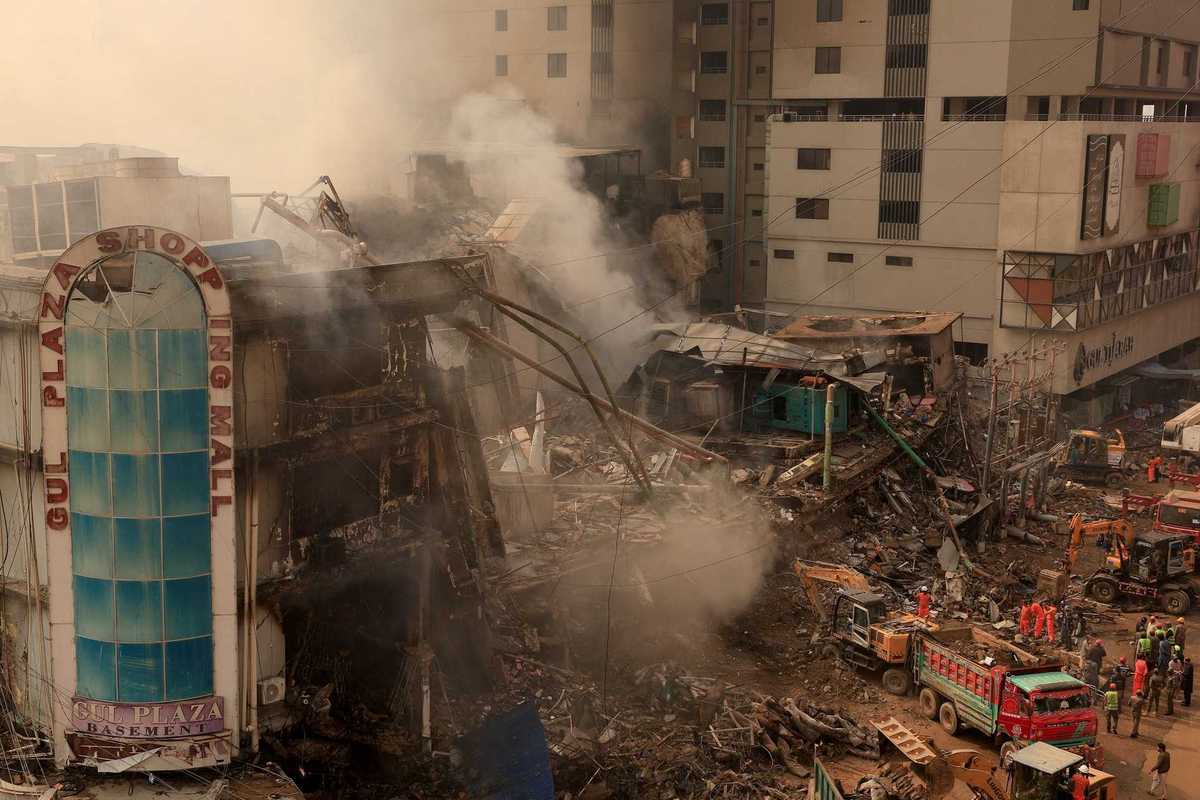
An 11-year-old is among six people formally charged by Karachi police in connection with the catastrophic Gul Plaza shopping mall fire that killed 72 people on January 17.
Investigators determined that a child accidentally ignited the blaze while playing with matchsticks inside an unmonitored retail outlet. The prosecution filed criminal negligence and manslaughter charges to initiate a formal trial.
Who did police hold responsible for the Karachi shopping mall fire?
Investigators indicted shopkeeper Naimatullah, his 11-year-old son Huzaifa, and four market union officials for criminal negligence.
The police report states that the shop owner left his child unsupervised, while the market union locked major security gates and cut off the electricity, trapping victims inside the burning building.
The fatal fire broke out at approximately 10:15 p.m. on the ground floor inside a shop selling highly flammable artificial flowers. Investigators revealed that the 11-year-old boy was playing with matchsticks alongside another minor inside the retail store.
A discarded matchstick accidentally landed on the fabric flowers and sparked an immediate inferno that quickly became uncontrollable.
The flames rapidly spread to adjacent storefronts and raced upward through the commercial building's central air-conditioning vents.
This fast-moving smoke and fire trapped hundreds of weekend shoppers inside the busy three-story facility. Emergency responders arrived shortly after the initial outbreak but faced severe structural obstacles while attempting to enter the compound.
Why did administrative failures worsen the Gul Plaza tragedy?
The official police investigation heavily penalizes the market union leadership for failing to sound emergency alerts or call for immediate rescue assistance.
Furthermore, the administrative team kept the primary security gates padlocked, severely obstructing the main escape routes for panicked crowds. These combined actions left hundreds of shoppers completely unable to find a safe way out of the building.
The crisis worsened when Union President Tanveer Pasta requested that the local utility company shut off all electricity to the complex.
This forced blackout created a massive bottleneck in the pitch darkness, preventing trapped individuals from locating the emergency exits. The Director General of Rescue 1122 noted that the sudden power shutdown caused the maximum loss of life on the upper floors.
Police formally nominated four specific union officials in the final charge sheet, including President Tanveer Pasta and General Secretary Muhammad Amin.
Vice President Ammar Ismail and Joint Secretary Muhammad Ramadan face identical prosecution charges under the Pakistan Penal Code. The state will try the administrative leaders for manslaughter and negligent conduct during the upcoming legal proceedings.
What was the total death toll and economic damage from the blaze?
The devastating 36-hour inferno completely hollowed out the historic commercial hub located along the bustling M.A. Jinnah Road artery.
The disaster claimed a total of 72 lives, mostly due to severe suffocation, while injuring 108 other citizens. The intense flames also completely incinerated 1,153 wholesale and retail shops along with their entire inventories.
The overall financial impact is exceptionally severe because local traders had heavily stocked their stores for the upcoming Ramadan shopping season.
Regional trade associations estimate the total economic damage at more than 3 billion rupees, which is roughly 10.7 million dollars. Local business owners are now facing massive financial ruin as a direct consequence of the catastrophic market fire.
A specialized forensic team dispatched from Lahore conducted a thorough sweep of the debris to rule out any potential sabotage. The investigators confirmed that no explosive materials were used, officially declaring the incident an accident caused by severe negligence.
Medical teams relied extensively on DNA testing at the University of Karachi to identify victims because the extreme heat reached 1,200 degrees Celsius.




Comments
See what people are discussing