

Kashmir Black Day: Pakistan urges UN to address rights concerns
On Kashmir Black Day, Zardari and Sharif said lasting South Asian peace depends on resolving the dispute, as Pakistan urged the UN to address rights concerns

News Desk
The News Desk provides timely and factual coverage of national and international events, with an emphasis on accuracy and clarity.
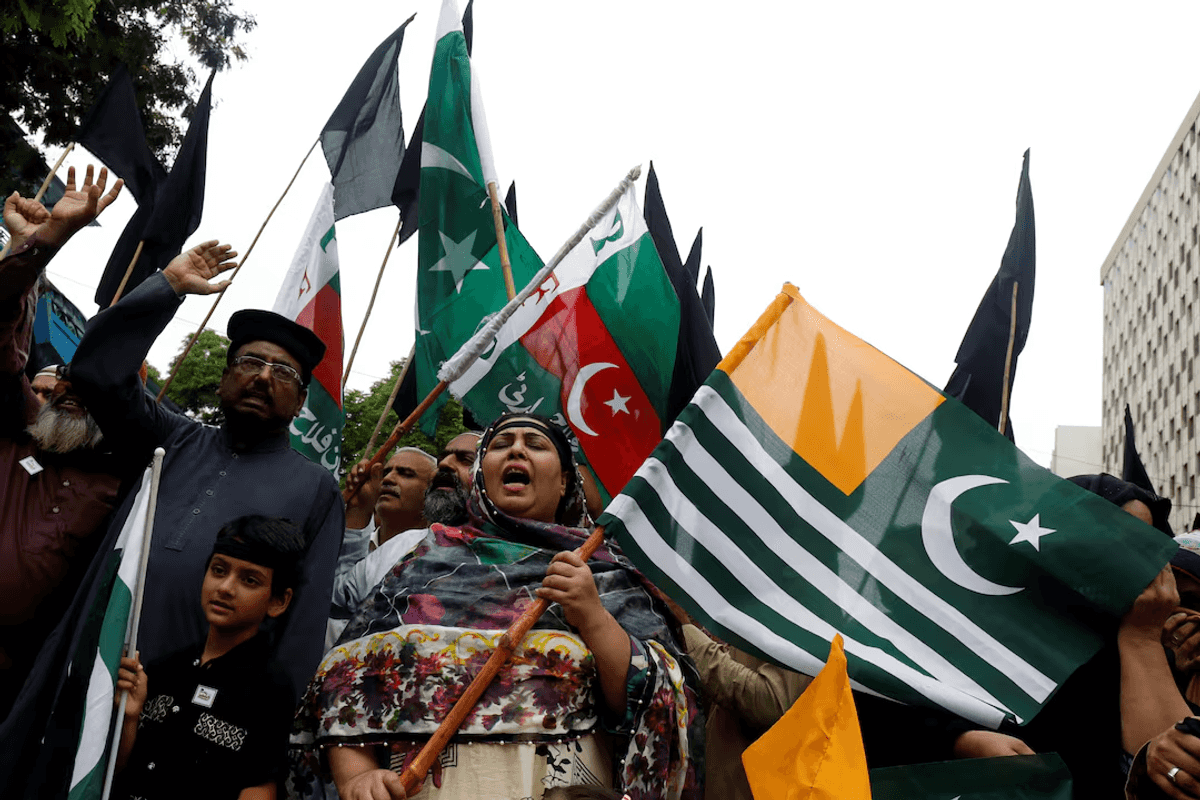
People carry Azad Kashmir flags during a Kashmir Black Day protest in Karachi in August 2019.
Reuters
Pakistan’s political leadership on Tuesday renewed calls for a settlement of the Jammu and Kashmir dispute and urged the international community to address rights concerns in Indian-administered Kashmir.
The calls came as the country marked Kashmir Black Day on October 27, the anniversary of Indian troops arriving in Srinagar in 1947.
What is Kashmir Black Day?
Kashmir Black Day is observed by Pakistan every year on October 27.
It marks the day in 1947 when Indian troops arrived in Srinagar. Pakistan uses the occasion to express support for Kashmiris and to oppose India’s control of the disputed Himalayan region.
What did Pakistan’s leaders say on Kashmir Black Day?
President Asif Ali Zardari and Prime Minister Shehbaz Sharif said in separate statements that a durable peace in South Asia remained contingent on resolving the dispute. Both reiterated Pakistan’s commitment to supporting the Kashmiri people.
Prime Minister Muhammad Shehbaz Sharif's Message on Jammu & Kashmir Black Day, 27 October 2026.Seventy-nine years ago, Indian forces landed in Srinagar, marking the beginning of a tragic chapter in the history of Jammu and Kashmir, one that continues to cast its long shadow over the region to this day. Since then, the people of Jammu and Kashmir have been denied the realization of their inalienable right to self-determination, as affirmed in the relevant United Nations Security Council resolutions.The people of Indian Illegally Occupied Jammu and Kashmir (IIOJK) have endured immense hardship, suffering and repression. Yet their courage, resilience and unwavering resolve to secure their fundamental rights remain undiminished. The sacrifices of successive generations stand as a powerful testament to their enduring commitment to freedom, dignity and justice.India has continued its efforts to suppress legitimate political expression and silence the voices that represent the aspirations of the Kashmiri people. The prolonged incarceration of Kashmiri political leaders, activists and human rights defenders remains deeply concerning. It underscores the need for due process, respect for basic liberties, and greater international attention to the situation in Jammu and Kashmir.Since 5 August 2019, India has taken a series of unilateral measures in IIOJK, accompanied by sweeping restrictions on fundamental freedoms. These measures, affecting the political, legal and demographic character of the territory, have drawn serious international attention. Pakistan has consistently called for these developments to be addressed in accordance with international law and the applicable United Nations Security Council resolutions.Pakistan's position on Jammu and Kashmir remains clear, consistent and principled. Lasting peace and stability in South Asia cannot be achieved without a just and peaceful resolution of the Jammu and Kashmir dispute, in accordance with the relevant United Nations Security Council resolutions and the aspirations of the Kashmiri people.On this solemn occasion, I pay tribute to the countless Kashmiri men, women and children who have offered immense sacrifices in pursuit of their rights. Their memory will always be honoured. The aspirations of the Kashmiri people cannot be extinguished through coercion or repression.On this Jammu & Kashmir Black Day, the Government and people of Pakistan reaffirm their unwavering solidarity with the people of IIOJK. Pakistan will continue to extend its moral, diplomatic and political support to the Kashmiri people, and to advocate for their legitimate rights at every national and international forum.May the people of Jammu and Kashmir realize a future of lasting peace, dignity and security, and the fulfilment of their aspirations, including the right to self-determination.
— Prime Minister's Office (@PakPMO) October 27, 2026
Zardari urged the United Nations, international human rights organizations and the wider global community to take notice of the situation in the territory. Sharif said Islamabad would continue to provide political, diplomatic and moral backing to Kashmiris and raise their demands at domestic and international forums.
MESSAGE FROM PRESIDENT ASIF ALI ZARDARI ON JAMMU AND KASHMIR BLACK DAY — 27 OCTOBER 2026On Jammu and Kashmir Black Day, we solemnly remember 27 October 1947, when Indian forces landed in Srinagar, marking the beginning of a prolonged and tragic chapter in the history of Jammu and Kashmir. This day reaffirms our recognition of the longstanding aspirations of the Kashmiri people and the continued pursuit of the fundamental and inalienable right to self-determination. For the past eight decades, the people of Indian Illegally Occupied Jammu and Kashmir (IIOJK) have endured profound sufferings, marked by violence, repression and serious violations of fundamental rights. Generations of Kashmiris have made immense sacrifices in their pursuit of justice, dignity and freedom. Their resilience and determination in the face of adversity remain a testament to the enduring strength of their cause.Since 27 October 1947, the people of IIOJK have endured decades of conflict, restrictions and denial of their fundamental rights. The continuing restrictions on fundamental freedoms, heightened militarisation, arrests and reports of human rights violations remain a matter of serious concern and underscore the need for sustained international attention. The situation has further deteriorated since August 5, 2019, when India unilaterally attempted to alter the constitutional and legal status of Jammu and Kashmir.Jammu and Kashmir Black Day is, therefore, not merely a day of remembrance. It is also an occasion to reaffirm our commitment to a peaceful and just resolution of the Jammu and Kashmir dispute. Lasting peace, stability and prosperity in South Asia remain closely linked to the resolution of this longstanding dispute, in accordance with the relevant United Nations Security Council resolutions and the aspirations of the Kashmiri people.On this solemn occasion, I call upon the international community, particularly the United Nations and international human rights organisations, to take due cognisance of the human rights situation in IIOJK, support efforts for the protection of the fundamental rights of the Kashmiri people and contribute meaningfully towards a just, peaceful and lasting resolution of the Jammu and Kashmir dispute.Pakistan will continue to extend its unwavering moral, diplomatic and political support to the people of IIOJK. We will continue to raise their voice at every appropriate international forum and to advocate the realisation of their legitimate aspirations.Today, we pay tribute to the countless sacrifices of the Kashmiri people and reaffirm our solidarity with our Kashmiri brothers and sisters. Pakistan stands with them in the pursuit of justice, peace, dignity and the realisation of the legitimate right to self-determination.The day is not far off when the people of Jammu and Kashmir will be able to determine their own future in accordance with their aspirations and the Jammu and Kashmir dispute will move towards a just and peaceful resolution.——
— The President of Pakistan (@PresOfPakistan) October 26, 2026
Separately, Human Rights Minister Azam Nazeer Tarar called for international action over what he described as persistent abuses in the region. He said the dispute must be settled in line with the wishes of the Kashmiri people and their right to determine their future.
Tarar urged governments and international organizations to use relevant forums to press for accountability over alleged rights violations. He said lasting regional stability would remain elusive while abuses and exploitation continued.
On Kashmir Black Day, Pakistan reaffirms its support for Kashmiris’ right to self-determination. A just settlement must reflect their aspirations and relevant UN Security Council resolutions.Senator Azam Nazeer Tarar#KashmirBlackDay https://t.co/uM0QgFlL1t
— Ministry of Law and Justice (Official) (@ministry_law) October 27, 2026
The minister also criticized India’s changes to the territory’s legal status, saying Pakistan had consistently rejected the measures. He reiterated Islamabad’s position that the dispute should be resolved in accordance with relevant United Nations resolutions and the freely expressed will of Kashmiris.
What did the National Assembly resolution say about Kashmir?
The National Assembly adopted a unanimous resolution reaffirming Pakistan’s moral, political and diplomatic support for Kashmiris and their right to self-determination. The resolution condemned extrajudicial killings, arbitrary arrests, enforced disappearances, custodial torture and curbs on fundamental freedoms in Indian-administered Kashmir.
It also voiced concern over the continued detention of Kashmiri political leaders and activists. Lawmakers rejected India’s decision on August 5, 2019, to revoke the region’s special constitutional status, saying the move sought to change the disputed territory’s status and demographic character.
What was Article 370 of the Indian Constitution?
India’s ruling Bharatiya Janata Party government removed the special status granted under Article 370 of the Indian Constitution in 2019. The provision had given Jammu and Kashmir a degree of autonomy and restricted the Indian parliament’s legislative powers over the region in certain areas.





Comments
See what people are discussing