

Lucky Cement earnings rise as margins improve, exports weaken
Border disruptions hit volumes in second quarter

Business Desk
The Business Desk tracks economic trends, market movements, and business developments, offering analysis of both local and global financial news.
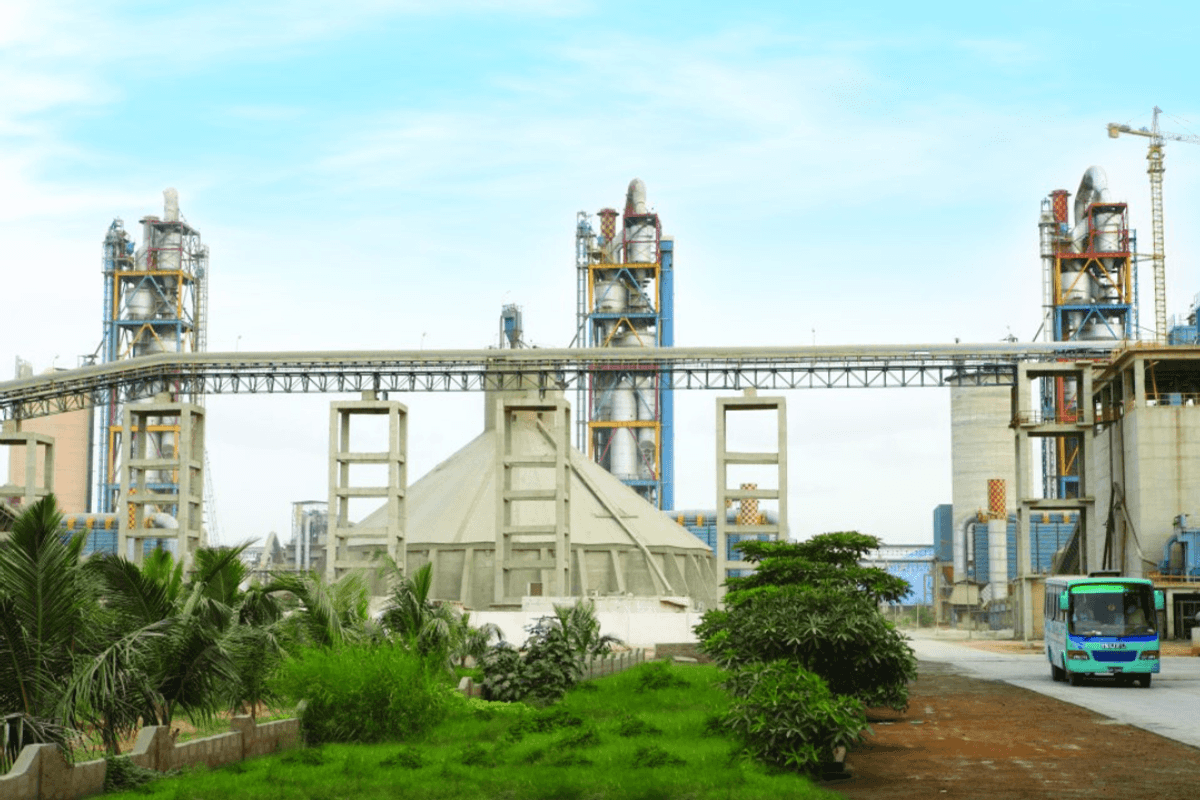
Lucky Cement Ltd. posted higher earnings in the second quarter of fiscal year 2026, supported by efficiency gains and a lower tax rate, even as export volumes declined amid border disruptions and rising competition, analysts said following a corporate briefing on Monday.
The cement maker reported consolidated net profit after tax of PKR 24 billion for 2QFY26, translating into earnings per share of PKR 15.44, up 6% year-on-year and 3% quarter-on-quarter.
“Stronger margins, driven by the implementation of UTIS technology and a lower-than-expected tax expense, were the key earnings drivers this quarter,” analysts at Arif Habib Ltd. said in a post-briefing note.
For the first half of FY26, consolidated earnings rose to PKR 30.45 per share, compared with PKR 26.87 in the same period last year. Unconsolidated profit in the second quarter increased 19% year-on-year to PKR 8.62 billion, with EPS of PKR 5.89.
Domestic cement volumes climbed 12.5% year-on-year to 3.36 million metric tons in the first half, reflecting a recovery in construction activity. However, management cautioned that demand growth is likely to moderate in the second half.
“Full-year domestic cement demand is expected to grow around 8-9%, as Ramadan, Eid holidays and a partial monsoon slowdown could keep second-half volumes subdued,” management said during the analyst briefing.
Exports
Export volumes fell 16.5% year-on-year to 1.51 million tons in 1HFY26, largely due to the closure of the Afghan border and increased competition from local peers. Analysts at Intermarket Securities noted that border disruptions alone reduced volumes by about 0.1 million tons, while heightened competition led to some loss of market share.
Africa remains Lucky Cement’s primary export destination, accounting for more than 70% of export sales. Average domestic cement retention prices are holding at around PKR 15,400 per ton, while export prices stand at $33-34 per ton for clinker and $45-46 per ton for cement, according to management.
Rising input costs remain a key challenge. The company has shifted entirely to imported coal following the unavailability of Afghan coal and shortages of local supply, with average coal inventory costs at around PKR 34,000 per ton.
Freight costs for transporting coal from Karachi to the North plant range between PKR 8,000 and PKR 10,000 per ton, though the Karachi-based South plant incurs no inland freight expense.
Despite industry capacity availability, pricing pressure is expected to remain contained.
“Management does not anticipate aggressive price competition, and cement prices are expected to remain broadly stable with a gradual upside over time due to inflationary pressures,” Arif Habib Ltd. said.
Investment plans
Lucky Cement continues to invest in efficiency and capacity expansion. Management plans to invest PKR 1.2 billion to install a 15-megawatt solar power plant at its South facility by March 2026, lifting total solar capacity to 89.3 MW. Renewable energy accounts for about 55% of the company’s power mix, limiting the impact of recent power tariff reductions on margins.
The company has also invested PKR 3 billion in UTIS technology across two production lines, with a payback period of five to seven years through lower fuel consumption. Management said the technology is expected to be rolled out to the remaining lines.
Internationally, Lucky Cement plans to expand its footprint in Africa, with a 1.6 million-ton fully integrated cement plant planned in Congo. Once completed, total capacity in Congo will rise to 2.91 million tons, as the company seeks to capitalize on improving economic activity.
Other business segments delivered mixed results. The chemicals division remains under pressure in soda ash and polyester due to import competition and unfavorable tariffs, though animal health and pharmaceutical segments are performing well. The auto business continues to see intense competition, but industry sales are up 46% year-on-year, management said.



Comments
See what people are discussing