

Mari Energies targets 117,000 boepd average production in FY27
Record reserves and resources and new gas developments support growth plans, while security constraints and RLNG availability remain key risks

Haris Zamir
Business Editor
Experience of almost 33 years where started the journey of financial journalism from Business Recorder in 1992. From 2006 onwards attached with Television Media worked at Sun Tv, Dawn Tv, Geo Tv and Dunya Tv. During the period also worked as a stringer for Bloomberg for seven years and Dow Jones for five years. Also wrote articles for several highly acclaimed periodicals like the Newsline, Pakistan Gulf Economist and Money Matters (The News publications)
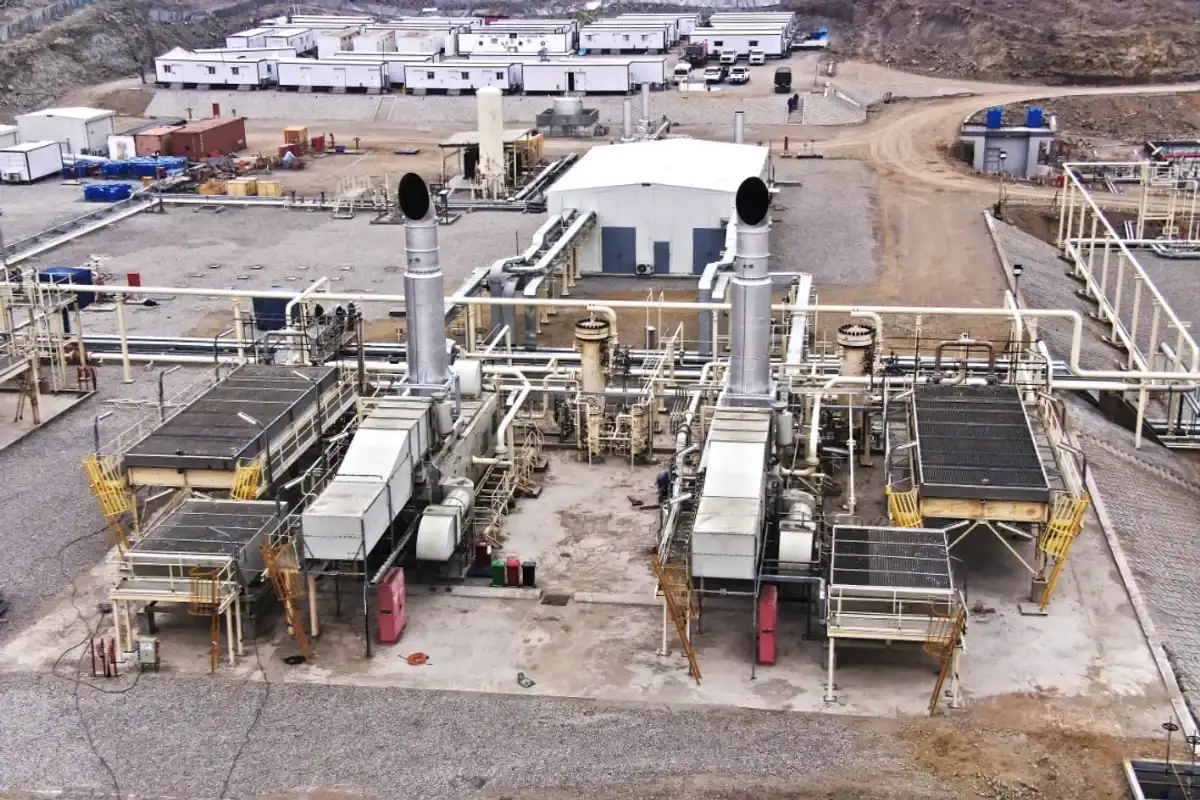
Mari Energies Limited is targeting average hydrocarbon production of about 117,000 barrels of oil equivalent per day in fiscal 2027 as it seeks to make greater use of expanded production capacity, according to management at the company’s FY26 corporate briefing.
The target would represent an increase of about 3.5% from FY26, when Mari sold a record 41.28 million barrels of oil equivalent, equivalent to average production of about 113,090 boepd. Average production stood at 107,200 boepd in FY25.
Gas production increased to an average 836 million cubic feet per day from 800 mmcfd a year earlier and accounted for about 99% of Mari’s production on an oil-equivalent basis.
Mari’s average installed production capacity increased to 129,000 boepd from 121,000 boepd, while peak daily capacity rose to 136,000 boepd from 127,000 boepd. Management attributed much of the gap between capacity and actual production to forced gas curtailments and security-related constraints.
The company’s net reserves and resources rose 8% to a record 1,029 MMBOE at the end of FY26. Its 2P reserve replacement ratio stood at 375%, while its 2P reserves-to-production ratio was 21 years.
What is Mari targeting for FY27 production?
Mari is targeting average production of about 117,000 boepd in FY27, with the amount of available domestic gas demand remaining an important factor in determining how closely the company can operate to its installed capacity.
Management said demand remains sensitive to the availability of regasified liquefied natural gas. Periods of reduced RLNG supply can increase demand for indigenous gas, allowing domestic producers such as Mari to supply additional volumes.
Muhammad Abdur Rafay, research analyst at Topline Securities, said Mari’s FY26 production remained below available capacity, while LNG supply disruptions had helped increase demand for domestic gas.
Mari is also developing its Waziristan assets, where production reached about 105 mmcfd after the SNGPL pipeline became operational, according to management.
The company is working with law-enforcement agencies to protect the pipeline following previous attacks. Management said security spending adds roughly USD 0.20-0.30 per barrel to operating costs.
Topline said security conditions have constrained development in North Waziristan. Management has reduced the estimated production potential of its North Waziristan assets, including Shewa and Spinwam, to about 200 mmcfd from an earlier estimate of 300 mmcfd, according to the brokerage.
How will Ghazij/Shawal support future production?
Mari expects production from the Ghazij/Shawal development to reach about 120 mmcfd by the end of FY27 and 222 mmcfd in FY28, providing additional volumes as production from some of its existing reservoirs declines.
The government has approved the allocation of 222 mmcfd of raw gas from the Ghazij/Shawal discoveries to Fauji Fertilizer Company’s Port Qasim plant, Fatima Fertilizer’s Sheikhupura plant and Agritech’s Daud Khel plant.
Bringing the full allocation online will require processing and other infrastructure to be installed by the fertilizer companies.
Mari plans to use pad drilling at Ghazij, reducing the number of surface sites required and cutting rig mobilization, which management expects to lower development costs.
Topline estimates Mari could spend around USD 1 billion over five to six years developing Ghazij/Shawal toward its potential. Fertilizer companies are expected to finance about USD 250 million of the required investment, with Mari funding the remainder.
Topline said the development could eventually produce as much as 400 mmcfd, although reaching that level would take several years.
InterMarket Securities has estimated that an additional 100 mmcfd of gas volumes could add about PKR 13.5 per share to Mari’s earnings, while an increase of 180 mmcfd could add around PKR 24.1 per share, assuming the additional gas is sold at Petroleum Policy 2012 rates.
How is Mari expanding its resource base?
Mari drilled eight exploration and appraisal wells during FY26 and made two discoveries: Shams-1 in the Mari Development and Production Lease, where it holds a 100% working interest, and Tibri-1 in the Kalchas South block, where it holds a 44% interest.
Shams-1 moved from discovery in March to first production in June 2026. The well was drilled to 3,075 meters and tested at 47.98 mmcfd of gas and 64 barrels per day of condensate.
Management said gas from Shams-1 has a higher heating value than any gas previously produced from the Mari D&PL.
Mari is drilling Ghauri East-1 and Rahi X-1, while seismic acquisition is underway at Karak, Kohat, Harnai and Ziarat.
Management said at the briefing that offshore seismic acquisition is now expected to begin in November 2026, while the company’s presentation had listed October. The first exploration well in Indus Block-C is targeted for early FY28.
Management estimated offshore seismic acquisition costs at around USD 15,000-20,000 per line kilometer, while shallow drilling could cost USD 10 million-20 million per well compared with more than USD 40 million for frontier onshore wells.
What other projects are supporting Mari’s production outlook?
The federal government has approved a 36-year renewal of the Mari Development and Production Lease, extending its expiry to 2065 from 2029.
Mari is also developing additional projects at existing fields. SML-3 and PKL-9 are being drilled at the Mari Field, while facilities at Sujawal and Shah Bandar are under development with potential production of about 20 mmcfd and 30 mmcfd, respectively.
In Waziristan, Spinwam-1 was commissioned and integrated into the Shewa processing facilities in April 2026. The well has production potential of about 40 mmcfd of gas and 250 barrels per day of condensate, while Shewa-1 and Shewa-2 are already on production.
Mari’s five-year rolling average finding cost fell to about USD 1.3 per barrel of oil equivalent in FY26 from USD 12.8/boe in FY20. Management aims to reduce the figure further to around USD 1/boe over the next one to two years.
The company said its FY26 net profit included the impact of a super-tax reversal following a Federal Constitutional Court judgment. Management said no further reversal relating to the matter is currently expected, while the future super-tax rate remains uncertain.
The company’s reserves and resources have meanwhile risen from 642 MMBOE at the end of FY22 to 1,029 MMBOE at the end of FY26.
How is Mari expanding beyond oil and gas?
Mari is also expanding into technology and emissions-related businesses as part of its diversification strategy.
Sky47, which is 60% owned by Mari Technologies, delivered the 5-megawatt Karakoram-01 data center at Capital Smart City in Islamabad within 12 months. Development of a second facility in Karachi is progressing and remains on track.
GHG Emissions Mitigation Limited, a 51:49 joint venture between Mari and Ghani, has placed an order for an LNG processing plant. Financing has been signed with Habib Bank Limited, while commissioning is targeted for July 2027.
The expansion of Mari’s reserves and resources, new gas developments and diversification projects provides additional potential growth drivers, while gas demand, security conditions and infrastructure availability remain important constraints on how quickly the company can increase production.


Comments
See what people are discussing