

Pakistan says mastermind of Islamabad mosque attack arrested
Minister says key facilitator arrested in raid, funding believed to come from India
Aamir Abbasi
Editor, Islamabad
Aamir; a journalist with 15 years of experience, working in Newspaper, TV and Digital Media. Worked in Field, covered Big Legal Constitutional and Political Events in Pakistan since 2009 with Pakistan’s Top Media Organizations. Graduate of Quaid I Azam University Islamabad.

News Desk
The News Desk provides timely and factual coverage of national and international events, with an emphasis on accuracy and clarity.
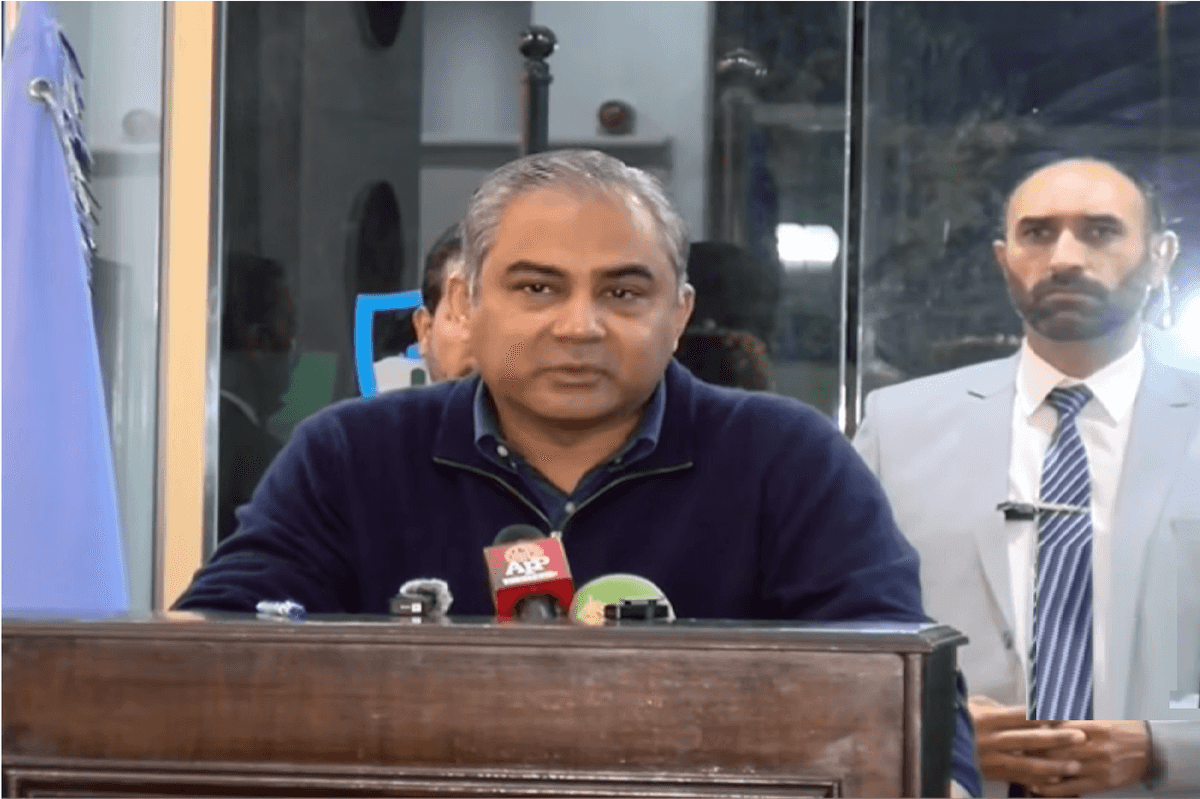
Pakistan Interior Minister Mohsin Naqvi speaks to reporters in Islamabad on Saturday.
Screengrab
Four facilitators of a deadly Friday suicide bombing at a mosque in Islamabad, including the alleged mastermind, have been arrested following overnight counterterrorism operations, Pakistani interior minister said on Saturday.
Mohsin Naqvi told reporters in the capital that operations had continued throughout the night to track those responsible for the attack, which killed at least 31 people and injured 169 others, making it the deadliest assault in the city since the 2008 Marriott Hotel bombing.
The explosion occurred at the Imam Bargah Qasr-e-Khadijatul Kubra in the Tarlai area, where worshippers had gathered for Friday prayers. Officials said the attacker was stopped at the mosque entrance before detonating explosives.
The Islamic State group (IS) claimed responsibility for the attack, according to the SITE Intelligence Group, which monitors militant communications. The group said one of its members targeted the congregation with an explosive vest.
Prime Minister Shehbaz Sharif condemned the bombing and pledged that those responsible would face justice. Deputy Prime Minister Ishaq Dar described the assault as a “heinous crime against humanity” and reaffirmed Pakistan’s unity against terrorism.
Naqvi highlighted the role of the Counter-Terrorism Department (CTD) and Khyber Pakhtunkhwa police in the arrests, saying, “All those involved, including the mastermind, were apprehended.” He described the operation as a “test case” for the agencies.
The minister said the raids in Nowshera and Peshawar had resulted in the capture of four facilitators and the mastermind, an Afghan national. He added that an assistant sub-inspector of the Khyber Pakhtunkhwa police was killed during the operation, and several officers were injured.
“The main mastermind is linked to Daesh and is now in our custody,” Naqvi said. He added that the planning and training for the attack had been conducted by Daesh in Afghanistan. “We have intelligence detailing how the attacker travelled there and received training,” he said, praising the law enforcement agencies for the operation.
Minister warns of wider militant network
Naqvi warned that Pakistan faces a broad network of militant groups, including the Tehreek-i-Taliban Pakistan (TTP), Afghan Taliban and Daesh, all of which he said were operating from Afghan territory. “At present, 21 terrorist organizations are active; the names of any terrorist body can be linked to operations in Afghanistan,” he said.
The minister urged the public to assist authorities. “We are in a state of war. Community intelligence is crucial. Reporting unknown individuals in your area helps prevent attacks,” he said. He added that for every blast that occurs, dozens more are foiled. “We are sharing this with the media to demonstrate the efforts taken to prevent incidents,” he said.
Naqvi further said that the groups receive funding from abroad, claiming, “They are increasing their budget. Payments that were once $500 are now $1,500. We believe these funds come from India, which provides targets for attacks.”
He said Pakistan’s position would eventually gain recognition on the international stage.
The United Nations Secretary-General, António Guterres, also condemned the attack, calling assaults on civilians and places of worship “unacceptable.”
The bombing comes amid a rise in militant violence in Pakistan, particularly in provinces bordering Afghanistan. Pakistan, a Sunni-majority country, has a Shiite minority of around 10 to 15 percent, which has historically been targeted in sectarian attacks.
Islamabad has repeatedly accused militants in Afghanistan of using cross-border sanctuaries to carry out attacks, a charge denied by Afghanistan’s Taliban-led government. Tensions between the two countries have escalated recently, with frequent border clashes reported.
The last major attack in Islamabad occurred in November 2025, when a suicide bombing outside a court killed 12 people. Across Pakistan, recent assaults in Balochistan have claimed dozens of lives among civilians and security forces, prompting large-scale counterterrorism operations.


Comments
See what people are discussing