

Nepal flood survivors cling to zipline to cross treacherous river
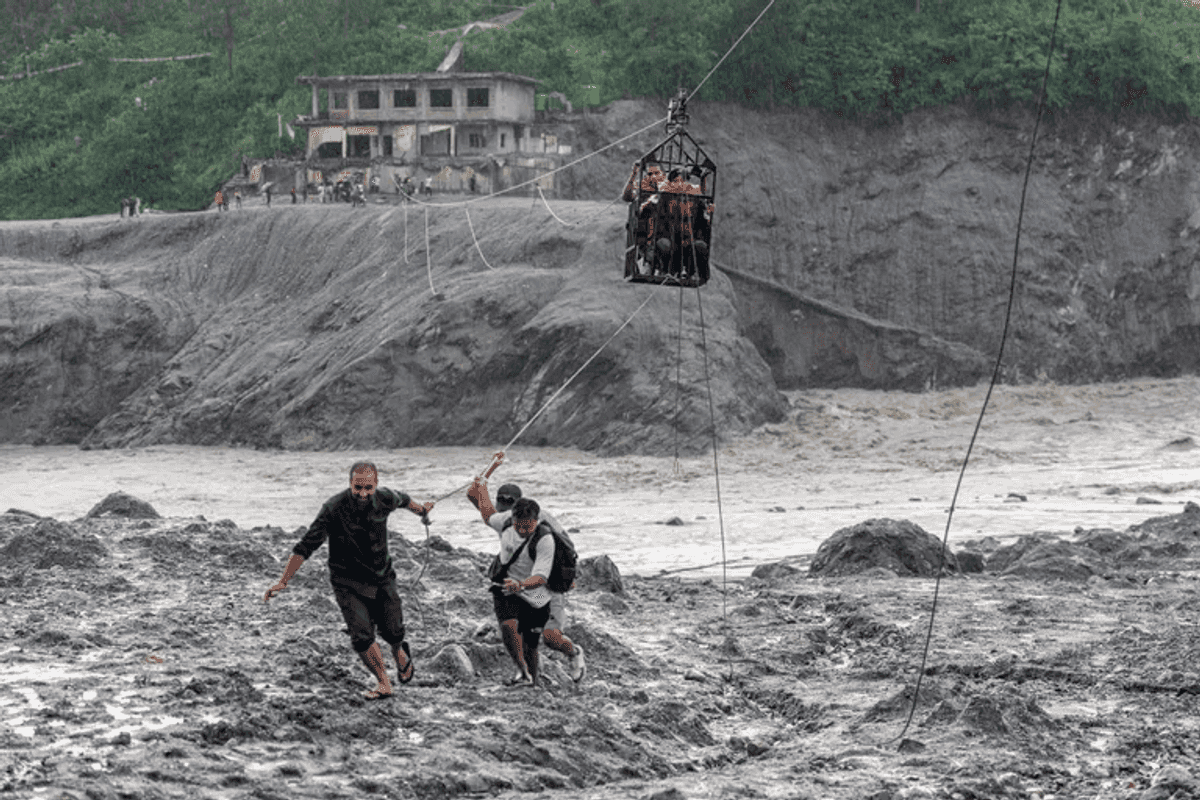
Nepal flood survivors are using a makeshift zipline to cross the swollen Trishuli River, after devastating floods swept away roads and bridges

News Desk
The News Desk provides timely and factual coverage of national and international events, with an emphasis on accuracy and clarity.
The catastrophic flooding has killed more than 1,200 people and left nearly 4,800 missing in Nepal and China's Tibet region.
Photo via X
High above the swollen Trishuli river, flood survivors gripped a makeshift cable as Nepali soldiers and residents pulled them to safety on Wednesday.
It came a week after one of the country's worst disasters struck on August 26.
Why are Nepal flood survivors using a zipline?
The Nepal Army installed a roughly 250-metre (820-foot) temporary cable crossing in Bidur, offering a precarious lifeline across the Trishuli River.
Floods had swept away the roads and bridges that once connected communities on either bank. Desperate people gathered on the riverbank, waiting their turn to be hauled across.
Who is crossing the Trishuli River zipline?
Those needing urgent treatment, medicines, food and other essentials were ferried over the waters.
"My home was taken by the floods, and my family is in a shelter," said Sujan, 44, a chef from Amsterdam who returned to Nepal after the disaster struck, giving only one name. Unable to secure a helicopter, he came to the river crossing hoping to reach his wife, two children and elderly mother.
How bad is the death toll from Nepal's floods?
The catastrophic flooding has killed more than 1,200 people and left nearly 4,800 missing in Nepal and China's Tibet region. Rescuers are still searching for survivors and victims.
Helicopters are flying food, temporary shelters and medicine to those left with almost nothing.
What are survivors saying about the crossing?
Devi Maji, 31, arrived at the zipline with her three-year-old son after becoming stranded in Trishuli. "I want to get back to my village to see my husband and my other two children," said the daily wage worker. For Bhishma Bhatta, 40, there was no time to wait.
His mother Tulkumaari developed severe breathing difficulties overnight, and the family ran out of oxygen. "We somehow managed to get her on the zipline and take her to hospital," he said. The army said the crossing was the first of five temporary cable links planned along the flood-hit Trishuli River.



Comments
See what people are discussing