

Pakistan welcomes arbitration court ruling against India’s water treaty move
Islamabad welcomes the ruling as a positive step, noting it upheld the country's stance and rejected India’s unilateral suspension as unlawful

News Desk
The News Desk provides timely and factual coverage of national and international events, with an emphasis on accuracy and clarity.
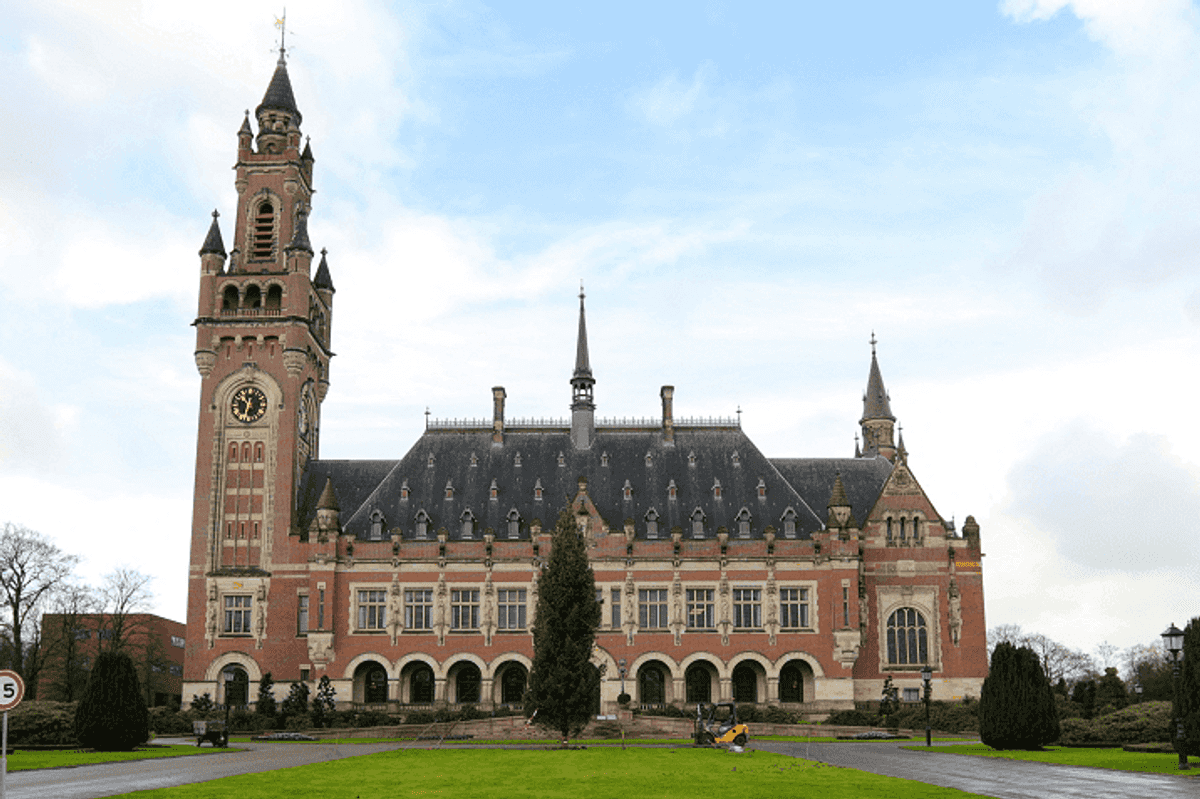
The International Court of Justice building in The Hague, Netherlands.
Reuters
Pakistan has welcomed a supplemental award issued by the Court of Arbitration under the Permanent Court of Arbitration (PCA) concerning the Indus Waters Treaty, calling it a significant endorsement of its position and a rebuke of India’s unilateral actions.
In a statement on Friday, the Government of Pakistan said it welcomed the Court of Arbitration’s supplemental decision, released earlier in the day and published on the PCA’s official website.
The court, Pakistan noted, has reaffirmed its jurisdiction and made clear that India's unilateral move to suspend the treaty does not affect the competence of either the court or the neutral expert appointed in separate proceedings initiated by India.
The government described the ruling as a positive development, particularly as the court upheld Pakistan’s long-standing position and declared India’s attempt to unilaterally suspend the treaty as legally unfounded.
Key findings from the court’s supplemental award:
- The Court of Arbitration will not halt its proceedings on the basis of any one-sided decision to suspend the treaty.
- A detailed review of the treaty confirms that there is no clause permitting either party to suspend it unilaterally.
- The treaty remains in effect unless both India and Pakistan agree mutually to suspend it.
- Neither party, including India, can use unilateral measures to block arbitration proceedings.
- Attempts to undermine the role of the arbitrator contradict the treaty’s mandatory dispute resolution provisions.
- Consequently, the court ruled that India has no right to suspend arbitration proceedings under the treaty on its own.
- The Court of Arbitration affirmed that it will continue to fulfill its responsibility to impartially and effectively resolve disputes under the treaty framework.
Pakistan also reaffirmed its confidence in the arbitration process and said it looks forward to the court’s forthcoming award on the first phase of the merits, following the hearing held in July 2024 at the Peace Palace in The Hague.
Emphasizing the need to de-escalate and return to diplomacy, Pakistan once again extended an olive branch to India. The government underscored that the immediate priority is for both countries to re-engage in meaningful dialogue -- particularly on the implementation of the Indus Waters Treaty.
Prime Minister Shehbaz Sharif, in remarks made on June 24, 2025, reiterated Pakistan’s readiness to engage with India on all outstanding issues, including Jammu and Kashmir, water, trade, and terrorism, the statement added. “Pakistan is ready to engage in a meaningful dialogue with India on all outstanding issues,” he said, in widely publicized comments aimed at reviving regional engagement.
Background of the dispute
In 2016, Pakistan approached the Court of Arbitration over India’s alleged illegal construction of water storage infrastructure on the western rivers. Simultaneously, India requested the appointment of a neutral expert to adjudicate certain technical aspects of the same issue. Both tracks of proceedings have since continued under the treaty’s framework.
India later attempted to suspend its obligations under the treaty and asked the arbitration court to halt proceedings -- a request that has now been rejected through the court’s latest supplemental award.





Comments
See what people are discussing