

Army chief says Afghanistan must choose between Islamabad and TTP
Syed Asim Munir says 70% of militants involved in formations of the Tehreek-e-Taliban Pakistan operating from Afghanistan were Afghan nationals

News Desk
The News Desk provides timely and factual coverage of national and international events, with an emphasis on accuracy and clarity.
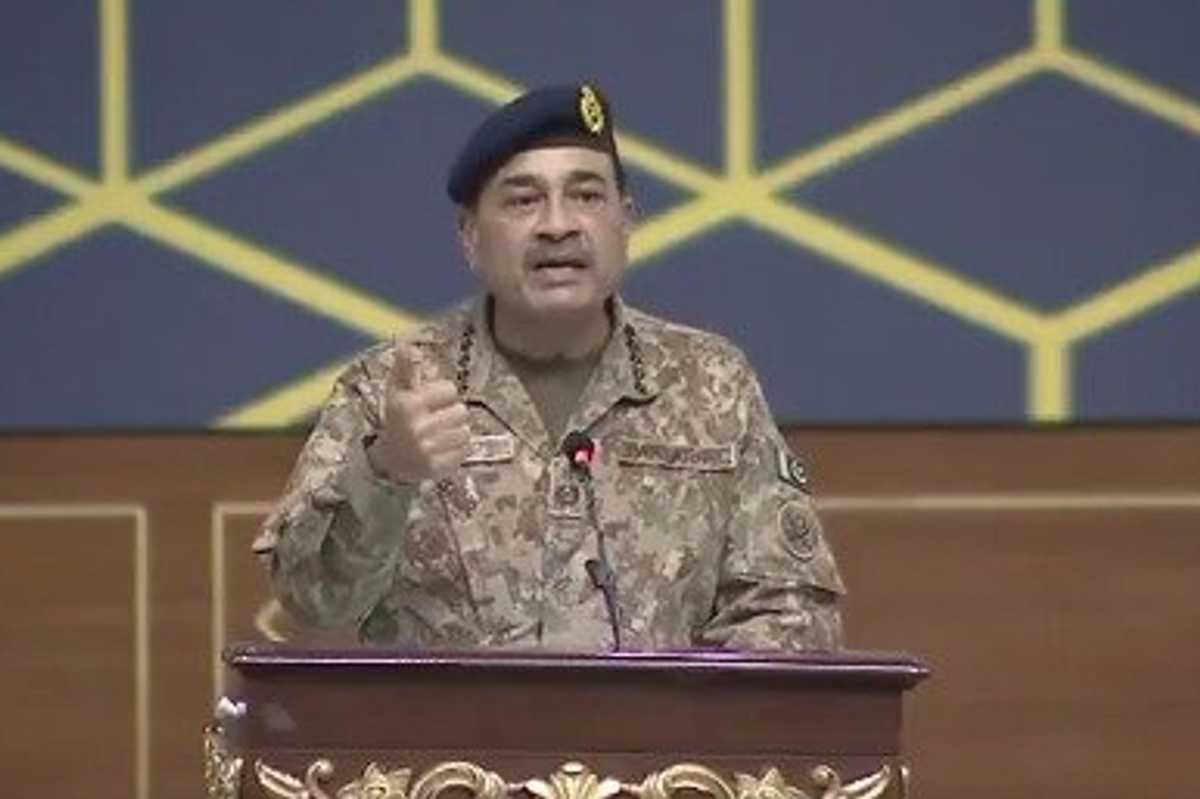
Pakistan’s Chief of Army Staff and Chief of Defense Forces, Field Marshal Syed Asim Munir addressing the National Ulema Conference held in Islamabad on Dec. 10.
Screengrab
Pakistan’s Chief of Army Staff and Chief of Defense Forces, Field Marshal Syed Asim Munir, said Afghanistan must choose between Pakistan and Tehreek-e-Taliban Pakistan (TTP), warning against militancy emanating from Afghan soil.
He made the remarks while addressing the National Ulema Conference held in Islamabad on Dec. 10, according to statements and clips from the event broadcast on television on Sunday.
*چیف آف آرمی سٹاف و چیف آف ڈیفنس فورسز فیلڈمارشل سید عاصم منیرکا قومی علماء مشائخ کانفرنس سے اہم خطاب*
کانفرنس کا انعقاد 10 دسمبر 2025 کو اسلام آباد میں ہوا، جس میں ملک بھر سے تمام مکاتب فکر کے علماء اور مشائخ نے بھرپور شرکت کی
فیلڈ مارشل نے ملک کو درپیش چیلنجز، دہشتگردی، قومی… pic.twitter.com/pORQSDxoBh
— PTV News (@PTVNewsOfficial) December 21, 2025
The conference was attended by religious scholars and clerics from across Pakistan, representing all schools of thought.
Munir spoke at length on challenges facing the country, including terrorism, national security, Pakistan’s emerging global role, wartime preparedness and the importance of knowledge.
He cited verses from the Holy Qur'an and poetry to present what he described as his clear viewpoint on Pakistan.
“Allah Almighty has granted Pakistan, among Islamic countries, the honor of being the guardians of the holy sanctuaries,” Munir said, referring to Makkah and Madina.
He said there was a deep relationship and resemblance between the Islamic state established in Saudi Arabia 1,400 years ago and the state of Pakistan. Both states, he said, were founded on the principles of Kalima Tayyaba during the blessed month of Ramadan.
Munir said the resemblance existed because the Almighty destined one to be the custodian of the holy sanctuaries and the other their protector.
Speaking about the four-day May conflict with India, he said he witnessed and experienced "divine help" during Operation Bunyan al-Marsous, Pakistan's retaliatory operation against the neighboring country.
'No one other than the state can order jihad'
Munir said no individual or group other than the state has the authority to issue calls or religious edicts for jihad in any Islamic state.
He accused militants, backed by the Afghan Taliban, of targeting innocent Pakistani citizens and children through terrorism.
He said 70% of those involved in formations of what he called Fitna al-Khawarij (TTP) operating from Afghanistan were Afghan nationals.
“Afghanistan will have to choose between Fitna al-Khawarij and Pakistan,” Munir said.
He also warned that nations that abandoned the intellectual and scholarly legacy of their forefathers and the power of the pen fell into decline.
Islamabad has blamed a surge in violence in Pakistan on militants who use Afghan soil to plan attacks on Pakistani security forces across the border.
Kabul has denied the charges, saying Pakistan’s security is an internal matter.
Once longtime allies, Pakistan and Afghanistan have engaged in intermittent border skirmishes since October.
Three rounds of peace talks hosted by Qatar, Turkey and Saudi Arabia have failed to produce a lasting agreement.
The mountainous border regions are home to Islamist militants from the Tehreek-e-Taliban Pakistan, or TTP, also known as the Pakistani Taliban.
The group has waged a war against the Pakistani state for nearly two decades.
The TTP adheres to a strict interpretation of Islamic law similar to their counterparts in Kabul.




Comments
See what people are discussing