

Pakistan's auto market nears electric shift as fuel costs drive consumer demand
Pakistan's auto market is shifting toward electric vehicles as high fuel costs and new policy incentives reshape consumer demand, a report says

Business Desk
The Business Desk tracks economic trends, market movements, and business developments, offering analysis of both local and global financial news.
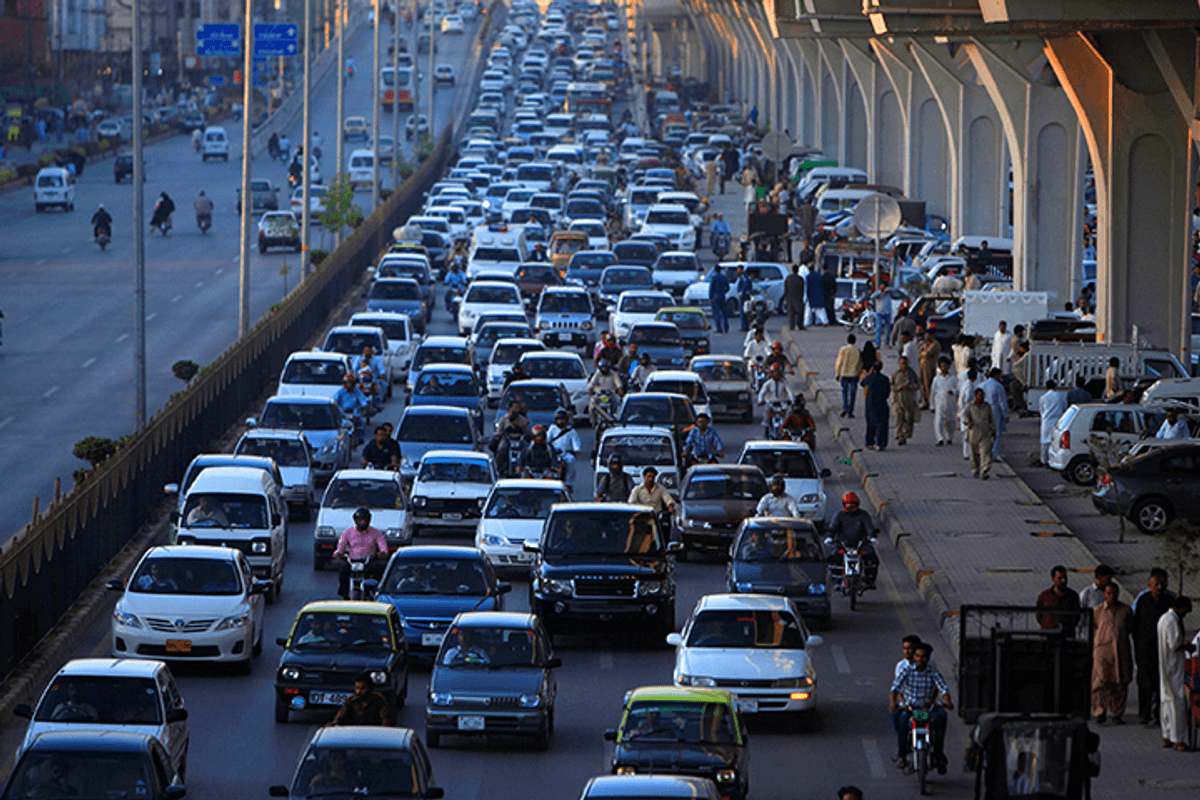
Chinese automakers are rapidly emerging as the dominant force in Pakistan's electrified vehicle market.
X
Pakistan's automobile sector is approaching a critical shift from conventional petrol vehicles to electrified mobility, according to a report by AL Habib Capital Markets.
The brokerage said persistently high fuel costs, supportive government policy and a growing range of electric and plug-in hybrid vehicles are driving the change.
Why is Pakistan's auto market shifting toward electric vehicles?
Pakistan's auto market is undergoing a structural shift as consumers increasingly seek alternatives to petrol-powered vehicles amid elevated fuel prices and the country's heavy dependence on imported oil.
Petrol prices have climbed above PKR250 per litre, while Pakistan spends an estimated $10 billion to $16 billion annually on oil imports. Plug-in hybrids now offer running costs nearly 70% lower than conventional SUVs, making electrified vehicles increasingly attractive.
How much cheaper are plug-in hybrids to run?
Plug-in hybrid electric vehicles can operate at around PKR10 per kilometer when powered by electricity, offering cost savings of nearly 70% compared with conventional sport utility vehicles. Those economics have translated into a sharp rise in demand. PHEV sales surged 340% between 2025 and early 2026, while sales of traditional petrol-powered vehicles have started to weaken.
AL Habib Capital Markets said the transition to electrified mobility is no longer just a consumer preference, calling it an emerging economic necessity for Pakistani households.
Why are plug-in hybrids more popular than full EVs in Pakistan?
The brokerage described plug-in hybrids as the most viable near-term solution for Pakistan's transition, addressing infrastructure and range concerns that continue to limit fully electric vehicle adoption. Unlike battery-only EVs, PHEVs combine electric driving for daily commutes with conventional engines for longer distances, easing concerns over charging availability and range limits.
The report highlighted strong early market acceptance, citing more than 2,000 bookings for Chery's Tiggo PHEV within weeks of launch. It also noted that models such as the MG HS Super Hybrid offer up to 135 kilometers of electric-only range, letting many users complete daily travel without consuming fuel. Current offerings include the Jaecoo J7 PHEV priced at PKR10.499 million and the Chery Tiggo 7 PHEV at PKR9.5 million.
Will electric and hybrid vehicles become more affordable?
EVs and PHEVs remain more expensive than conventional vehicles, but AL Habib Capital Markets expects the pricing gap to shrink over the next two to three years. EV prices currently range from PKR3.6 million for entry-level models to PKR15.49 million for premium vehicles, while PHEVs are priced between PKR9.5 million and PKR19.95 million. Conventional entry-level vehicles remain available below PKR3 million, while ICE-powered SUVs typically range between PKR6 million and PKR8 million.
The brokerage expects prices for EVs and PHEVs to decline by 15% to 25% as local assembly by manufacturers such as BYD and MG Motor expands and global battery prices continue to fall. Battery prices have already dropped by more than 80% from their 2022 peak, the report noted.
What is Pakistan's government doing to support EV adoption?
Pakistan's National Electric Vehicle Policy 2025-2030 will play a central role in accelerating adoption, according to the report. The policy aims for new energy vehicles to account for 30% of all new vehicle sales by 2030 and includes PKR100.36 billion in subsidies and incentives. AL Habib Capital Markets said the plan could save between 1.8 billion and 2.07 billion litres of fuel annually, cut carbon emissions by around 4.5 million tons and create 15,000 green jobs.
The government also plans to install 3,000 charging stations nationwide by 2030, including 40 fast-charging stations on motorways within the next six months. Proposed tax incentives, including lower sales tax rates for EVs relative to conventional vehicles, are also expected to support long-term adoption.
Which automakers are leading Pakistan's electric vehicle shift?
Chinese automakers are rapidly emerging as the dominant force in Pakistan's electrified vehicle market, introducing a broad lineup across multiple price points. The brokerage said companies including BYD, MG Motor, Omoda, Jaecoo and Chery are driving the transition through aggressive pricing and diversified product portfolios. BYD has introduced models such as the BYD Atto 2, BYD Atto 3, BYD Sealion 7 and BYD Shark 6, while MG continues to expand its hybrid lineup.
The report also noted that Omoda and Jaecoo recorded 113% overall growth and 200% year-on-year growth in their new energy vehicle segment.
Are traditional automakers at risk of losing market share?
AL Habib Capital Markets warned that automakers without competitive electrified offerings risk losing relevance as consumer preferences evolve. Of the 23 vehicle launches planned between June and December 2026, 20, or 87%, feature electrified powertrains, underlining the industry's accelerating shift away from conventional engines.
The brokerage said Toyota and Honda, which currently lack PHEV offerings in Pakistan, are reportedly assessing new models to compete with Chinese entrants.
The report said the evidence is increasingly clear that manufacturers without competitive electrified offerings face declining relevance.
Is Pakistan close to an electric mobility tipping point?
AL Habib Capital Markets said Pakistan is nearing a decisive turning point in vehicle adoption, supported by falling battery costs, increasing localization, policy incentives and rising consumer acceptance.
The brokerage noted that international markets have shown EV adoption tends to accelerate rapidly once price parity with conventional vehicles is reached. With battery costs declining, local production expanding and policy support strengthening, the report said Pakistan is approaching an electric mobility inflection point.




Comments
See what people are discussing