

Pakistan’s budget dilemma: IMF targets vs growth pressures
Kamran Khan says Pakistan’s economic debate centers on the tension between IMF conditions and pressure for a more growth-friendly fiscal policy

News Desk
The News Desk provides timely and factual coverage of national and international events, with an emphasis on accuracy and clarity.
Pakistan’s economy stands at a delicate crossroads, where the demands of stabilization under an IMF program are increasingly colliding with calls for stronger, investment-led growth.
While macroeconomic stability has been achieved to some extent, the business community argues that stability alone cannot unlock jobs, exports, or long-term expansion unless it is paired with structural reforms and meaningful relief for the private sector.
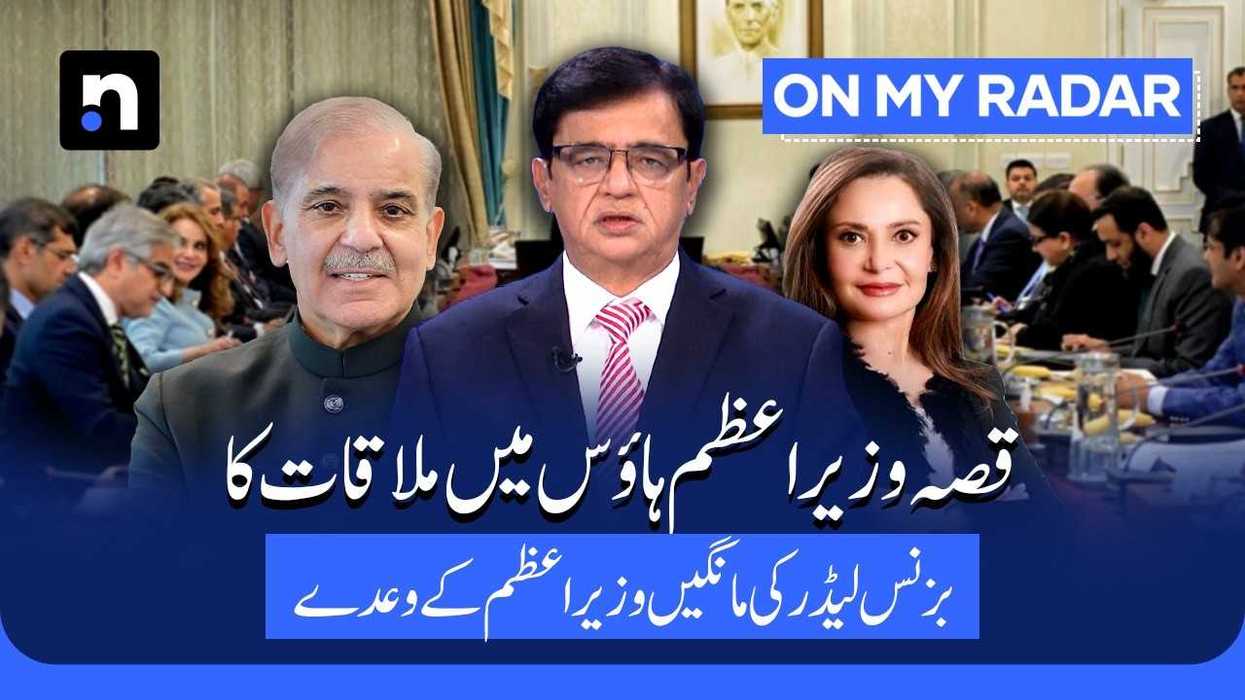
In the latest episode of On My Radar, Kamran Khan said Pakistan’s economic debate is now centered on a fundamental tension: the government’s obligation to meet strict IMF conditions versus growing pressure from industry to create a more growth-friendly fiscal environment. He noted that this balancing act has become one of the defining challenges ahead of the upcoming federal budget.
Against this backdrop, Prime Minister Shehbaz Sharif recently held a detailed and at times intense exchange with leading business figures. The discussion underscored sharply contrasting priorities: the private sector is seeking a growth-oriented budget focused on tax reduction and easing the cost of doing business, while the government remains bound by IMF revenue targets and fiscal constraints.
According to discussions from the meeting, businesses argue that lower taxation, reduced operating costs, and a more enabling regulatory environment are essential to spur investment, accelerate industrial expansion, and boost exports. Without these measures, they warn, economic growth will remain limited despite macroeconomic stability.
Reports also suggest that delays in finalizing the upcoming budget are linked to ongoing discussions with the IMF, with some key fiscal measures still awaiting consensus. The government is seeking space for targeted tax relief, increased Public Sector Development Program (PSDP) allocations, and additional room for defense spending. In contrast, the IMF is reportedly pressing for strict fiscal discipline and a primary surplus of around 2 percent of GDP in the next fiscal year, alongside the achievement of a PKR 15.26 trillion revenue target.
During the meeting, the government reportedly signaled several possible measures aimed at easing business concerns. These include clearing pending tax refunds by June 15, maintaining the Export Finance Scheme rate at 4.5 percent until June 2027, and advancing reforms in tax system digitization, tax tribunals, commercial courts, and logistics and transport infrastructure.
If implemented effectively, these steps could help improve investor confidence, strengthen exports, and ease operational bottlenecks for businesses. However, the central question remains unresolved: can the government meet ambitious IMF-mandated revenue targets while also delivering meaningful relief to the private sector?
Analysts warn that if the tax burden continues to fall disproportionately on existing compliant taxpayers, economic growth may remain constrained. Conversely, if reforms succeed in broadening the tax base, reducing the cost of doing business, and improving competitiveness, Pakistan could potentially enter a more sustainable growth cycle.




Comments
See what people are discussing