

Political violence shadows Bangladesh's new government
Political violence in Bangladesh continues six months after new PM Tarique Rahman vowed to end state-backed killings and impunity

News Desk
The News Desk provides timely and factual coverage of national and international events, with an emphasis on accuracy and clarity.
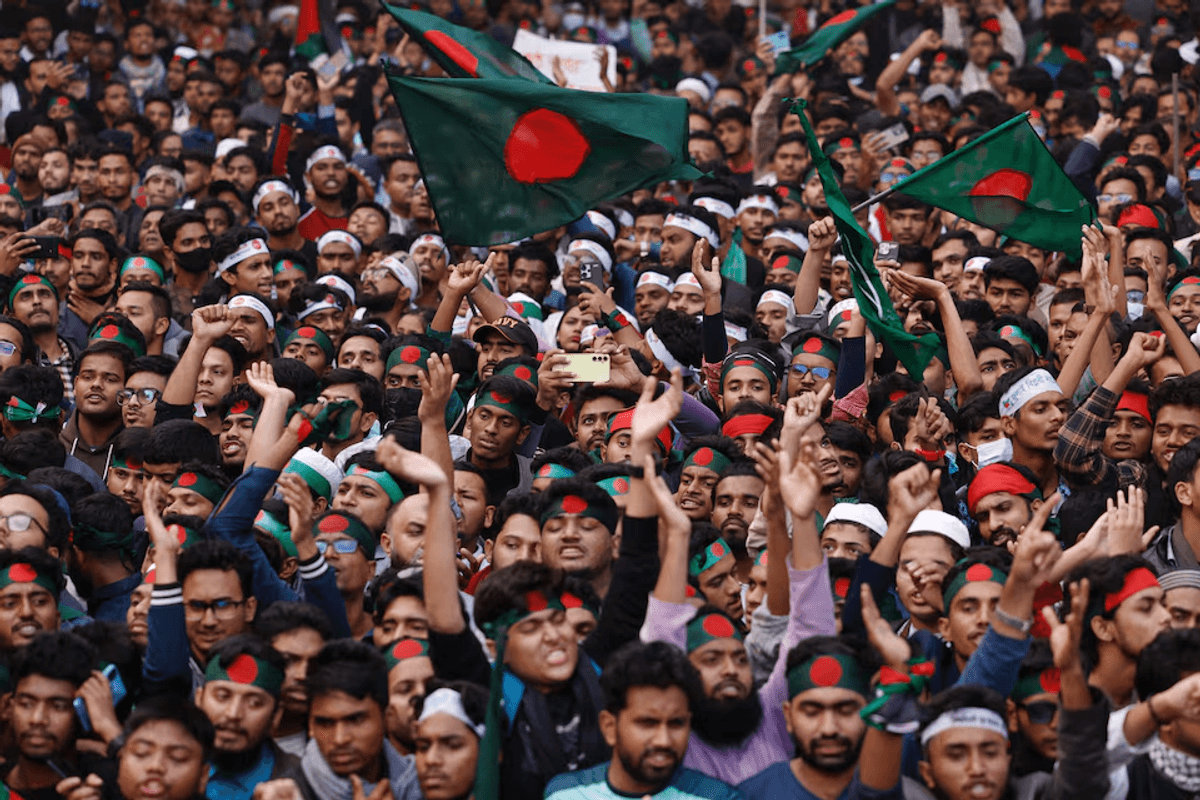
Bangladesh's new government was elected in February on a promise to end political violence, but six months into Prime Minister Tarique Rahman's term, the killings have not stopped.
Rahman, who leads the Bangladesh Nationalist Party (BNP), pledged to end the state-backed abuses that marked Sheikh Hasina's rule before her ouster in the 2024 revolution. Rights groups say that promise remains unmet.
What is causing political violence in Bangladesh?
Rights groups blame political rivalries, weak law enforcement and a culture of impunity for the continued bloodshed. Ain o Salish Kendra (ASK), a prominent rights organization, recorded at least 66 politically related killings, 61 deaths in police custody and 11 extrajudicial killings over six months. The government disputes this, arguing the numbers reflect old cases only now being reported.
Is there a new government in Bangladesh?
Yes. Rahman's BNP-led administration is Bangladesh's first elected government since the 2024 uprising that removed Hasina. ASK official Abu Ahmed Faijul Kabir told AFP that deaths in jail and police custody appear to be rising. Home Minister Salahuddin Ahmed rejected that account, telling parliament in late June that the country is in a historically improved position on most indicators.
What happened to the teenager killed in June?
In June, a 17-year-old joined a banned rally held by Hasina's Awami League and then vanished. Three days later, police recovered his decomposing body from the Turag River in Dhaka, alongside two other bodies. His uncle, Jewel Babu, told AFP the teenager worked night shifts at a kitchen market while attending school and had no known involvement in politics.
The family said friends described police and a mob breaking up the rally, forcing attendees to flee across the river by boat. "We have heard that, after being chased by local BNP leaders, they crossed the river only to encounter police," said Supreme Court lawyer Arif Sarkar Pavel, who represents seven men arrested in the same incident under anti-terrorism laws. He added that some were beaten with bamboo sticks after jumping into the water, and said police are trying to bury the truth.
How have police responded to the allegations?
Police have denied any brutality and said there was no killing incident. AFP could not independently verify how the teenager died. Police spokesman AHM Shahadat Hossain said all reported incidents of violence are under investigation.
Hossain said some victims were killed over personal feuds or land disputes but were labeled political because of their party ties. He also said authorities expect tensions to rise ahead of local elections later this year, noting that past records show more violence during local polls.
How has the BNP responded to the violence?
BNP spokesperson Shairul Kabir Khan said Rahman has already expelled party members found guilty of political violence. Khan said Rahman instructed the Home Ministry and Law Ministry to remain neutral and ensure justice regardless of political affiliation. He added that violence is unfortunately part of politics across the subcontinent and that Bangladesh is not immune to it.
The unrest has also included power struggles within parties. On June 9, local BNP official Billal Hossain Talukdar was stabbed to death during a meeting. On June 12, local BNP leader and businessman Masudul Haque was shot dead in Chattogram by gunmen who arrived on a motor-rickshaw, and on July 6, attackers threw petrol bombs at a National Citizen Party rally in Savar, wounding four activists.
What is the political situation in Bangladesh now?
The political violence is unfolding against a backdrop of broader violent crime nationwide. Police data show an average of at least 10 murders a day, including 1,238 murders between March and June. Muhammad Sazzad Hossain Siddiqui, a professor of peace and conflict studies at the University of Dhaka, said the government must ensure the rule of law regardless of who the perpetrators are.
Siddiqui said periods of political transition typically draw violence from two groups: those seeking to reclaim illicit income streams from rivals and those competing for local dominance. He said unchecked violence and impunity make the cycle of bloodshed self-perpetuating. "That is exactly what we are witnessing now," he told AFP.




Comments
See what people are discussing