

IMF calls climate resilience ‘existential priority’ for Pakistan
Fund says energy subsidy reforms are key for fiscal sustainability and cutting consumption

Business Desk
The Business Desk tracks economic trends, market movements, and business developments, offering analysis of both local and global financial news.
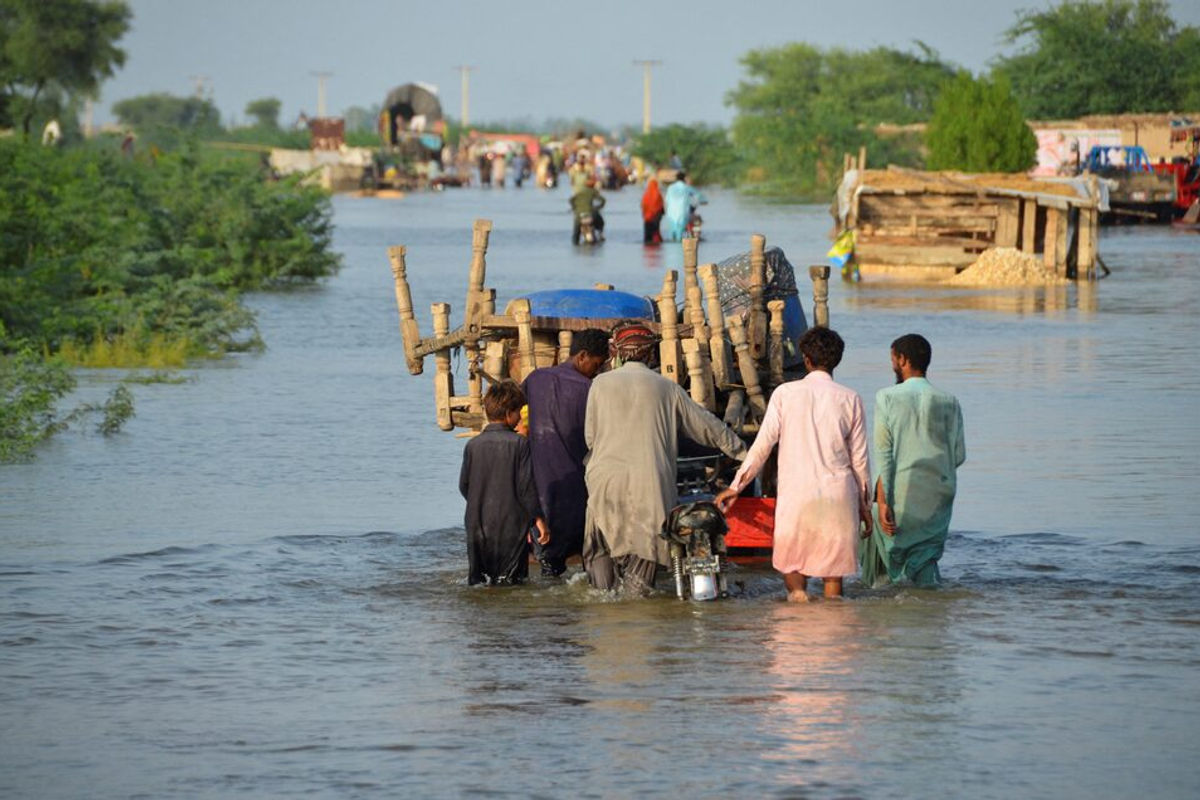
Building resilience to climate change has become an “existential priority” for Pakistan, one of the world’s most climate-vulnerable countries, the International Monetary Fund (IMF) said in its latest country report, citing back-to-back destructive floods and the urgent need to overhaul climate, water, and energy governance.
The IMF noted that catastrophic flooding in 2022 and severe floods again this year have underscored Pakistan’s extreme exposure to climate shocks.
“Building climate change resilience remains an existential priority for Pakistan,” the report said, adding that reforms backed by the Fund’s Resilience and Sustainability Facility (RSF) are supporting efforts to protect lives, infrastructure and the economy.
According to the IMF, RSF-supported policies focus on five key pillars:
- Integrating climate considerations into budget and investment planning
- Improving water system resilience and disaster-response financing
- Strengthening the climate-related information architecture to attract green investment
- Promoting green mobility and transport decarbonization
- Aligning energy-sector reforms with Pakistan’s climate commitments
The Fund said these reforms are aligned with Pakistan’s National Adaptation Plan and its Nationally Determined Contributions (NDCs) under global climate accords.
Both reform measures required under the first RSF review have been completed, the IMF confirmed.
The FY26 Finance Act introduced a new carbon levy, including a PKR 2.5-per-liter increase in FY26 and another scheduled PKR 2.5-per-liter rise in FY27, while also adding fuel oil to the Petroleum Development Levy.
The law additionally created a PKR 9 billion electric-vehicle subsidy, focused on two- and three-wheelers, alongside a 1–3% tax on internal combustion engine vehicles.
The IMF said these incentives will be reviewed each budget cycle “to ensure EV uptake incentives remain in line with Pakistan’s medium-term EV adoption plan.”
The report noted that Pakistan is preparing reforms to encourage EV-charging infrastructure (RM11), a key step in supporting green mobility. These efforts, it said, will “promote transport decarbonization in Pakistan.”
A major portion of the RSF agenda centers on improving the resilience of Pakistan’s fragile water systems.
The government is rolling out the digital e-Abiana irrigation service-charge system in Khyber Pakhtunkhwa, while Sindh and Balochistan are on track to adopt the system by August 2027. Punjab and Sindh also plan to introduce irrigation-tariff adjustment mechanisms to ensure cost recovery for operations and maintenance by February 2027.
Pakistan is also developing a framework to coordinate federal and provincial disaster-risk financing, as part of the National Disaster Risk Financing Strategy. A first draft will be shared with the IMF by March 2026, with full completion targeted for August.
Subsidy reforms
The IMF highlighted progress on Pakistan’s planned overhaul of energy subsidies, calling it a crucial step toward fiscal sustainability and climate alignment.
The government will replace broad tariff differential subsidies with a targeted subsidy system delivered through the Benazir Income Support Program.
Linking all electricity consumers to the National Socio-Economic Registry (NSER) will be completed by the end of December, followed by analysis to define eligibility criteria by July 2026.
A national communications campaign on the subsidy reform will begin after December.
The IMF report said Pakistan is also advancing measures to reduce energy consumption and strengthen climate-related transparency.
Minimum energy performance standards for major appliances will be implemented by end-June 2027, with procurement rules updated by the Public Procurement Regulatory Authority.
A monitoring system will be in place by December.
Climate-risk disclosure guidelines for financial institutions and listed companies will be issued by December.
The IMF emphasized that Pakistan’s ability to withstand climate shocks is inseparable from its broader economic stability. The country report warns that climate risks—if unaddressed—will undermine growth, strain public finances and increase humanitarian emergencies.
The Fund said the RSF is designed to help Pakistan shift from reactive crisis management toward long-term resilience. “These reforms will help build a greener, more competitive and climate-resilient Pakistan,” it said.





Comments
See what people are discussing