

Pakistan court defers reserved verdict in Aleema Khan's Nov 26 protest case for fourth time
Rawalpindi ATC postpones its verdict for fourth time in November 26 protest case against Aleema Khan and 10 others, fixing November 26 as new date

News Desk
The News Desk provides timely and factual coverage of national and international events, with an emphasis on accuracy and clarity.
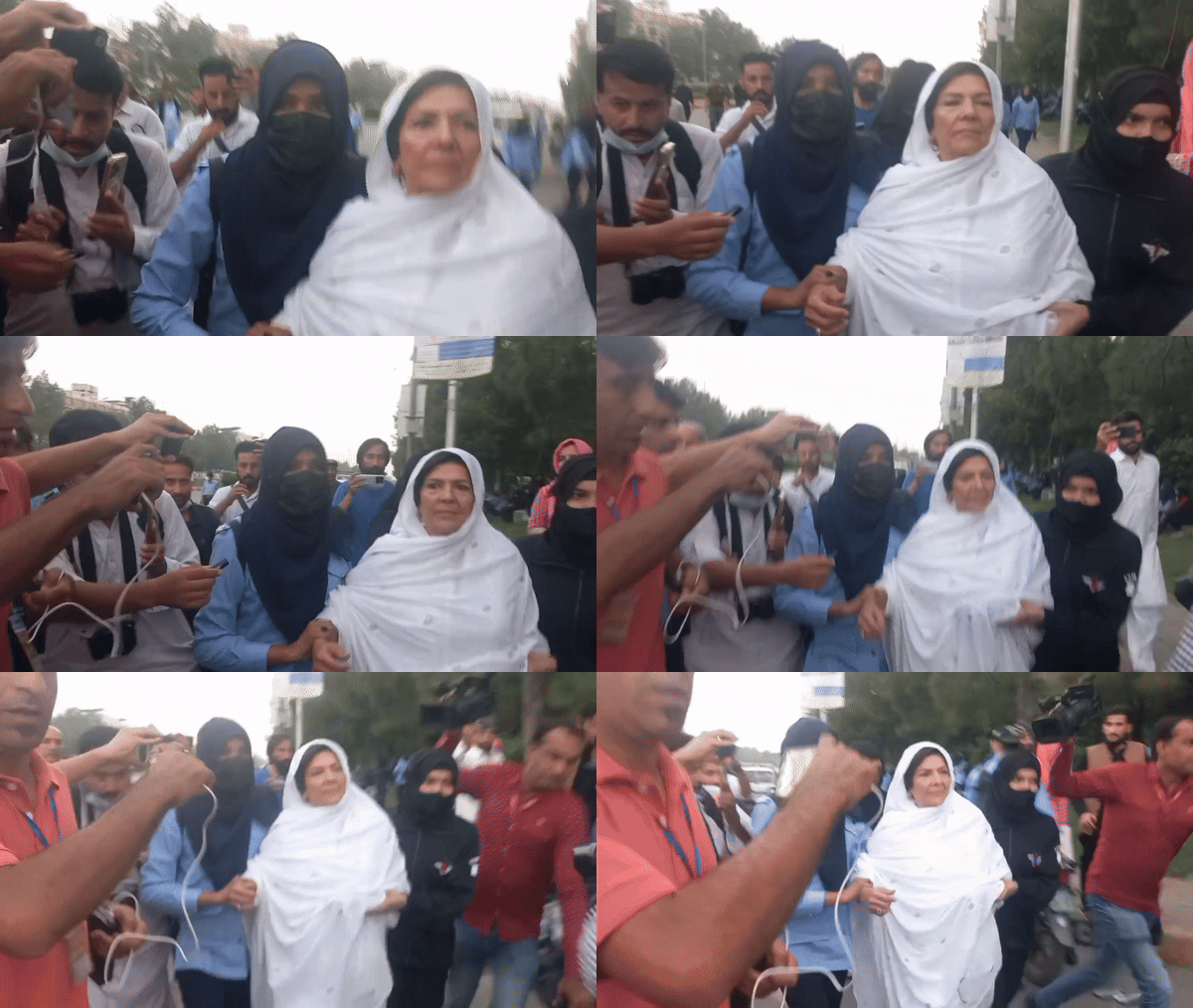
FILE: Islamabad police arrested former prime minister Imran Khan’s sister, Aleema Khan, at D-Chowk on October 4, 2024.
A special Anti-Terrorism Court (ATC) in Rawalpindi deferred for the fourth time the announcement of its reserved verdict in the November 26 protest case involving Aleema Khan, sister of incarcerated Pakistan Tehreek-e-Insaf (PTI) founder Imran Khan, and ten co-accused, postponing the decision to November 26.
Why was reserved verdict deferred and what arguments did defense raise?
The reserved judgment, which has remained pending since the conclusion of final arguments on September 22, was deferred without substantive proceedings during the scheduled hearing before the special court. Defense counsel Faisal Malik appeared before the bench on Khan's behalf.
The defense team previously urged the court to grant a further hearing before handing down a final ruling, maintaining that the prosecution had failed to establish incriminating evidence linking Khan to violent acts or property damage. Counsel argued that Khan had consistently respected the judicial process and requested the court to decide the matter on merit.
What are origins of the FIRs and charges against accused?
The legal proceedings stem from the PTI's march toward Islamabad in late November 2024. According to The Nation, Khan was booked alongside ten others in a First Information Report (FIR) registered at Rawalpindi's Sadiqabad police station. Police also registered two parallel cases at the Taxila police station and another at the Naseerabad police station over alleged vandalism, road blockades, and clashes with law enforcement personnel during the demonstration.
Prosecutors charged Khan and key party organizers with instigating and facilitating the protest convoy, which culminated in street confrontations with police and paramilitary forces along major arteries leading into Islamabad's Red Zone.
How has trial progressed through procedural delays?
The case has been marked by protracted procedural friction over the past year. The anti-terrorism court had previously issued arrest warrants and ordered administrative measures over non-appearance before trial proceedings, witness testimonies, and cross-examinations were concluded.
With the formal evidentiary phase wrapped up, the special court is now slated to announce whether the accused will be convicted or exonerated when the matter resumes on November 26.





Comments
See what people are discussing