

Pakistan hints at bringing personal crypto assets under state’s watch
High-level meeting discusses amnesty scheme to encourage users to move their assets to regulated domestic platforms

Business Desk
The Business Desk tracks economic trends, market movements, and business developments, offering analysis of both local and global financial news.
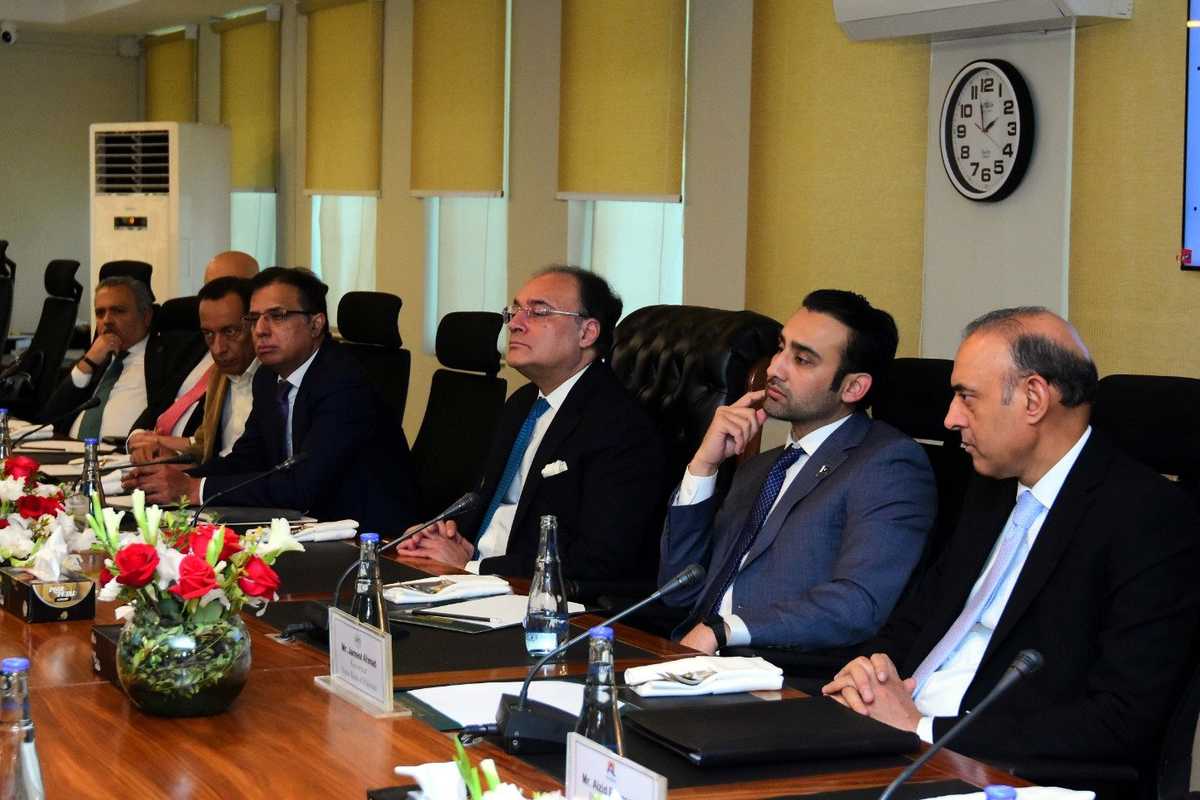
Pakistan Finance Minister Muhammad Aurangzeb, Pakistan Virtual Assets Regulatory Authority Chairman Bilal bin Saqib, and State Bank of Pakistan Governor Jameel Ahmed attend a consultation meeting on the regulatory framework for cryptocurrencies on Friday
Ministry of Finance
Pakistan’s federal minister for finance has signaled a decisive shift in national economic policy, announcing plans to bring personal virtual assets held by citizens into a formal regulatory framework.
Speaking at a high-level consultative meeting at the Finance Division on Friday, Muhammad Aurangzeb described the rapid adoption of digital assets as an "irreversible global trend".
A statement issued by the ministry said Aurangzeb underscored the economic necessity of bringing citizen-held virtual assets within formal monitoring structures.
According to the minister, this integration is designed to strengthen financial visibility, support creditworthiness assessments, and enhance national asset reporting, though he clarified that this move would not confer legal tender status on digital assets.
The meeting was co-chaired by Bilal bin Saqib, the chairman of the Pakistan Virtual Assets Regulatory Authority and attended by the State Bank of Pakistan governor, presidents of leading commercial banks, and a delegation from Binance led by Global CEO Richard Teng.
The meeting discussed principles for a practical taxation framework, including shifting primary oversight to licensed exchanges and designing a gradual capital gains structure to promote market stability.
They also discussed a "time-bound amnesty" to encourage users to move their assets from unregulated offshore platforms onto compliant, regulated domestic platforms.
The participants noted that blockchain-based systems could significantly lower costs associated with the country’s $38 billion annual remittance flows.
A day ago, Saqib, in a separate interview, highlighted the utility of stablecoins for sending remittances, noting that emerging economies are ideal use cases for saving transaction fees on cross-border payments.
Sovereign debt and industry growth
Beyond individual assets, the meeting examined the potential for sovereign debt tokenization to improve liquidity and widen investor access, positioning Pakistan as a regional leader in compliant blockchain financial instruments.
Saqib, who has previously noted that Pakistan is the third-biggest market for crypto adoption globally even without a framework, emphasized that the goal is to turn "confusion into clarity".
He stated that digital assets should be viewed as critical financial infrastructure capable of supporting financial inclusion for the unbanked.
Aurangzeb said a regulated environment is essential for market stability and aligning national systems with international standards, while safeguarding national economic interests.
The government aims to create a "one window operation" to streamline the incubation and acceleration of the crypto sector in Pakistan, he added.





Comments
See what people are discussing