

Pakistan shifts to daily fuel pricing as OGRA gets authority to revise rates
Federal cabinet approves market-linked mechanism based on seven-day rolling average of global oil prices, eliminating need for government approval on working days

Haris Zamir
Business Editor
Experience of almost 33 years where started the journey of financial journalism from Business Recorder in 1992. From 2006 onwards attached with Television Media worked at Sun Tv, Dawn Tv, Geo Tv and Dunya Tv. During the period also worked as a stringer for Bloomberg for seven years and Dow Jones for five years. Also wrote articles for several highly acclaimed periodicals like the Newsline, Pakistan Gulf Economist and Money Matters (The News publications)
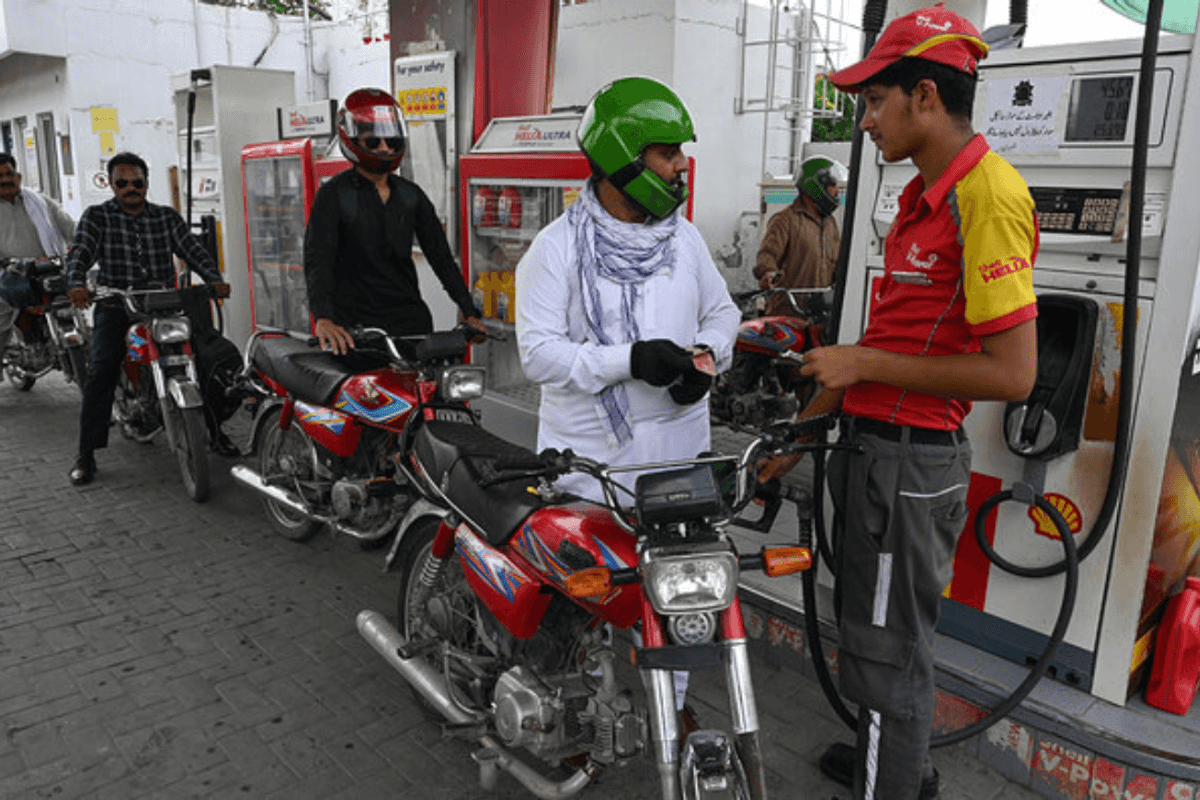
OGRA to revise fuel prices daily under Pakistan's new pricing policy
Pakistan's federal government has introduced a daily pricing mechanism for petroleum products, authorizing the Oil and Gas Regulatory Authority (OGRA) to revise petrol and high-speed diesel (HSD) prices every working day without prior government approval under a market-linked framework based on a seven-working-day rolling average of international oil prices.
The revised pricing framework, approved by the federal cabinet on July 17 and communicated to OGRA by the Ministry of Energy's Petroleum Division, aims to reduce the impact of volatile global oil markets on domestic consumers while improving transparency in fuel pricing.
Under the new policy, OGRA will calculate and publish ex-depot prices for petroleum products on its website every working day without requiring approval from the federal government or the prime minister. Prices will remain unchanged on Saturdays and Sundays.
The free-on-board (FOB) price for Motor Spirit (MS-92 petrol) and HSD will be determined using a rolling average of the previous seven working days of Platts Arab Gulf assessments. Beginning July 1, 2026, OGRA will also publish the daily Platts benchmark prices for MS-92 and HSD on its website to improve transparency and provide greater market visibility.
For petrol, the pricing formula will incorporate actual import premiums, incidentals and customs duty based on Pakistan State Oil's (PSO) imported cargoes during the preceding seven working days.
If no petrol imports are made during that period, the calendar year-to-date average premium, along with applicable incidentals and customs duty, will be used. If imports are supplied under a long-term agreement with a foreign supplier, such as OQ Trading Oman, the contracted premium will apply when no imports have been made during the previous seven working days.
Similarly, HSD prices will be based on the actual import premiums of PSO cargoes. If no imports occur during the seven-working-day period, the Kuwait Petroleum Corporation (KPC) term-contract premium will be used, while incidentals and customs duty will be calculated using the calendar year-to-date average.
The notification states that the petroleum levy may not exceed the upper limit approved by the federal cabinet. Any revision during fiscal year 2027 will require prior approval from the Ministry of Finance, and both OGRA and the Petroleum Division must consult the ministry before making any changes.
Other pricing components, including exchange rate adjustments, the inland freight equalization margin (IFEM), refinery regulatory duty, research octane number (RON) adjustments and HSD sulphur penalties, will continue under the existing framework.
The government also decided that imports of HSD during fiscal year 2027 will remain restricted to PSO. Petrol imports, however, will be allowed for oil marketing companies (OMCs) based on their market share through the Product Review Meeting (PRM), subject to a minimum shipment size of 10,000 metric tons.
The notification warns that OMCs failing to meet import commitments, delaying agreed delivery schedules or defaulting on refinery uplift obligations will be barred from receiving additional import allocations for nine months.
In addition, prices of superior kerosene oil (SKO) and light diesel oil (LDO) will also be revised daily using the same seven-working-day rolling average of Platts Arab Gulf assessments, while all other pricing parameters will remain unchanged.
The Ministry of Energy directed OGRA to implement the revised pricing mechanism immediately and issue detailed operating procedures for its implementation.




Comments
See what people are discussing