

Pakistan election body finalizes party positions in KP ahead of CM vote
Move comes as jailed ex-PM Imran Khan’s party prepares to elect province’s new chief minister amid internal rifts

Kamran Ali
Correspondent Nukta
Kamran Ali, a seasoned journalist from Khyber Pakhtunkhwa, Pakistan, has a decade of experience covering terrorism, human rights, politics, economy, climate change, culture, and sports. With an MS in Media Studies, he has worked across print, radio, TV, and digital media, producing investigative reports and co-hosting shows that highlight critical issues.
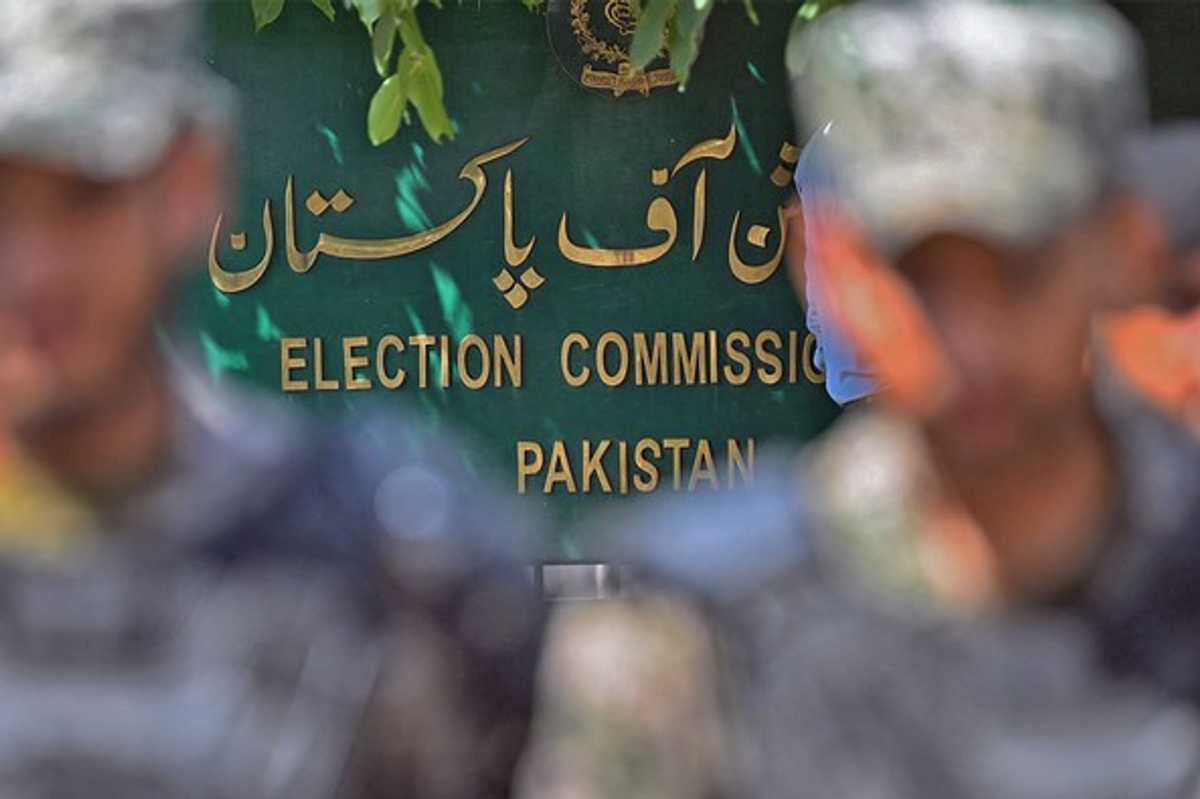
Pakistan’s top election body formally announced on Thursday the allocation of party positions in the national and provincial assemblies, recognizing members of the Pakistan Tehreek-e-Insaf (PTI) and Sunni Ittehad Council (SIC).
The move follows a landmark ruling by the Supreme Court’s Constitutional Bench on Aug. 25 and comes at a politically sensitive moment. Former Prime Minister Imran Khan, who remains jailed, has nominated provincial lawmaker Sohail Afridi to replace Ali Amin Gandapur as chief minister of Khyber Pakhtunkhwa (KP).
Party strength in Khyber Pakhtunkhwa
According to the Election Commission of Pakistan (ECP), 92 members have been declared independent in the KP Assembly. Jamiat Ulema-e-Islam-Fazl (JUI-F) emerged as the largest parliamentary party with 18 members, followed by the Pakistan Muslim League-Nawaz (PML-N) with 17. The Pakistan Peoples Party Parliamentarians (PPP-P) secured 10 seats, the Awami National Party (ANP) four, the Pakistan Tehreek-e-Insaf Parliamentarians (PTI-P) three, and the Sunni Ittehad Council one.
In the 2024 general elections, 91 candidates backed by PTI contested as independents after the party lost its election symbol. Daud Shah later won a by-election on an SIC ticket, giving PTI and SIC a combined strength of 92 seats. The joint opposition holds 53 seats, strengthened by one independent lawmaker, Hadi Shah, who supports them.
Political implications of the ECP ruling
Arif Yousafzai, a senior journalist who covers political affairs, told Nukta that the ECP’s latest notification carries major political weight. “The independence of members could undermine this majority,” he said. “There are internal divisions within PTI, and some insiders have accused more than 20 members of giving written assurances to the establishment. Such moves could complicate Sohail Afridi’s election as chief minister.”
Dr Ibad Ullah, the opposition leader in the KP Assembly, said the situation is being closely monitored. “Nothing is impossible in politics,” he said. “We cannot allow anyone to play with the fate of the province, so consultations are ongoing—and a political surprise cannot be ruled out.”
Junaid Akbar, PTI’s provincial president, urged outgoing Chief Minister Gandapur to identify lawmakers accused of submitting affidavits to the establishment. “We want to make it clear that workers have no doubts about the remaining 70 members,” he said.
Akbar also instructed party lawmakers not to leave the country. “If any institution or political group approaches you, immediately inform the party leadership—otherwise, strict action will be taken,” he warned.
Legal expert Ali Gohar Durrani told Nukta that independent lawmakers are not bound by party policy and cannot be disqualified for voting against it. “By notifying them as independents, the ECP has effectively confirmed that party discipline does not apply to them, allowing them to vote for any candidate of their choice,” he explained.
Background and legal battle
The dispute stems from the 2024 general elections, when the ECP stripped PTI of its iconic election symbol, the cricket bat, over alleged violations of internal election rules. As a result, PTI candidates ran as independents. After the elections, most joined the Sunni Ittehad Council to claim reserved seats for women and minorities.
However, the ECP rejected the claim, citing procedural flaws such as the SIC’s failure to submit priority lists of candidates, and distributed those seats among other parties. PTI challenged the decision in court.
In March 2024, the Peshawar High Court upheld the ECP’s stance. But in July 2024, the Supreme Court overturned that ruling and restored PTI’s claim to the reserved seats. In a major reversal in June 2025, however, the apex court reviewed and overturned its own verdict, once again ruling PTI ineligible for the seats.
The decision carries major political consequences. If PTI had been recognized as a parliamentary party and allotted reserved seats, its position in both the National Assembly and provincial legislatures would have been significantly stronger.



Comments
See what people are discussing