

Pakistan engages Moody’s to boost investor confidence and secure better credit outlook
Finance minister leads virtual session to highlight economic reforms, IMF success, and plans for global market re-entry

Business Desk
The Business Desk tracks economic trends, market movements, and business developments, offering analysis of both local and global financial news.
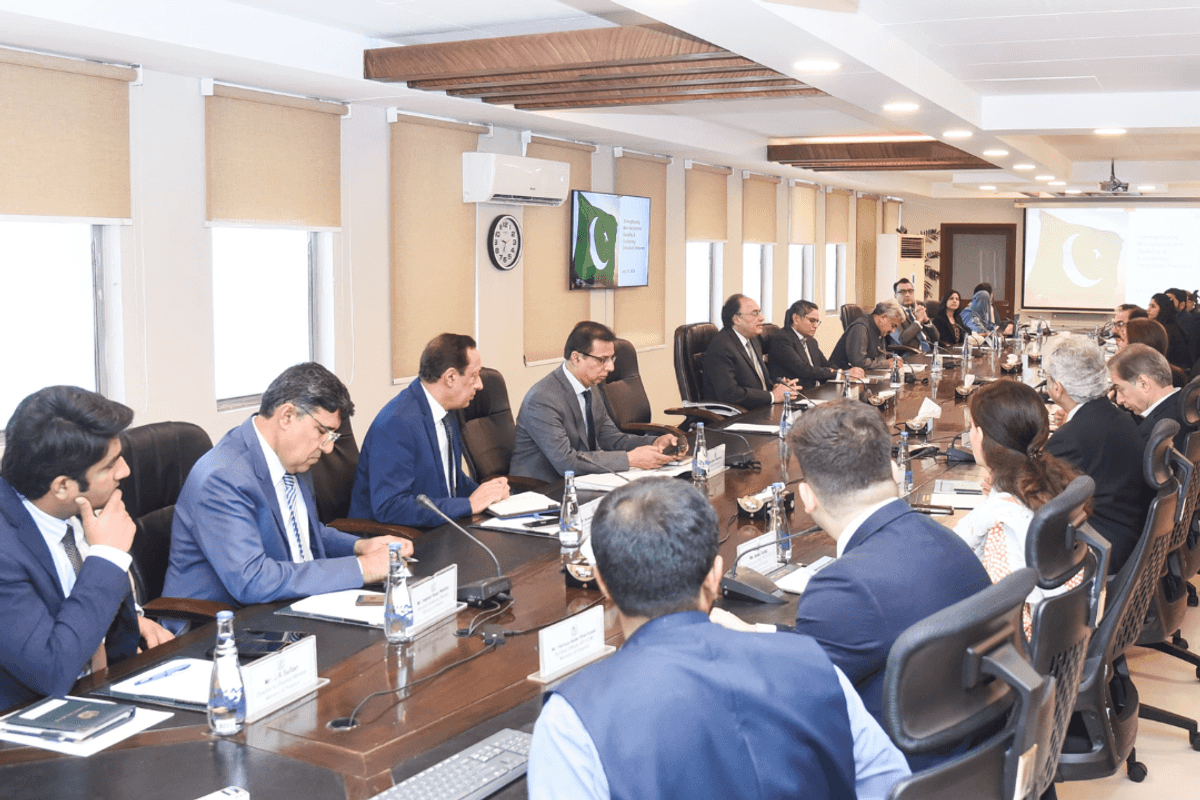
Finance Minister Muhammad Aurangzeb chaired the virtual meeting with Moody's
Ministry of Finance
In a key move to rebuild investor confidence and improve its international credit outlook, the Government of Pakistan held a detailed virtual session with global credit rating agency Moody’s, presenting its case for the country’s ongoing economic stabilization and reform path.
Federal Finance Minister Muhammad Aurangzeb led the briefing alongside Minister of State for Finance Bilal Azhar Kayani, the governor of the State Bank of Pakistan, and senior officials from the Finance, Revenue, and Economic Affairs Divisions. The meeting, held at the Finance Division in Islamabad, aimed to update Moody’s on Pakistan’s macroeconomic progress, structural reforms, and re-engagement with international capital markets.
Economic recovery gains momentum
Aurangzeb said Pakistan had completed the final review under the IMF’s Stand-By Arrangement, securing the second tranche of the facility. He also pointed to ongoing progress under the Resilience and Sustainability Facility (RSF), saying these steps had contributed to macroeconomic stability and increased global confidence in the country’s economic management.
The minister presented data showing a sharp drop in inflation, reduced interest rates, a stabilized exchange rate, and a current account surplus—developments signaling a shift from crisis management to recovery. He added that Pakistan’s foreign exchange reserves had topped $14 billion by the end of June, supported by rebounding remittances and stronger exports.
Reforms underpinning stability
Officials also detailed structural reform measures outlined in the FY26 budget, including fiscal consolidation, tariff rationalization, and efforts to reduce non-development spending. Aurangzeb emphasized that these were not short-term fixes but part of a broader strategy for sustainable and inclusive growth.
Highlighting the modernization of Pakistan’s tax system, he cited gains from digitization, automation, and stronger enforcement. “This year’s Rs2 trillion revenue gain was not donor-driven—it came from autonomous efforts,” he said, reiterating the government’s plan to raise the tax-to-GDP ratio to 13–13.5% in the coming years. He credited reform momentum to direct oversight from Prime Minister Shehbaz Sharif, who chairs regular reviews on tax administration and economic restructuring.
Global market re-engagement
Aurangzeb told Moody’s that Pakistan is actively working to re-enter international capital markets. This includes the recent mobilization of $1 billion in commercial financing from Middle Eastern partners and plans to issue Pakistan’s first Panda bond in Chinese markets. He also noted the country’s intent to return to the Eurobond market as its credit profile improves.
Ongoing discussions with the United States on preferential market access were also mentioned as part of a wider export-led growth strategy.
Looking ahead
In response to Moody’s inquiries, Aurangzeb reaffirmed the government’s commitment to privatization, state-owned enterprise restructuring, and improved public sector performance. He said the government was confident that recent macroeconomic improvements and the reform push would be reflected in future credit assessments.
“Pakistan is moving forward with a clear vision for long-term, export-oriented growth. We are determined to stay the course on reforms that ensure resilience and inclusive prosperity,” he said.
The engagement comes at a crucial time as Pakistan seeks to regain investor trust, re-enter global financial markets, and secure an improved credit rating aligned with its strengthening economic fundamentals.





Comments
See what people are discussing