

Pakistan’s textiles, cement, and engineering sectors 'to gain most’ from relief package
Analysts say lower financing, electricity costs will improve margins for energy-intensive industries

Business Desk
The Business Desk tracks economic trends, market movements, and business developments, offering analysis of both local and global financial news.
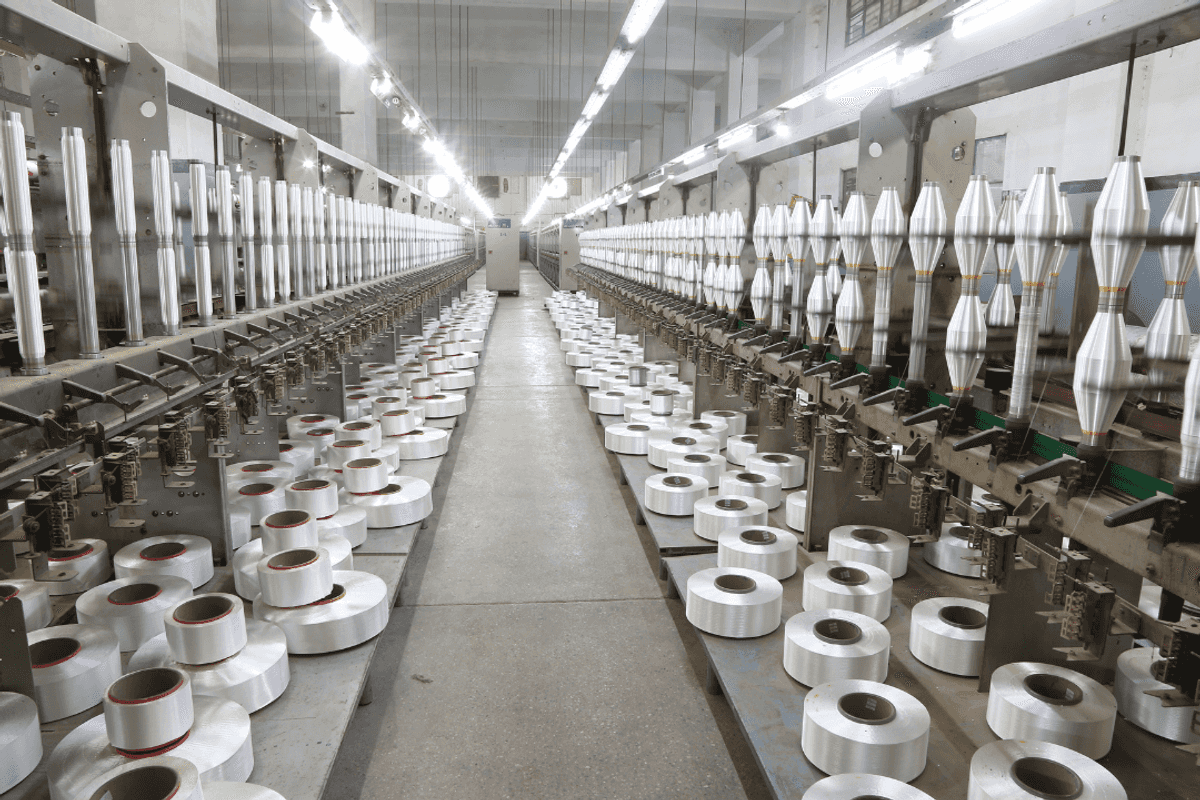
Pakistan’s export-oriented and energy-intensive industries are expected to be the main beneficiaries of a new relief package announced by the prime minister, as lower financing costs and reduced power tariffs are set to improve margins, liquidity and competitiveness across key sectors, analysts said.
Prime Minister Shehbaz Sharif unveiled a series of measures to support exporters and revive industrial activity, including a 300-basis-point cut in the Export Refinance Scheme (ERS) rate and a reduction in electricity wheeling charges.
The EFS, which has been in operation since 1973, offers short-term financing facilities to exporters through banks for exports of all manufactured goods and value-added products.
Under the package, the ERS rate was reduced from 7.5% to 4.5%, easing working capital costs for exporters, particularly in value-added and energy-intensive segments.
In addition, the government announced a PKR 4.04 per unit reduction in electricity wheeling charges, lowering them to PKR 8.51 per unit.
While detailed implementation guidelines are still awaited, market participants broadly view the announcement as a pro-export signal for both investors and manufacturers.
“These measures are supportive for export-oriented and power-intensive sectors such as textiles, cement and engineering,” said Arif Habib Ltd in a research note.
“Lower export financing rates and reduced energy costs should translate into better margins, improved liquidity and enhanced competitiveness.”
The brokerage added that banks are likely to see a largely net-neutral impact, as the reduction in ERS lending rates may be offset by the recent 1% cut in the Cash Reserve Requirement, which has freed up incremental liquidity in the system.
Within the cement sector, the impact of lower power tariffs is expected to vary depending on reliance on grid electricity.
According to Arif Habib Ltd, companies such as D.G. Khan Cement and Fauji Cement are among the biggest beneficiaries, with earnings gains projected to range between low single digits and over 6% in the medium term due to higher grid power usage at key plants.
Other cement manufacturers, including Lucky Cement and Maple Leaf Cement, are also expected to benefit, though to a lesser extent, reflecting their lower dependence on grid electricity. Power Cement, which sources a significant portion of its energy from the grid, is also positioned to gain from the tariff reduction, the brokerage said.
The engineering and steel sectors are likewise poised to benefit, particularly companies with heavy reliance on grid power. Firms such as Mughal Iron & Steel, Agha Steel, and Amreli Steels are expected to see meaningful earnings gains from lower energy costs, even as some continue to face restructuring challenges.
Textiles, however, are expected to emerge as the largest overall beneficiaries of the package, given their extensive use of concessionary export financing.
Companies with high grid power usage, including Interloop and Nishat Mills, could see earnings rise by around 4% to 5%, analysts estimate.
Intermarket Securities said the reduction in ERS rates is especially significant for the textile sector, where export financing plays a central role. “The cut broadly mirrors the favorable borrowing environment seen during 2020–2022, when effective rates remained in the 3% to 6% range,” the brokerage said, adding that the measure comes at a time of rising global competition and potential export headwinds from Europe.
Intermarket noted that within its coverage universe, export-oriented steel producers such as International Steels could see earnings uplift of around 5% due to lower financing costs, while southern cement producers with export exposure are also likely to benefit modestly.
Both brokerages cautioned that the full impact of the package will depend on formal notifications and clarity around the power tariff mechanism. “While the policy direction is encouraging, structural reforms—particularly in energy pricing—remain critical to achieving sustained export competitiveness,” Intermarket Securities said.
The government has positioned the package as part of a broader effort to shift the economy from stabilization toward a more durable growth phase, with exports playing a central role in that transition.



Comments
See what people are discussing