

Pakistan warns of glacial lake outburst flood risk in seven KP districts
Pakistan's disaster authority places seven Khyber Pakhtunkhwa districts on high alert as heat and monsoon rain speed glacial lake outburst floods

Kamran Ali
Correspondent Nukta
Kamran Ali, a seasoned journalist from Khyber Pakhtunkhwa, Pakistan, has a decade of experience covering terrorism, human rights, politics, economy, climate change, culture, and sports. With an MS in Media Studies, he has worked across print, radio, TV, and digital media, producing investigative reports and co-hosting shows that highlight critical issues.
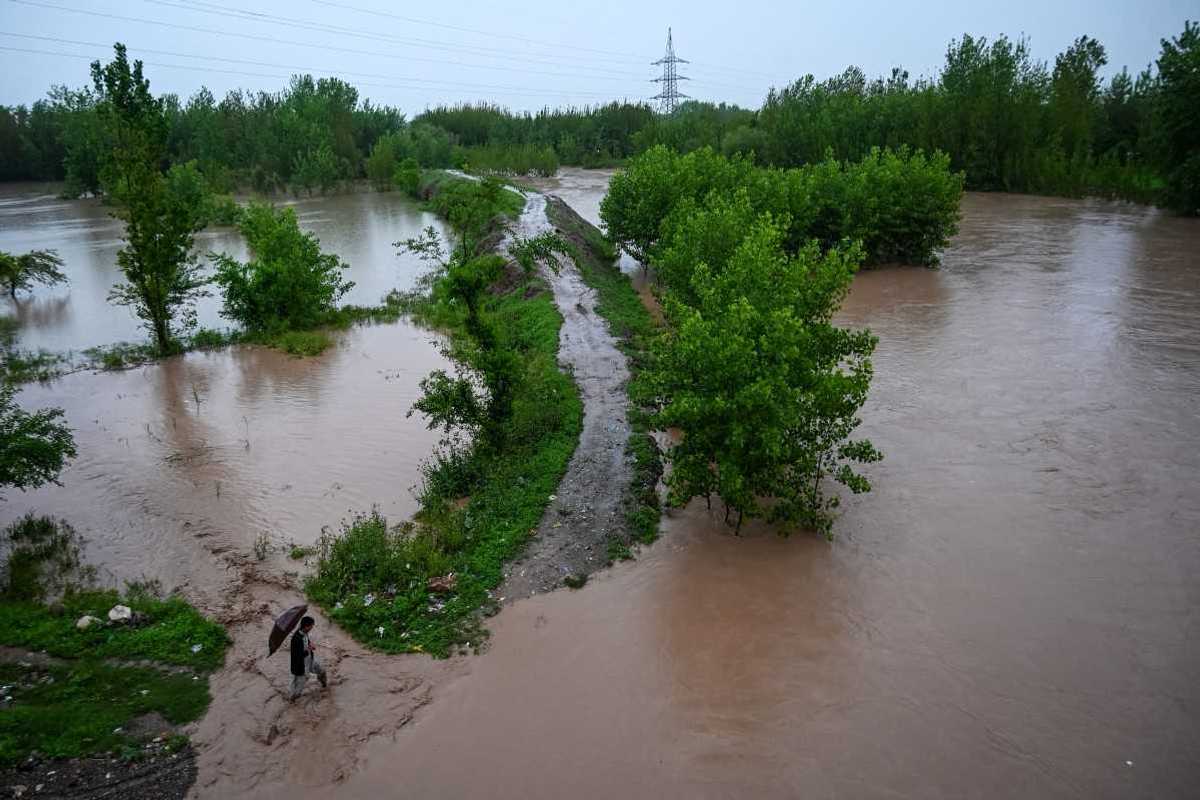
A man walks along a flooded path as torrential rains cause water channels to overflow, inundating nearby areas of Peshawar on April 7, 2026.
AFP
Pakistan's Provincial Disaster Management Authority has placed seven districts in Khyber Pakhtunkhwa on high alert for glacial lake outburst floods.
The warning comes as rising temperatures and heavier-than-normal monsoon rainfall accelerate glacier melt in glacier-fed valleys. Officials say the combination threatens vulnerable mountain communities through the coming weeks.
What is causing the glacial flood risk in Khyber Pakhtunkhwa?
Persistently high temperatures through July are speeding up snow and ice melt across the province's glacier-covered valleys, the PDMA said.
Water levels in river streams are expected to stay elevated, existing glacial lakes may expand quickly, and new lakes could form from the added meltwater. Heavy monsoon rainfall is compounding the melt, raising the risk of sudden outburst floods.
Which districts are on high alert for glacial lake outburst floods?
The PDMA named Chitral Upper, Chitral Lower, Dir Upper, Swat, Kohistan Upper, Kohistan Lower and Mansehra as the districts under high alert. District administrations have been told to strengthen monitoring and surveillance of vulnerable glacial lake sites to sharpen early warning and emergency response.
Authorities have also been directed to pre-position rescue equipment and emergency resources in high-risk areas.
What have officials said about the glacial flood threat?
Anwar Shahzad, an official at the Provincial Disaster Management Authority, told Nukta that the Hazara and Malakand divisions contain more than 2,000 glaciers facing heightened risk from unusually heavy rainfall and rising heat. He said above-normal rainfall is expected across the northern districts this monsoon, while southern districts face extreme heat. That combination, he said, significantly raises the risk of accelerated glacier melt and glacial lake outburst floods.
Shahzad said Pakistan ranks among the countries most vulnerable to climate change, with shifting weather patterns increasingly visible across the seasons. Glacier melt itself is not new, he said, but climate change has sped up the process and made it a serious concern.
The Pakistan Meteorological Department has recorded temperatures above 40 degrees Celsius across much of the country, with the heat index reaching about 50 degrees Celsius in some areas, as rainfall continues in the mountains.
Shahzad warned that extreme heat combined with persistent rainfall could trigger sudden glacial lake outburst floods. Meltwater can rapidly expand lakes beneath glaciers, and if a glacier breaches, it can send fast-moving flash floods carrying large boulders and debris downstream.
How many glaciers does Pakistan have, and why do they matter?
Pakistan has an estimated 13,032 glaciers, most located in Gilgit-Baltistan and Khyber Pakhtunkhwa, according to the country's Information Department.
These glaciers are the main freshwater source for the Indus River Basin, which supports the livelihoods of millions of people. The Space and Upper Atmosphere Research Commission has identified 130 potentially dangerous glacial lakes that pose an outburst flood risk to downstream communities.





Comments
See what people are discussing