


News Desk
The News Desk provides timely and factual coverage of national and international events, with an emphasis on accuracy and clarity.
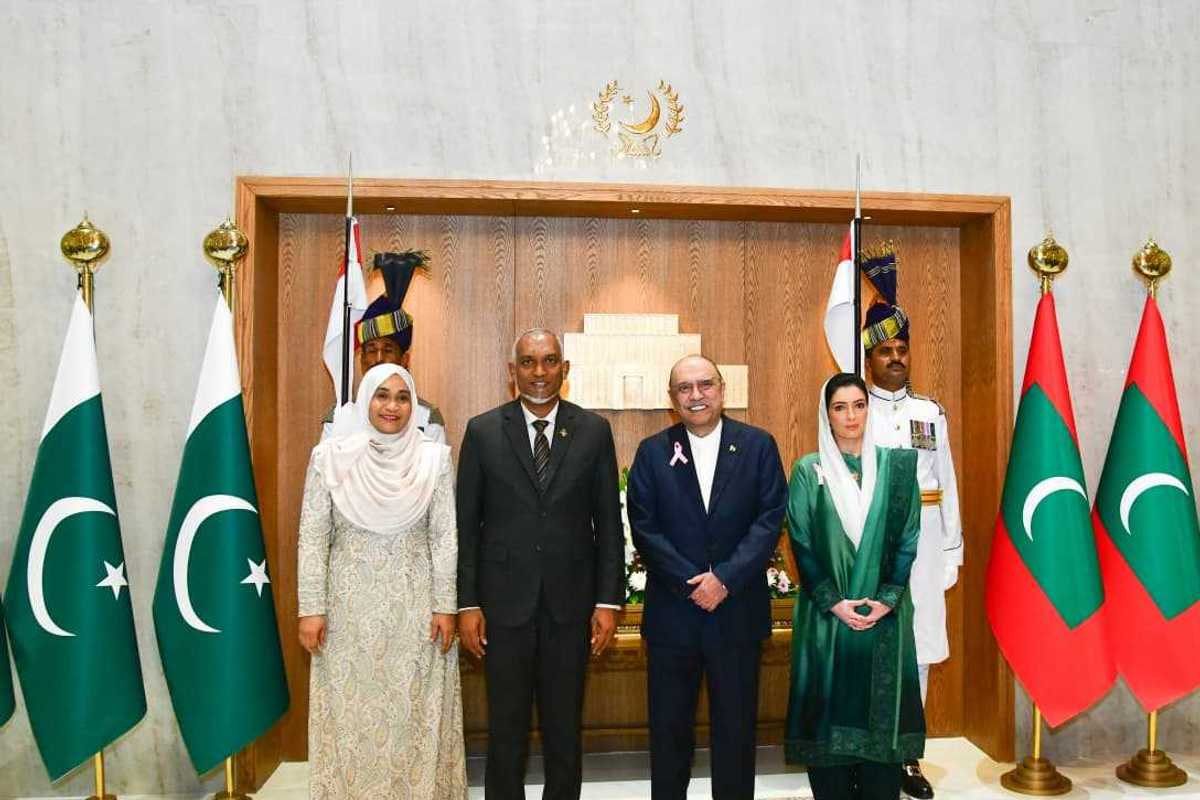
President Asif Ali Zardari meets Maldivian President Dr. Mohamed Muizzu, alongside First Lady Aseefa Bhutto Zardari’s meeting with First Lady Sajidha Mohamed, at Aiwan-e-Sadr to strengthen bilateral ties and cooperation.
Picture Courtesy: Government of Pakistan
President Asif Ali Zardari and Maldivian President Dr. Mohamed Muizzu held wide-ranging official talks at Aiwan-e-Sadr on Wednesday, October 21, pledging to expand economic cooperation, scale up bilateral trade and investment, and deepen joint collaboration on climate resilience as both nations celebrate 60 years of diplomatic relations.
How did Zardari and Muizzu plan to strengthen trade, climate action, and regional ties?
During the bilateral summit, the two heads of state reviewed the trajectory of Pakistan-Maldives ties and explored frameworks to expand collaboration across education, healthcare, human resource development, social protection, and sustainable economic initiatives.
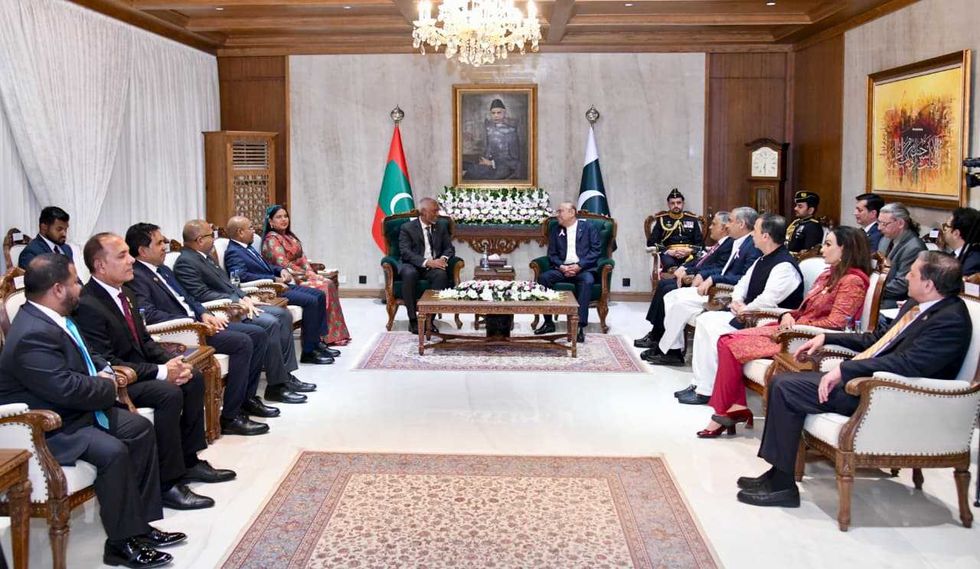 President Asif Ali Zardari meets Maldivian President Dr. Mohamed Muizzu at Aiwan-e-Sadr in Islamabad to discuss strengthening bilateral trade, investment, and climate cooperation as Pakistan and the Maldives mark 60 years of diplomatic relations.Picture Courtesy: Government of Pakistan
Welcoming President Muizzu on the first state visit by a Maldivian president in 11 years, President Zardari underscored that bilateral relations remain anchored in shared faith, mutual trust, and sovereign equality. Zardari pointed to long-standing Pakistani contributions to Maldivian national infrastructure—notably the construction of the Maldivian Parliament building and the School of Medicine in Malé—as lasting symbols of institutional friendship.
Addressing shared environmental vulnerabilities, the leaders discussed the acute threats posed by global climate change to small island developing states and vulnerable South Asian economies. President Zardari reaffirmed Pakistan’s commitment to supporting the Maldives in climate adaptation, disaster mitigation, and environmental protection, offering formal backing for President Muizzu’s Five Million Tree Initiative.
On regional and international affairs, both presidents stressed the centrality of diplomacy, dialogue, and international law under the United Nations Charter, while reiterating their shared support for the rights of the Palestinian people and the creation of an independent, sovereign Palestinian state.
The Maldivian delegation included Foreign Minister Iruthisham Adam, Defence and National Services Minister Hassan Rasheed, Homeland Security Minister Ali Ihusaan, and Economic Development Minister Mohamed Saeed. The Pakistani side featured Deputy Prime Minister and Foreign Minister Ishaq Dar, Interior Minister Mohsin Naqvi, Federal Minister for Maritime Affairs Muhammad Junaid Anwar Chaudhry, and Senators Sherry Rehman and Saleem Mandviwala.
Following the talks, President Zardari hosted a formal state banquet in honor of the Maldivian delegation. The banquet was attended by Prime Minister Shehbaz Sharif, Chief of Defence Forces and Chief of Army Staff Field Marshal Syed Asim Munir, Senate Chairman Yousuf Raza Gilani, National Assembly Speaker Sardar Ayaz Sadiq, and the service chiefs of the Pakistan Navy and Air Force.
What was discussed in bilateral meeting between First Ladies?
In a parallel meeting at Aiwan-e-Sadr, First Lady of Pakistan Bibi Aseefa Bhutto Zardari met with Maldivian First Lady Sajidha Mohamed to discuss advancing gender equity, youth empowerment, and public health initiatives. The two first ladies agreed to broaden bilateral cooperation across vocational training, educational exchanges, tourism, cost-effective agriculture, and female entrepreneurship.
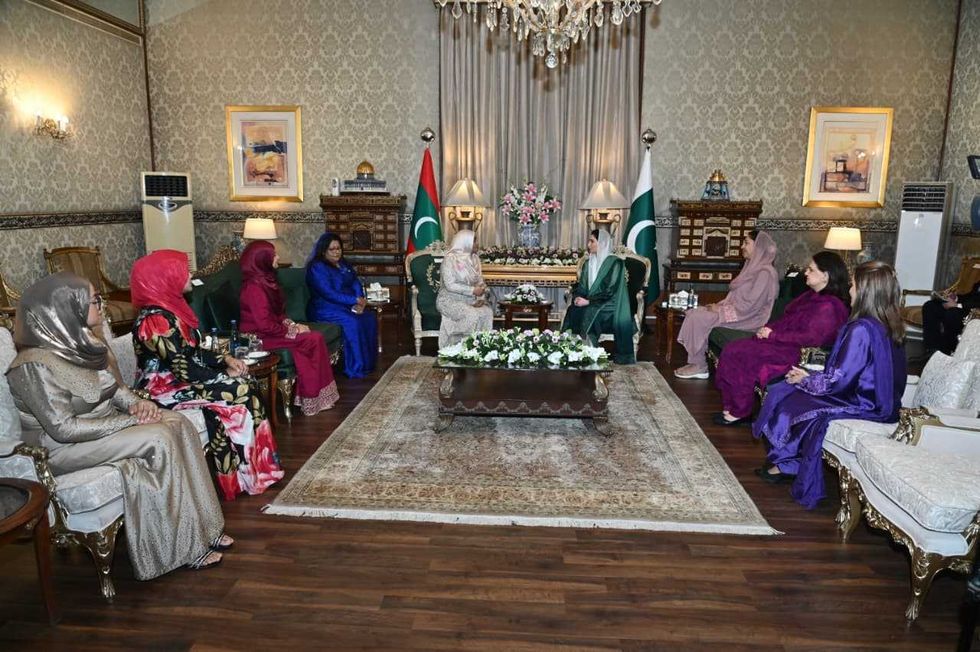 First Lady Bibi Aseefa Bhutto Zardari meets Maldivian First Lady Sajidha Mohamed at Aiwan-e-Sadr to discuss women’s empowerment, youth development, public health, and enhanced cooperation between the two countries.Picture Courtesy: Government of Pakistan
Aseefa Bhutto Zardari commended Sajidha Mohamed’s professional work at the Maldives Food and Drug Authority and her leadership during the COVID-19 pandemic response. Highlighting Pakistan’s welfare infrastructure, the Pakistani first lady detailed the impact of the Benazir Income Support Programme (BISP) in delivering direct financial security to vulnerable women, alongside the Benazir Nashonuma Programme’s targeted interventions against childhood stunting and maternal malnutrition during the first 1,000 days of life.
Emphasizing that women's economic independence remains central to poverty alleviation, Aseefa stated: "Our objective is to ensure that every woman lives with dignity and economic security, and every child receives a healthy start in life." As part of ongoing breast cancer awareness initiatives, she presented pink ribbons to First Lady Sajidha and her delegation as a gesture of health advocacy and solidarity. The meeting was attended by Maldivian Health Minister Dr. Geela Ali, Minister of State for Federal Education Wajiha Qamar, BISP Chairperson Senator Rubina Khalid, and Member of the National Assembly Shazia Marri.
The talks established ground for multiple intergovernmental agreements to scale two-way trade from $13 million toward a targeted $200 million over the next two years.





Comments
See what people are discussing