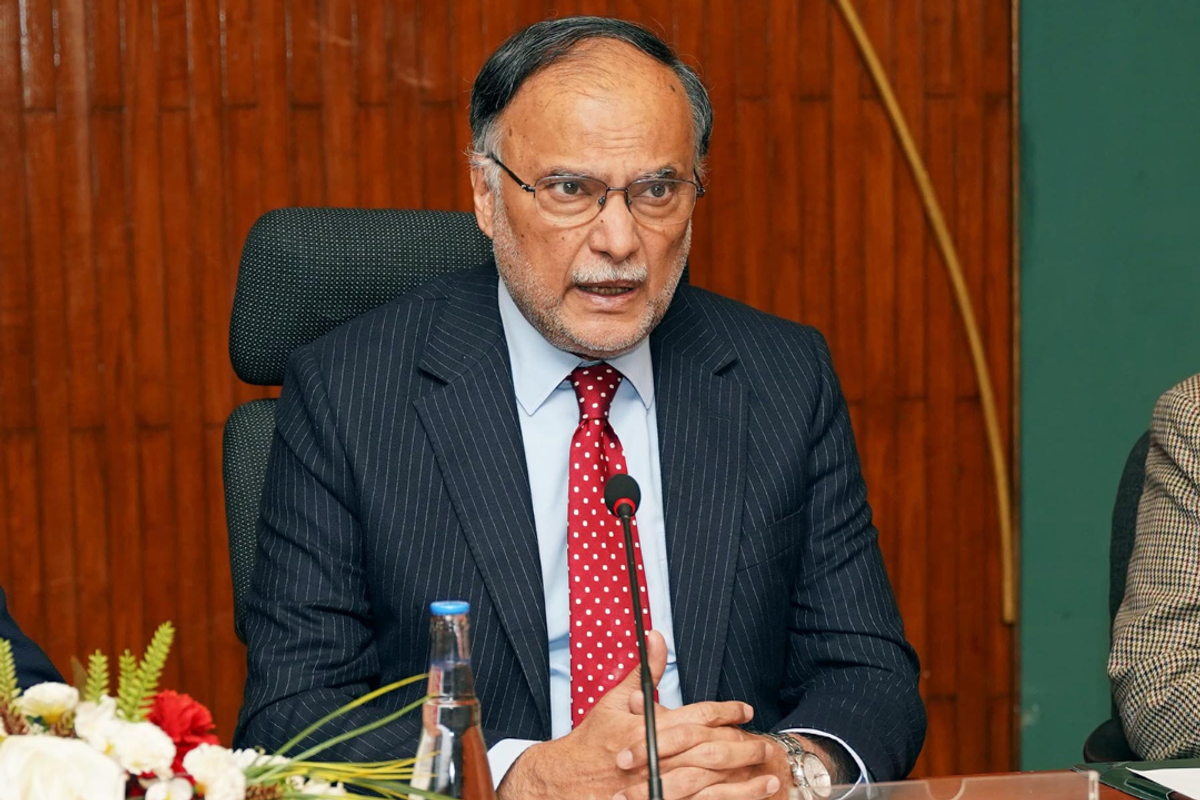
Pakistan must shift from debt-driven economic stabilization to export-led growth to achieve sustainable development, Planning Minister Ahsan Iqbal said on Thursday, urging the Asian Development Bank to help develop a strategy to expand and diversify the country's exports.
"Stabilization will only be true stabilization when it is not on the back of debt. Only exports can give us the legs to grow," Iqbal said, describing the shift toward an export-driven economy as a matter of "life and death" for Pakistan.
Iqbal was speaking during a meeting in Islamabad with Yingming Yang, the Asian Development Bank's vice president for South, Central and West Asia, who discussed the bank's ongoing support for Pakistan's development agenda under the government's URAAN Pakistan framework.
Iqbal asked the ADB to provide technical assistance and draw on international best practices to develop a strategic roadmap for expanding and diversifying Pakistan's exports, citing the bank's earlier technical support under Vision 2010.
The minister said the government aimed to transform Pakistan into a $1 trillion economy by 2035. He said Prime Minister Shehbaz Sharif was committed to removing structural bottlenecks and reforming key sectors, including industry, food security and commerce, while using economic diplomacy to support growth.
Iqbal also urged the ADB to maintain close coordination on development projects to ensure they remained aligned with the government's priorities. He described Pakistan's economic progress from 2022 to 2026 as a case study that could offer lessons for other developing economies.
The talks also covered climate resilience and water security, with Iqbal highlighting increasingly severe and unseasonal rainfall in Pakistan.
He called for ADB support to develop localized water-management infrastructure, including small dams, reservoirs and retention ponds, to capture rainwater, reduce urban flooding and strengthen water supplies for agriculture. He also highlighted the challenge posed by sudden transboundary water inflows.
The minister separately sought the bank's technical assistance in developing a sustainable tourism-management framework for Gilgit-Baltistan, where rising visitor numbers are putting pressure on the region's fragile ecosystems.
Yang reaffirmed the ADB's support for Pakistan's development priorities under URAAN Pakistan, including institution-building, climate resilience and long-term sustainable growth.





Comments
See what people are discussing