

Pakistan passes minority rights commission bill after dropping disputed clauses
The law minister says clauses were removed on JUI-F’s advice to keep bill aligned with the constitution

Ali Hamza
Correspondent
Ali; a journalist with 3 years of experience, working in Newspaper. Worked in Field, covered Big Legal Constitutional and Political Events in Pakistan since 2022. Graduate of DePaul University, Chicago.
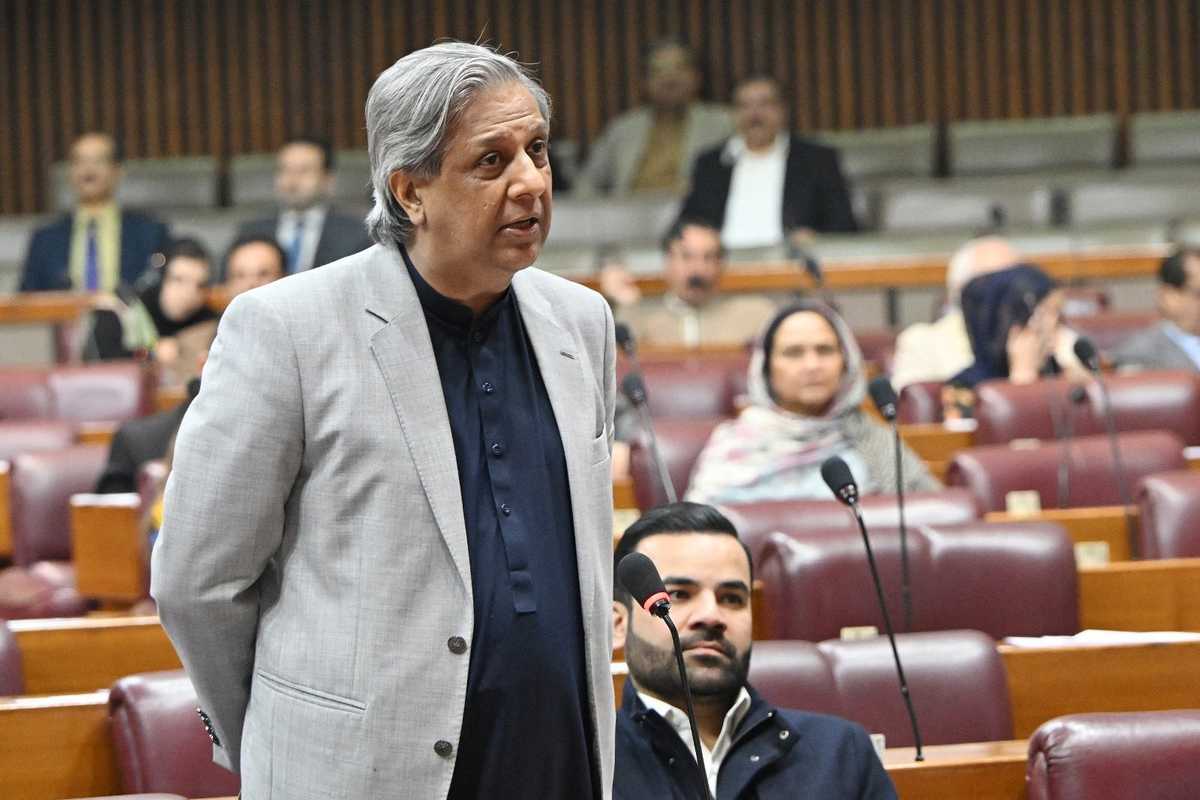
Law Minister Azam Nazeer Tarar addresses the National Assembly on December 1, 2025.
Courtesy: Facebook/National Assembly of Pakistan
Pakistan’s parliament passed on Tuesday the National Commission for Minorities Rights Act, 2025, after removing two controversial clauses that drew strong objections from two major opposition parties: Jamiat Ulema-e-Islam Fazl (JUI-F), an influential religious party, and Pakistan Tehreek-e-Insaf (PTI), led by former Prime Minister Imran Khan.
The bill was approved in a joint sitting with 160 votes in favor and 79 against. During the debate, PTI Senator Noorul Haq Qadri urged the government to first send the bill to the Council of Islamic Ideology, a constitutional advisory body that reviews legislation for consistency with Islamic principles.
One of the provisions removed was Clause 35, which religious parties argued could be interpreted as undermining Pakistan’s 1984 constitutional amendment and related ordinance that declared the Ahmadi community non-Muslim and criminalized their identifying as Muslims.
The second deleted clause—point (h) of Section 12—would have empowered the proposed commission to independently investigate any violations of minority rights by public or private entities. JUI-F Senator Kamran Murtaza led the opposition to both provisions.
Law Minister Azam Nazeer Tarar told lawmakers that the government struck the clauses from the bill after JUI-F’s recommendations, saying the goal was to maintain alignment with the constitution and Islamic injunctions.
Once enacted, the new statutory commission will replace the existing non-statutory National Commission for Minorities, created by Pakistan’s federal cabinet in 2020. That body, which operated under the Ministry of Religious Affairs, lacked legal authority and completed its three-year term in 2023 without significant progress on improving protections for minority faiths, including Christians, Hindus, Sikhs, and others who make up roughly 4 percent of the country’s population.
Under the new law, the commission will be chaired by a Pakistani citizen at least 35 years old with a background in human rights advocacy. Membership will include minority representatives from the four provinces and Islamabad, as well as ex-officio members from Pakistan’s national human rights institutions and senior officials from the ministries of Human Rights, Law and Justice, Religious Affairs, and Interior.
The commission will function as an autonomous corporate body headquartered in Islamabad, with full administrative and financial powers, including authority to appoint staff, manage its budget, and establish offices across the country. The government will also provide a rehabilitation fund for victims of rights violations.
It will have civil-court powers to summon witnesses, compel the production of documents, and take evidence under oath. Its responsibilities include monitoring constitutional safeguards for minorities, reviewing laws for discriminatory elements, developing national protection plans, investigating complaints, ensuring compliance with the five-percent job quota for minorities, and coordinating security for religious sites and festivals. The commission will also report directly to parliament.
An 18-member National Council will advise the commission, comprising representation from Hindu, Christian, Sikh, Parsi, and Bahai communities, as well as scheduled caste members, Muslim human rights advocates, and provincial minority or human rights departments.
The bill now awaits presidential assent. Its passage fulfills a long-standing requirement of a landmark June 19, 2014, Supreme Court ruling by then–Chief Justice Tassaduq Hussain Jillani, issued after a deadly bombing at a church in Peshawar. The court directed the government to establish an independent national body to monitor and protect the rights of Pakistan’s religious minorities.




Comments
See what people are discussing