

Pakistan pledges macro stability as Wafi Energy eyes up to $100M investment
Wafi Energy signals expansion plans, finance minister says

Business Desk
The Business Desk tracks economic trends, market movements, and business developments, offering analysis of both local and global financial news.
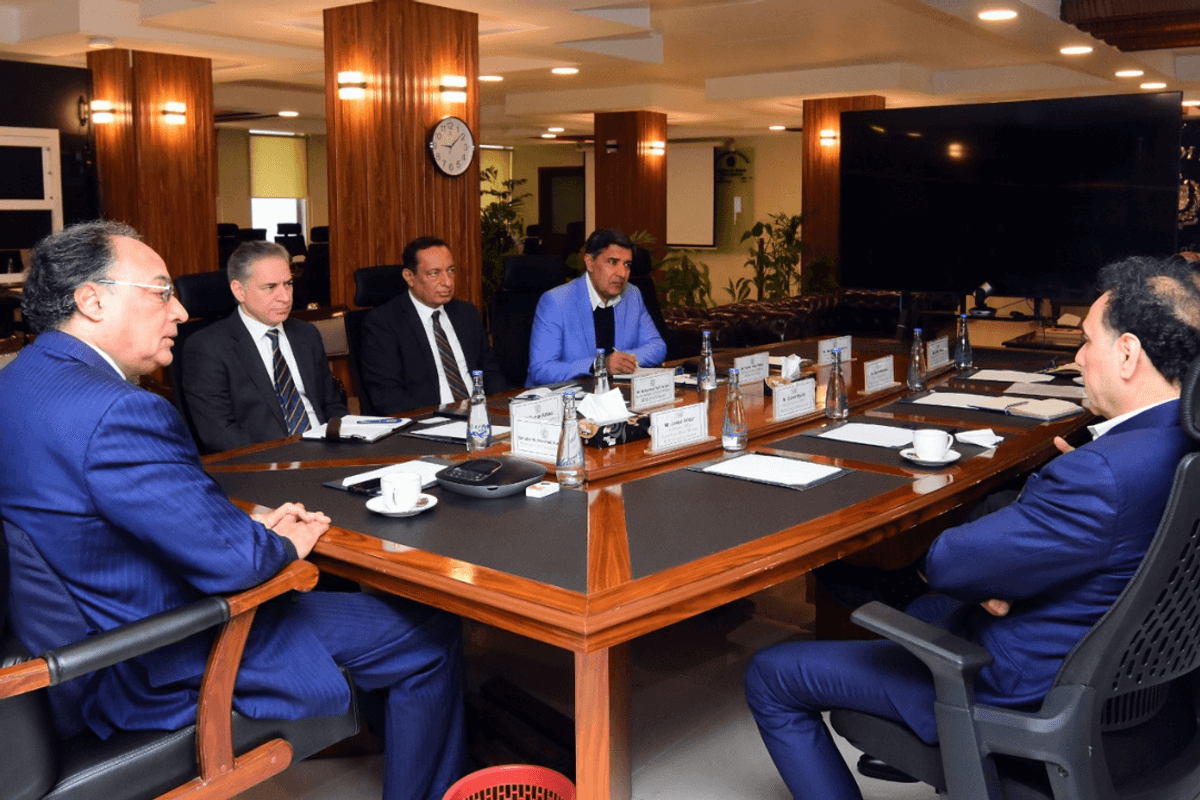
Finance Minister Muhammad Aurangzeb (left) speaks with the Wafi Energy delegation
Finance Division
Pakistan’s finance minister said Monday the government remains committed to maintaining macroeconomic stability and strengthening foreign exchange reserves, as Wafi Energy Pakistan Ltd. signaled it may invest up to $100 million in the country over the next two to three years.
Finance Minister Muhammad Aurangzeb made the remarks during a meeting at the Finance Division with a delegation from Wafi Energy Pakistan, led by Javaid Akhtar, chief finance officer of Asyad Group and a board member of Wafi Energy Pakistan. The delegation also included Wafi Energy Pakistan Chief Executive Officer Zubair Shaikh and Chief Finance Officer Zarrar Mahmud.
Aurangzeb said sustained macroeconomic stability is central to the government’s economic strategy and key to bolstering investor confidence. He added that improved availability of foreign exchange reflects broader economic reforms and discipline, and would help facilitate legitimate business transactions such as dividend repatriation and cross-border payments.
The finance minister said improving economic indicators were already translating into increased confidence among domestic and foreign investors, calling these trends essential to creating a healthy investment climate. He also stressed the role of local investors in encouraging foreign investment inflows.
Discussions also focused on the use of public-private partnerships and structured finance to deliver large-scale infrastructure projects. Aurangzeb said successful provincial-level experiences showed the potential of such models and called for stronger engagement with the banking sector to support infrastructure development.
Wafi Energy Pakistan officials said the company has benefited from improved operating conditions amid greater macroeconomic stability and plans to expand its retail and storage footprint as part of a broader growth strategy. They expressed confidence in Pakistan’s economic outlook and said interest among international and regional stakeholders in the country was increasing.
The delegation said Wafi Energy Pakistan operates a nationwide retail network and has continued investing in modernization and efficiency. It noted that greater predictability in the operating environment had allowed the company to resume and scale up investments following recent business integration.
Company officials said Wafi Energy Pakistan is considering investments of up to $100 million over the next two to three years to expand its retail network and storage capacity, focusing on infrastructure development and technology-driven improvements to strengthen supply resilience and service standards.
They also highlighted ongoing digitization initiatives across operations, underscoring the company’s commitment to transparency, efficiency and regulatory compliance.
The delegation raised concerns related to the operating environment for oil marketing companies, emphasizing the need for a stable and predictable regulatory and fiscal framework to support long-term investment in the capital-intensive sector. They said continued engagement between the government and industry would help align policy measures with investment and reform goals.
Aurangzeb reaffirmed the government’s commitment to privatization and outsourcing, saying the private sector is better positioned to manage commercial assets efficiently. He said recent privatization efforts had attracted strong investor interest and that future transactions would be conducted through transparent and competitive processes in line with directives from Prime Minister Shehbaz Sharif.
The finance minister also pointed to digitization as a national priority, acknowledging uneven progress across the sector and the need for firm policy measures to accelerate adoption. He said sector-related issues would be reviewed with relevant ministries and regulators.
Aurangzeb cited ongoing high-level engagement with international partners, including Saudi Arabia, as an important platform for strengthening economic cooperation and investment ties, and said reforms, privatization, digitization and investment facilitation remain central pillars of the government’s economic agenda.


Comments
See what people are discussing