

Pakistan revises solar buyback tariff to ensure equitable cost-sharing among consumers
Solar net metering tariff being reduced from PKR 27 per unit to PKR 8-9 per unit

Business Desk
The Business Desk tracks economic trends, market movements, and business developments, offering analysis of both local and global financial news.
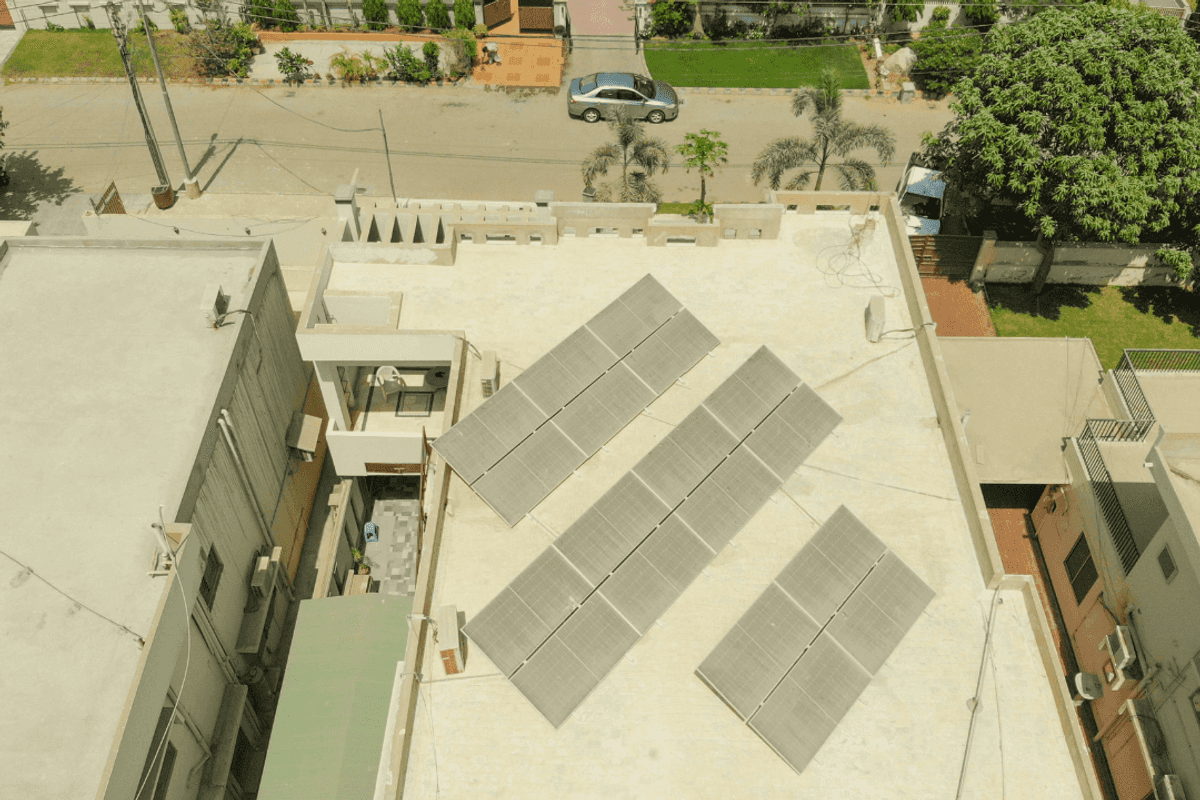
Pakistan government is revising the buyback tariff for solar net metering, reducing it from PKR 27 per unit to PKR 8-9 per unit. The move, according to ministry sources, aims to ensure equitable cost-sharing among all electricity consumers.
While reaffirming its commitment to the solar net metering policy, the government emphasized that the tariff adjustment is designed to promote fairness and alleviate the financial burden on the majority of electricity users.
Officials noted that the policy, though beneficial for early adopters, has inadvertently created an imbalance, placing an undue financial strain on nearly 40 million electricity consumers. These consumers currently pay an additional PKR 1.5 per unit to subsidize solar net metering users.
The solar net metering initiative was introduced in 2018 under the Pakistan Muslim League-N (PML-N) government, led by Mian Nawaz Sharif and Power Minister Awais Leghari.
The policy was intended to encourage renewable energy adoption, reduce reliance on fossil fuels, and allow consumers to sell surplus electricity back to the grid, thereby lowering their energy costs.
Since its inception, the number of net metering users has grown significantly, rising from 224,000 in October 2024 to 283,000 in March 2025.
However, this surge has resulted in a PKR 159 billion financial burden on non-solar consumers, disproportionately benefiting wealthier segments of society.
Despite the revised tariffs, the government assures that solar investments remain financially viable. Payback periods for solar installations are expected to extend from two years to a reasonable four to five years, ensuring continued adoption of solar energy without the need for unfair subsidies.
Officials have also addressed misinformation circulating about the policy changes. Contrary to claims that the government is ending net metering, they clarified that the reforms are aimed at protecting the majority of consumers from escalating electricity costs while maintaining support for renewable energy expansion.
The government is committed to ensuring that solar net metering policies benefit all Pakistanis equitably, rather than favoring a privileged few.
These reforms are aimed at striking a balance between promoting sustainable energy and safeguarding the financial interests of the broader population.





Comments
See what people are discussing