

Pakistan's crude oil import bill surges 46.4% as Middle East conflict drives up costs
World Bank says falling LNG import volumes cushioned rising oil costs, but expensive fertilizers and higher borrowing rates added pressure on the economy

Business Desk
The Business Desk tracks economic trends, market movements, and business developments, offering analysis of both local and global financial news.
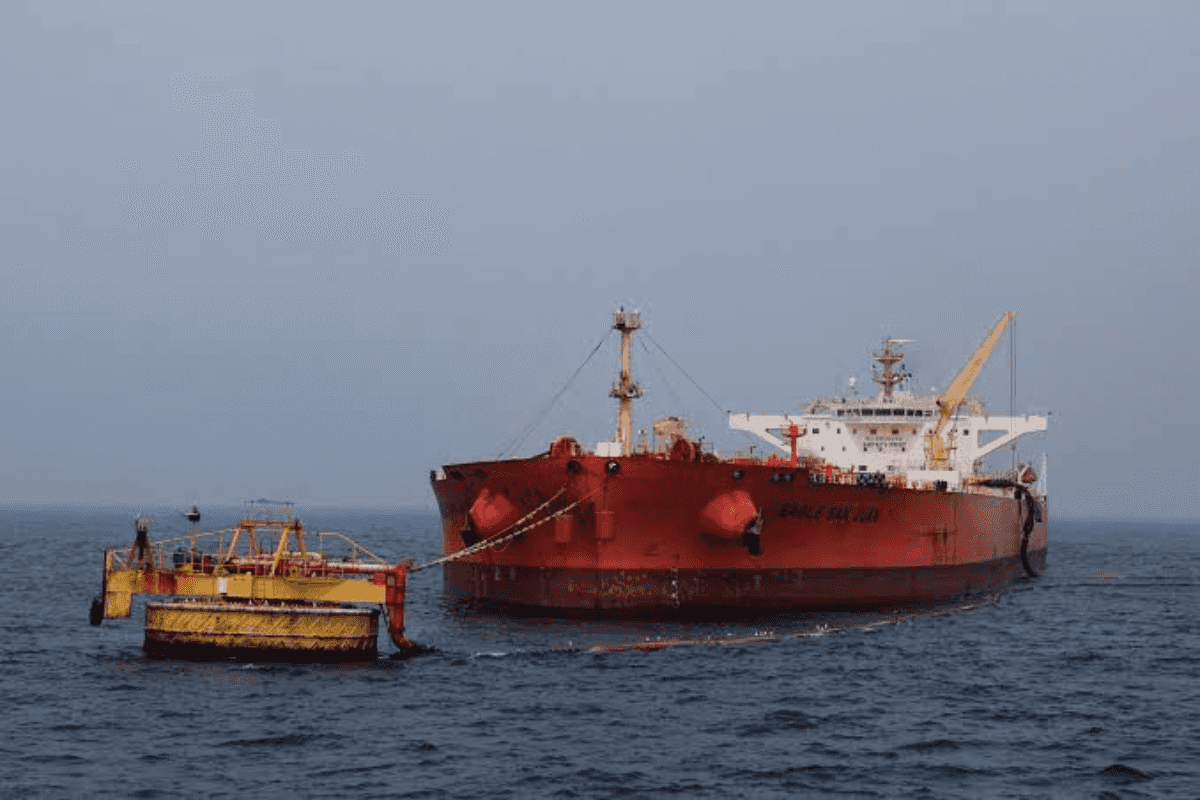
A crude oil tanker EAGLE SAN JUAN, offloads at Cnergyico's SPM, near Hub coast in Balochistan, March 18, 2026.
Reuters
Pakistan's crude oil import bill rose 46.4% from a year earlier during January–June 2026 as the conflict in the Middle East pushed up global energy prices, according to the World Bank.
LNG import volumes fell nearly 50%, partly offsetting the increase in oil costs, while strong remittance inflows helped cushion the impact on Pakistan's current account.
The findings were published in the World Bank's October 2026 Pakistan Development Update: Attaining Escape Velocity.
How has the Middle East conflict affected Pakistan's imports?
The conflict, which began on February 28, 2026, drove up international oil and gas prices, increasing Pakistan's energy import costs. Petroleum-group imports rose 9.2% from a year earlier during January–June 2026, while the crude oil import bill increased 46.4%. Lower LNG import volumes partly offset the additional costs.
Petroleum and gas products accounted for roughly one-quarter of Pakistan's total imports in fiscal year 2025 (FY25), equivalent to 3.7% of gross domestic product (GDP).
Gulf Cooperation Council countries supplied around 80% of these imports, leaving Pakistan heavily exposed to disruptions in the region.
By the end of June 2026, global oil and LNG prices had increased significantly compared with levels before the conflict.
Despite the higher import bill, strong workers' remittances helped limit the pressure on Pakistan's external finances.
Fertilizer prices threaten agricultural productivity
The conflict also disrupted international fertilizer markets, affecting the cost and availability of products derived from natural gas.
International urea prices rose sharply between March and May before declining again. However, domestic supplies and substantial inventories helped limit shortages ahead of the Kharif cropping season.
Diammonium phosphate (DAP), another important fertilizer, faced greater pressure as prices rose significantly following the outbreak of the conflict.
Pakistan's DAP imports declined in FY26, reducing its use during the Kharif season and potentially constraining agricultural productivity during the Rabi season of FY27.
The World Bank warned that DAP prices remaining elevated beyond 2026 could affect agricultural production during FY27 and FY28 and put additional pressure on food prices.
Borrowing costs rise amid global uncertainty
Higher international energy prices, combined with Pakistan's substantial debt burden and limited fiscal and external financial buffers, also contributed to higher domestic borrowing costs.
Coupons on Pakistan Investment Bonds across different maturities increased by at least 1.5 percentage points in auctions held after February 2026 compared with those conducted before the conflict.
However, the cost of newly issued bonds remained below the levels recorded in 2024 and early 2025.
Spreads on Pakistan's Eurobonds also widened temporarily, reflecting greater pressure on its international borrowing costs.
Despite these pressures, Pakistan returned to international capital markets in April 2026 after a four-year absence, raising USD 750 million through a three-year Eurobond placement.
Government raises fuel prices, announces support measures
To contain the impact on public finances and reduce demand for imported energy, the government raised domestic fuel prices and introduced austerity measures.
It also announced targeted support for vulnerable groups, with funding expected to come from reallocations within the development budget and cost-sharing arrangements with provincial governments.
The World Bank's economic outlook assumes that the Middle East conflict will continue to affect Pakistan through the end of 2026, followed by a gradual de-escalation during 2027.





Comments
See what people are discussing