


News Desk
The News Desk provides timely and factual coverage of national and international events, with an emphasis on accuracy and clarity.
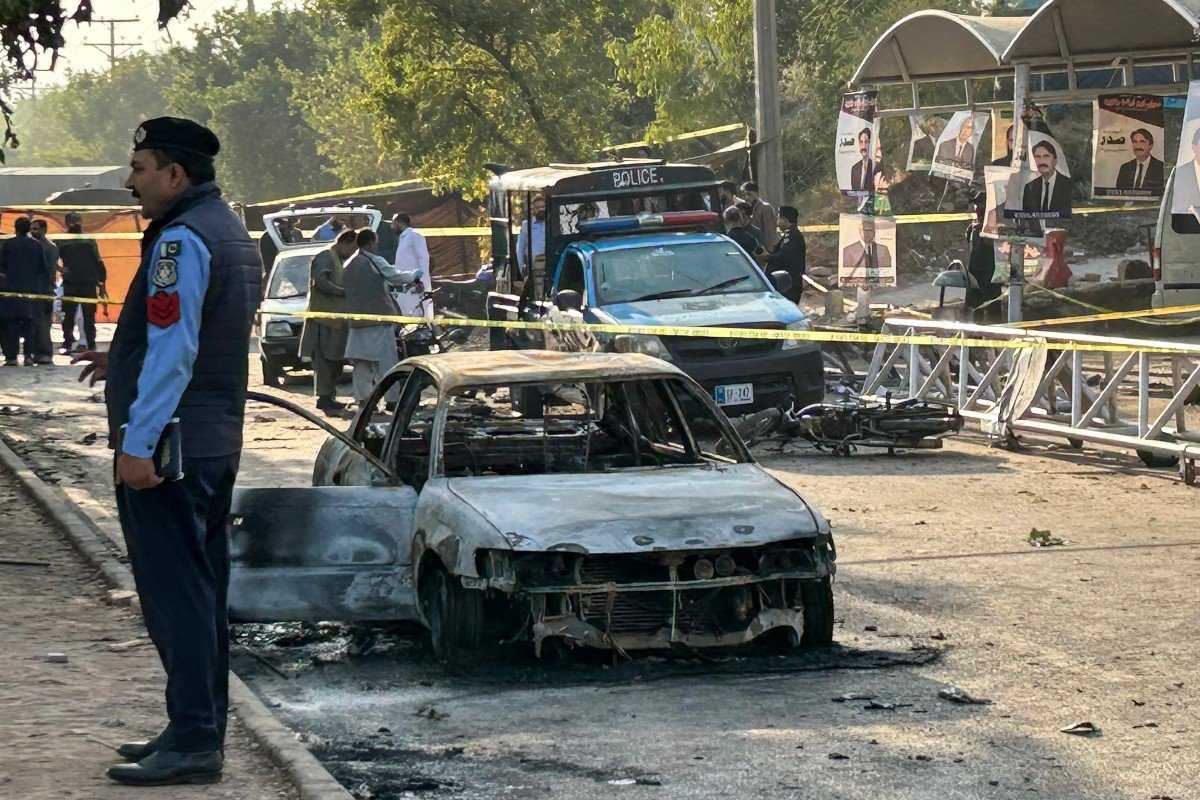
Policemen examine damaged vehicles after a suicide blast outside the district court in Islamabad on November 11, 2025.
AFP
Pakistan’s information minister has said that last week’s suicide bombing outside a court complex in the capital was planned by the head of Tehreek-e-Taliban Pakistan, a militant group responsible for years of attacks against the state and believed by Islamabad to be operating from Afghanistan.
The November 11 blast outside the Judicial Complex in Islamabad killed 12 people and wounded 35. The attack targeted an area that houses several courts and is usually crowded with lawyers, police and defendants.
Information Minister Attaullah Tarar said the bombing was ordered by Noor Wali Mehsud, leader of TTP, a banned group ideologically aligned with the Afghan Taliban but separate from it. Pakistan says TTP leaders and fighters have found sanctuary in Afghanistan since the Taliban takeover in 2021, a claim Kabul denies.
Speaking at a press conference in Islamabad, Tarar said investigators uncovered communications between four alleged facilitators and TTP commanders across the border. Displaying their photos, he identified them as handler Sajidullah, also known as Sheena, along with Kamran Khan, Muhammad Zali and Shah Munir.
Tarar said Mehsud planned this attack through his commander Daadullah, who had met Sajidullah repeatedly in 2023, 2024 and August 2025. He said the two stayed in touch through an app.
He described Daadullah as a resident of Pakistan’s Bajaur district who is currently in Afghanistan.
The minister played what he said was a video statement from Sajidullah, alleging he secured the suicide jacket and brought the bomber to the attack site. “Their target was to carry out such an act in either Rawalpindi or Islamabad,” Tarar said.
He added that Sajidullah joined the TTP in 2015 and trained in several camps in Afghanistan. Tarar said he traveled to Jalalabad in 2024 to meet Daadullah “to plan this suicide bombing” and recruited Zali and Khan after returning to Pakistan.
Four suspects arrested
Tarar said the Intelligence Bureau and the Counter-Terrorism Department arrested the four suspects within 48 hours of the blast in a joint operation. He said all four men, as well as the bomber, “had direct links with Afghanistan and were trained in training camps there.”
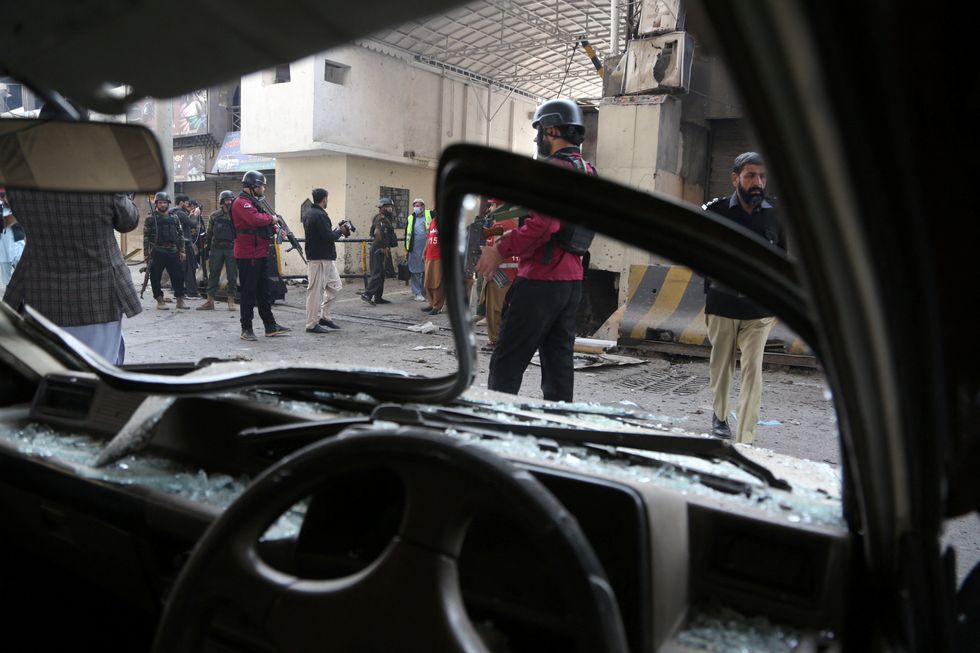 Paramilitary soldiers secure the entrance of the headquarters of a Pakistani paramilitary force after suicide bombers targeted it in Peshawar, Pakistan, November 24, 2025. Reuters
He said the militants aimed to hit a “high value target,” but security in Islamabad prevented the bomber from reaching the intended location. Tarar said the attack would have been deadlier “had the suicide bomber been able to get inside the court.”
He added that the government is “deeply aggrieved” by the deaths but called the rapid arrests a “major success” in disrupting further attacks. He said Prime Minister Shehbaz Sharif had ordered security forces to stay on high alert.
Escalating tensions
Earlier on Tuesday, Afghanistan’s Taliban government accused Pakistan of overnight airstrikes that killed 10 civilians, further escalating tensions between the neighbors.
Taliban spokesman Zabihullah Mujahid said on X that Pakistani forces bombed a home in Khost province, killing nine children and a woman. He said drones and aircraft also struck areas in Kunar and Paktika provinces, injuring four civilians. Local officials confirmed the casualties.
In Jige Mughalgai, a village near the border, residents sifted through the rubble of a collapsed home as families prepared graves for the victims.
- YouTube www.youtube.com
Mujahid condemned the strikes and said Afghanistan “has the right to defend its territory,” warning that a response would come “at the right time.” Pakistan’s military did not respond to requests for comment.
Deteriorating relations
Relations between Pakistan and Afghanistan have deteriorated sharply since the Taliban returned to power in 2021. Tensions spiked after border clashes in October that killed about 70 people on both sides.
Those clashes ended with a truce mediated by Qatar and Turkey, but talks in Doha and Istanbul failed to secure a lasting agreement. Pakistan continues to urge Kabul to curb TTP fighters it says are operating from Afghan soil, while Afghanistan denies the allegation.
The Pakistan-Afghanistan Joint Chamber of Commerce and Industry said thousands of shipping containers remain stuck at the border, each incurring steep daily fees and adding economic strain for traders.


Comments
See what people are discussing