

Pakistan shifting from economic stabilization toward growth, Aurangzeb says
Finance minister points to stronger reserves, a lower fiscal deficit, improving exports and investment as signs of greater economic stability
Haris Zamir
Business Editor
Experience of almost 33 years where started the journey of financial journalism from Business Recorder in 1992. From 2006 onwards attached with Television Media worked at Sun Tv, Dawn Tv, Geo Tv and Dunya Tv. During the period also worked as a stringer for Bloomberg for seven years and Dow Jones for five years. Also wrote articles for several highly acclaimed periodicals like the Newsline, Pakistan Gulf Economist and Money Matters (The News publications)
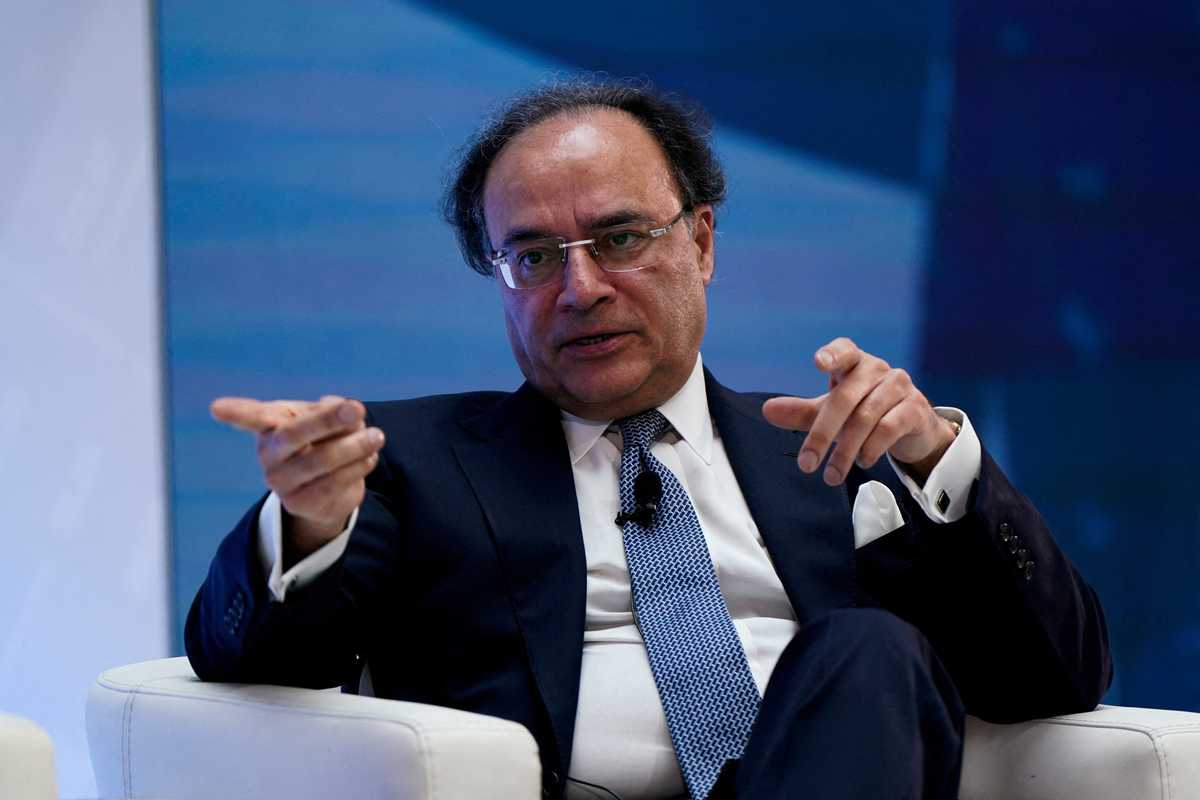
Pakistan’s economic recovery is moving from stabilization toward growth, with improved foreign exchange reserves, a narrowing fiscal deficit and a current account surplus signaling greater macroeconomic stability, Finance Minister Muhammad Aurangzeb said.
Aurangzeb said foreign exchange reserves held by the State Bank of Pakistan have reached USD 21.4 billion, while the fiscal deficit has declined to 2.6% of gross domestic product, its lowest level in 22 years.
He attributed the improvement in the fiscal position to higher tax revenues and reduced government spending, saying Pakistan’s economic indicators have strengthened after a period of severe external and fiscal pressures.
“The economic journey of Pakistan is moving from stabilization toward economic growth,” Aurangzeb said.
The country’s current account also moved into surplus after 14 years, according to the minister. He said the current account was broadly balanced during the last fiscal year and that the trend continued during the first two months of the current fiscal year.
Remittances have continued to improve, while information technology exports are expected to increase to USD 5.5 billion from USD 4.6 billion, Aurangzeb said.
Goods exports are also showing signs of improvement, helping keep the current account deficit within a range of zero to 1% of GDP, he said. The government has set a target of USD 32.9 billion for goods exports during the current fiscal year, with exports expected to grow by about 6%.
“The average daily volume of goods exports is around USD 90 million,” Aurangzeb said, adding that severe disruptions in the past had reduced daily export volumes by about 50%.
Growth, manufacturing and investment
Pakistan’s economy grew 3.7% in the last fiscal year, while economic growth is expected to exceed 4% in the current fiscal year, the minister said.
Large-scale manufacturing recorded a significant recovery last year, with output increasing on both a monthly and annual basis in July and August, he said.
Corporate profitability has also improved, while participation by investors, particularly young people, in the stock market has increased, according to Aurangzeb.
Pakistan recorded 11 initial public offerings last year and five IPOs during the first two months of the current fiscal year, he said. The increase in IPO activity reflects a greater appetite for business expansion, new production units and investment, Aurangzeb said.
The minister said tax revenues have increased by about 40% over the past two years, highlighting the Federal Board of Revenue’s role in maintaining fiscal discipline.
Foreign direct investment also needs to increase further, he said. FDI stood at USD 311 million in August.
Aurangzeb said macroeconomic stability is a prerequisite for attracting foreign investment and that the restoration of confidence among domestic investors can also encourage greater interest from foreign investors. He said foreign investor participation had begun to increase following improvements in the stock market.
Regional disruptions pose risks
Aurangzeb warned that instability in the Middle East and Gulf region is creating significant challenges for global trade.
Disruptions to supply chains, along with higher freight and insurance costs, are putting pressure on exporters and businesses, he said. The situation around the Strait of Hormuz and Bab el-Mandeb is already affecting exporters and the business community.
The minister also warned that further domestic economic disruptions could undermine Pakistan’s exports and growth.
He estimated that strikes, sit-ins, long marches and road closures could cause economic losses of around PKR 120 billion per day.
The services sector could face losses of about PKR 86 billion a day, while industrial activity could suffer losses of around PKR 25 billion, he said. Agriculture could face losses of about PKR 9 billion a day.
Disruptions could affect construction, manufacturing, raw-material supplies and broader supply chains, while transportation, perishable goods, dairy distribution and agricultural trade could also be affected, Aurangzeb said.
“The economic cost of disruption is ultimately borne by ordinary people and daily wage workers,” he said, adding that small retailers and businesses are also directly affected.
IT exports vulnerable to connectivity disruptions
Pakistan’s IT exports stood at around USD 811 million during the first two months of the current fiscal year, with daily exports averaging about USD 13 million, according to Aurangzeb.
He warned that disruptions to communications or internet connectivity could severely affect the IT export sector.
“In the worst circumstances in the past, IT exports were affected by as much as 80%,” he said.
Any disruption to goods and services exports could therefore deliver a significant setback to the economy, the minister said.
Aurangzeb said Pakistan’s economic stabilization and recovery had been achieved through difficult decisions and sustained efforts, adding that the country must continue moving toward higher growth, exports and investment.
He also called for the country’s political and other challenges to be resolved through dialogue and consensus, saying economic stability and the pace of growth should not be put at risk.
“Facts, statistics and potential economic losses must be placed before the public,” Aurangzeb said.
He said Pakistan’s recovery should continue toward sustainable growth, stronger exports and increased investment.





Comments
See what people are discussing