

Pakistan shifts higher petrol import costs to refineries to protect consumers
Pakistan has shifted higher petrol import costs to refineries under a 30-day formula that freezes ex-refinery prices at March 7 levels to shield consumers.

Haris Zamir
Business Editor
Experience of almost 33 years where started the journey of financial journalism from Business Recorder in 1992. From 2006 onwards attached with Television Media worked at Sun Tv, Dawn Tv, Geo Tv and Dunya Tv. During the period also worked as a stringer for Bloomberg for seven years and Dow Jones for five years. Also wrote articles for several highly acclaimed periodicals like the Newsline, Pakistan Gulf Economist and Money Matters (The News publications)
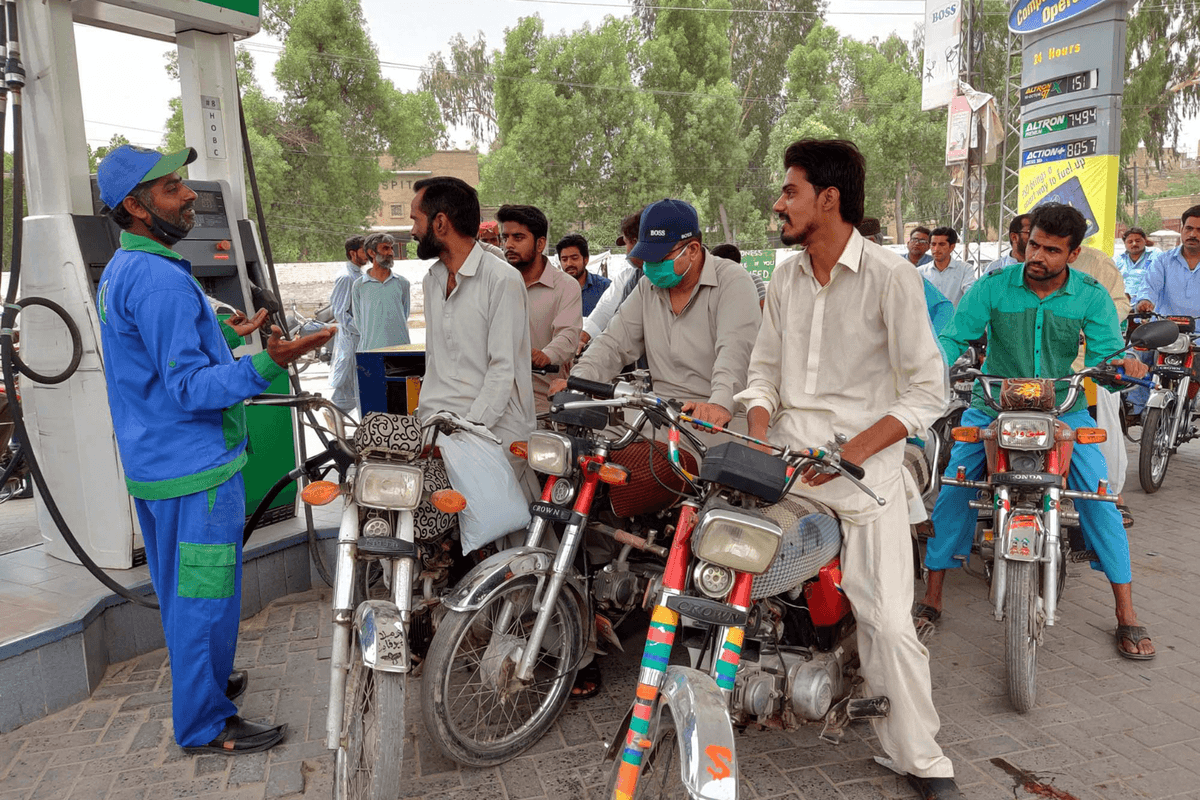
Motorcyclists get their vehicles refueled at a petrol station in Sukkur, Pakistan.
Pakistan has shifted higher petrol import costs to domestic refineries for the next 30 days to prevent a retail price increase, industry sources said. The Petroleum Division issued the revised pricing mechanism after cabinet approval, as tensions between Iran and the United States escalate.
How does Pakistan's new petrol pricing formula work?
Refineries can keep petrol ex-refinery prices at their March 7, 2026, levels. Import prices are calculated from the actual cost of Pakistan State Oil's (PSO) imported cargo. Refineries deposit any difference between the calculated import price and the ex-refinery price as petroleum levy.
If the actual import cost is unavailable, refineries can use the premium and additional expenses from the last imported cargo. They will also retain the premium, additional costs and customs duty at their March 7 levels.
Why did Pakistan cut the petroleum levy as petrol import costs rose?
Petrol import premiums and freight charges rose sharply to $25.52 per barrel from $19.88 per barrel. Topline Securities estimates the increase has added 14.71 rupees per liter to petrol costs.
The government responded by reducing the petroleum levy on petrol from 80 rupees to 65.29 rupees per liter. Any benefit arising from adjustments to the levy will pass exclusively to petrol consumers through lower retail prices.
"Instead of passing this increase on to consumers, the government has reduced the petroleum levy charged at the pump from PKR 80 to PKR 65.29 per liter, with refineries bearing the additional cost," said Asad Ali, a research analyst at Topline Securities.
How much will the new formula cost refineries?
Domestic refineries account for approximately 30% of Pakistan's motor spirit, or petrol, supply. Ali said the revised notification implies an effective additional burden of 49.02 rupees per liter on petrol sold by local refineries.
"Based on our initial estimates, this could impose a financial burden of PKR 10 billion to PKR 15 billion per month on refineries, assuming annual motor spirit production of 2.6 million tons," Ali said. He added that the estimate was preliminary and subject to further confirmation.
How will the government enforce the new petrol pricing mechanism?
The Petroleum Division has formally communicated the revised mechanism to all oil refineries. It has directed them to submit daily details of petrol sales to the division and the Oil and Gas Regulatory Authority (OGRA).
Refineries must also provide cash payment receipts (CPRs) and payment challans with their daily sales reports. OGRA and the Petroleum Division will verify the additional petroleum levy payments and related calculations to ensure compliance, the sources said.




Comments
See what people are discussing