

Pakistan stocks track sovereign credit ratings, data shows
Market valuations rise and fall with shifts in fiscal stress and external liquidity

Haris Zamir
Business Editor
Experience of almost 33 years where started the journey of financial journalism from Business Recorder in 1992. From 2006 onwards attached with Television Media worked at Sun Tv, Dawn Tv, Geo Tv and Dunya Tv. During the period also worked as a stringer for Bloomberg for seven years and Dow Jones for five years. Also wrote articles for several highly acclaimed periodicals like the Newsline, Pakistan Gulf Economist and Money Matters (The News publications)
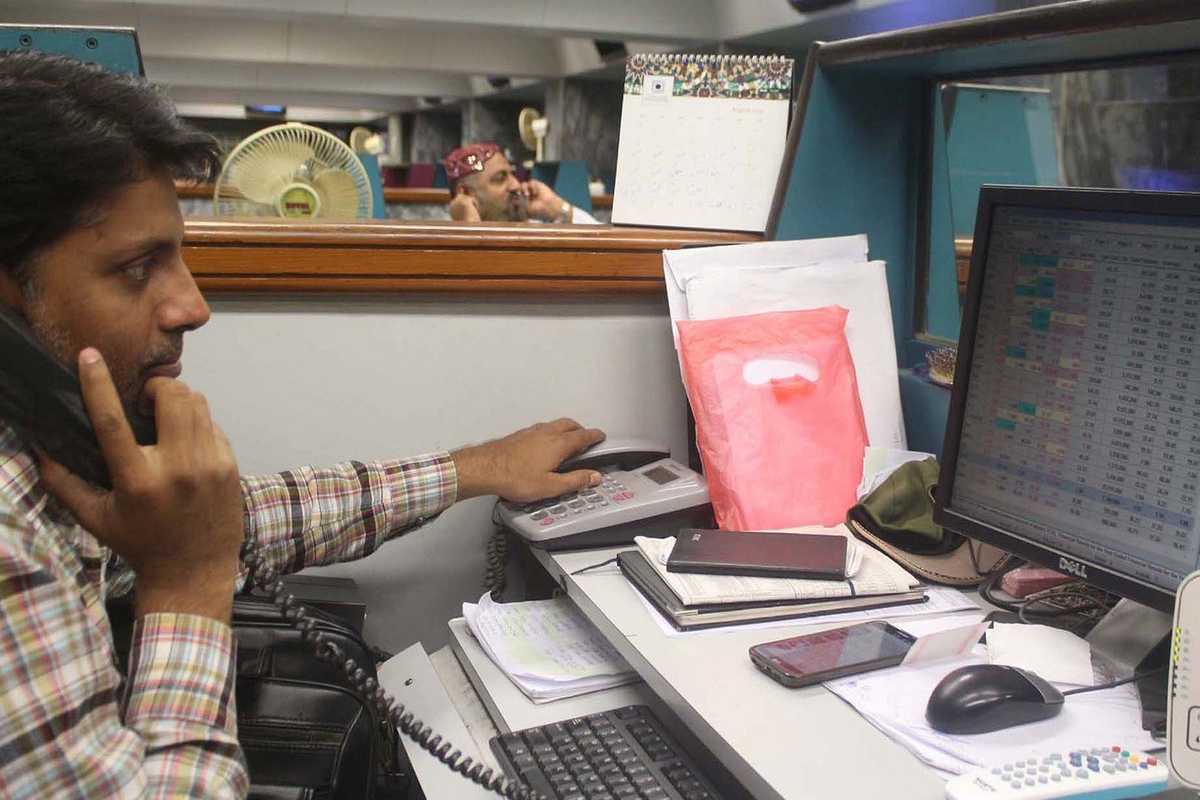
Pakistan’s stock market valuation has historically moved in close step with changes in the country’s sovereign credit rating, underscoring how perceptions of macroeconomic stability shape investor behavior in frontier markets, according to newly compiled financial data.
An analysis of Pakistan’s benchmark KSE-100 Index shows that the market’s average price-to-earnings (P/E) ratio has tended to rise when the country’s creditworthiness improves and fall sharply during periods of fiscal stress.
Data drawn from international rating agencies and the State Bank of Pakistan indicates that when Pakistan carried a B+ rating from S&P Global Ratings, the stock market traded at an average P/E multiple of about 11.0. By contrast, at a CCC+ rating, the average multiple dropped to roughly 5.1.
“The equity market is effectively pricing in sovereign risk,” said an equity strategist at a Karachi-based brokerage firm, who reviewed the data. “When external financing conditions improve and default risk recedes, investors are willing to pay a higher multiple for earnings.”
The analysis also points to a strong link between stock market valuation and Pakistan’s external liquidity position, measured by import cover — the number of months a country can pay for imports using its foreign exchange reserves. At a B+ rating, Pakistan’s average import cover stood at about 3.7 months, compared with just 1.7 months during periods when the country was rated CCC+.
That relationship highlights how foreign exchange constraints, a recurring pressure point for Pakistan’s economy, directly affect investor sentiment.
“When reserves are thin, the market discounts earnings heavily because of currency risk, capital controls and the possibility of abrupt policy tightening,” said the analyst. “As reserves recover, those fears ease.”
Historically, the KSE-100 has traded at an average multiple of around 9.4 times earnings when Pakistan maintained a B sovereign rating, the data shows. During episodes of repeated downgrades, market valuations compressed sharply as foreign investors reduced exposure and domestic investors shifted toward safer assets.
Pakistan is currently rated CCC+, reflecting high debt levels, weak external buffers and reliance on multilateral financing. However, recent improvements in key macroeconomic indicators have raised expectations among market participants that the country could move back toward a B rating over the medium term.
Those improvements include a narrowing current account deficit, easing inflation pressures and renewed engagement with the International Monetary Fund under a stabilization program. The government has also taken steps to curb imports, raise energy prices and strengthen tax collection, though structural challenges remain.
“A rating upgrade would be more than symbolic,” said a senior portfolio manager at a local asset management firm. “It would likely trigger a re-rating of equities, improve access to foreign capital and reduce the cost of financing for both the government and the private sector.”
The KSE-100 Index, which tracks the performance of Pakistan’s largest listed companies, is widely viewed by global investors as a barometer of sovereign risk in one of Asia’s most volatile frontier markets. Analysts say its sensitivity to credit ratings makes it a useful gauge of how macroeconomic policy and external financing conditions filter through to asset prices.
While risks remain, including political uncertainty and vulnerability to external shocks, investors will be closely watching rating agencies and reserve data for signals that Pakistan’s fragile recovery is gaining durability.




Comments
See what people are discussing