

Pakistan stocks to remain under pressure over weak results, Reko Dik uncertainty
Analysts say bearish momentum is ‘short-term correction’; pin hope on ample mutual funds liquidity to turn tide

Business Desk
The Business Desk tracks economic trends, market movements, and business developments, offering analysis of both local and global financial news.
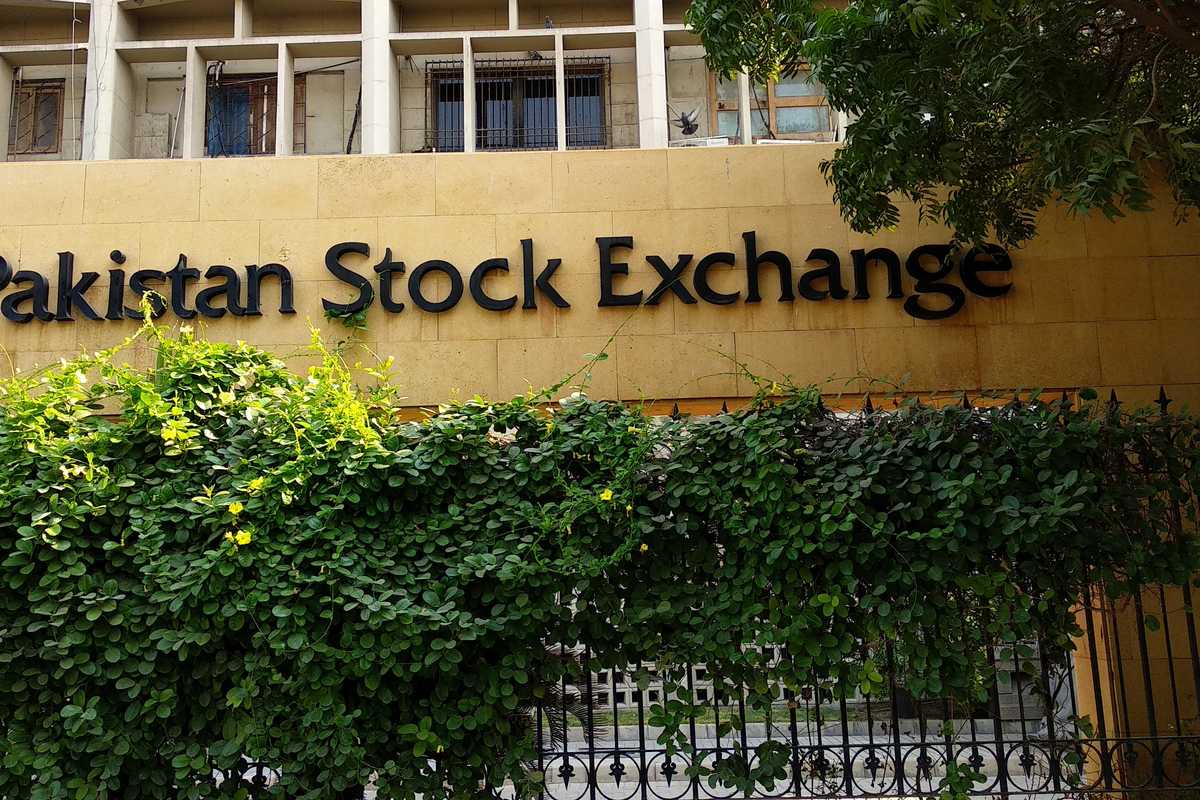
The Pakistan Stock Exchange is likely to remain under selling pressure in the coming week due to lower-than-expected financial results and payouts, and uncertainties stemming from issues such as the Reko Diq and the rollover of loans from the UAE.
The KSE-100 remained bearish throughout the week, losing 8,920 points and ending at 179,604 – down 2.46% week-on-week.
Over the week, Moody’s revised Pakistan’s banking system outlook from positive to stable, indicating that while macroeconomic indicators have improved, the recovery in the operating environment remains gradual.
Nasheed Malik, Head of Research at Growth Securities, stated that the data confirms sales of PKR 4.2 billion, equivalent to nearly $15 million. He noted that this is a short-term concern, particularly because the majority of sales have come from foreign corporations.
According to his analysis, heavy selling has been observed across all major sectors, including oil and gas exploration, cement, technology, and banking.
He suggested that the ongoing geopolitical and security situation in Pakistan — particularly uncertainty surrounding Reko Diq and the broader security environment in Balochistan — may have contributed to the recent pressure in the market.
However, he emphasized that despite foreign outflows, local investors have consistently absorbed the selling. He highlighted that the market has delivered outstanding performance over the past three years, even as foreign participation has declined.
Malik further explained that local liquidity remains strong and sufficient to support the market once current concerns ease.
A significant portion of mutual fund assets has yet to be converted into equity funds, and alternative investment avenues remain limited. Additionally, assets under management (AUMs), insurance company funds, and bank deposits are all at record levels, indicating ample liquidity in the system.
In conclusion, he acknowledged that the situation is concerning in the short term but expressed confidence that, once stability returns, local liquidity will drive the market forward and that foreign investment is likely to return in the longer term.
Shahryar Butt, Head of Portfolio Management at Darson Securities Limited, commented that the market’s correction is likely to continue into next week, with selling pressure likely on rallies, particularly due to weaker-than-expected corporate results from key banking stocks.
He noted that major banks have failed to meet market expectations.
Meezan Bank not only announced lower dividends but also reported a decline in earnings, while Bank Al Habib also posted weaker earnings. In the fertilizer sector, Fauji Fertilizer Company declared lower dividends, and Engro Fertilizers reported a 21% drop in earnings, reflecting declining profitability across parts of the sector.
According to Butt, the market is currently finding support from the auto sector, where new entrants are driving renewed interest. Leading auto stocks are outperforming on the back of strong sales growth. He also highlighted positive momentum in Nishat Chunian Limited and Nishat Chunian Power, particularly following the launch of a new car model within the group.
The market is currently in a bearish trend, having dropped over 8000 points last week and losing the key 180,000 level. The 177,000 zone is now a crucial support, where a bounce is possible. Strong corporate results, improved law and order, and positive news on Saudi investment could act as key triggers for recovery.
He emphasized the importance of upcoming corporate results, especially from banking stocks. Positive surprises could help the market resume its upward movement. Otherwise, with Ramadan approaching next week, trading volumes are expected to shrink, and overall market activity may slow in the early days of the month.
Ali Nawaz, the CEO of Chase Securities, said the market is expected to take direction primarily from ongoing corporate earnings announcements and stock-specific developments in the near term. Investors are likely to closely assess earnings quality, forward guidance, and sectoral performance to determine positioning.
Recently, the market has undergone a healthy correction amid concerns related to the Reko Diq project, leading to cautious sentiment and short-term volatility. However, this pullback appears to be more of a consolidation phase rather than a shift in the broader trend.
On the macroeconomic front, key indicators remain stable, with supportive monetary conditions, manageable inflation expectations, and improving external sector dynamics. Importantly, a significant amount of liquidity remains on the sidelines, reflecting cautious but not bearish investor positioning.
As clarity emerges and confidence improves, this liquidity is likely to gradually re-enter the market, particularly flowing toward fundamentally strong companies with solid earnings visibility, robust balance sheets, and sustainable growth prospects. Overall, while short-term fluctuations may persist, the medium-term outlook remains constructive.
Equity analyst Jibran Sarfraz stated that the recent downward trend in the market was largely driven by the start of the results season, particularly as earnings from the fertilizer and oil sector came in slightly below expectations. He noted that Engro Fertilizer Company and Pakistan Petroleum Limited results disappointed investors, contributing to negative momentum. Additionally, following the recent decline, some profit-taking was observed during the week.
Looking ahead, Sarfraz expressed optimism that the market could turn positive next week, though performance will remain closely tied to ongoing corporate announcements. He explained that strong results in individual stocks are likely to trigger upward movement in those specific stocks.
Overall, he described the market as fundamentally healthy. He added that any positive developments on the geopolitical front could further strengthen sentiment and potentially push the market toward new highs.
He also pointed out that with Ramadan set to begin next week, trading hours will be slightly reduced and investor participation may slow as people focus more on religious activities. As a result, he expects market activity to remain normal, with direction largely dependent on the outcome of the results season.
According to an analyst at Arif Habib Ltd., the KSE-100 Index may experience a temporary moderation in the coming week as Ramadan kicks in.
Additionally, the ongoing results season could provide further upside, particularly if companies report stronger-than-expected earnings. Moreover, key economic data, including trade and the current account, are expected; any positive developments could further support market gains.
The KSE-100 Index is currently trading at a PE of 9.1x, offering a dividend yield of 6.7%.
A leading analyst from Spectrum Securities said we are optimistic that the market will stay favorable, as the release of
NFDC’s monthly sales data could also act as a positive trigger, as robust figures may reinforce growth expectations for the fertilizer sector. Concurrently, several big corporate players are scheduled to announce their results.
Strong results could boost investor confidence and catalyse an upside trajectory in the market. Additionally, any positive announcement by the Barrick Gold Corporation can bolster investors’ confidence, while an unfavorable outcome could also weigh on sentiment and could lead to a downside trend in the market.



Comments
See what people are discussing