

Pakistan targets 4% GDP growth in FY2026-27 with PKR 3.67 trillion development outlay
Pakistan's NEC approves a 4% growth target and PKR 3.67 trillion development plan for FY2026-27, with infrastructure taking the largest share
Haris Zamir
Business Editor
Experience of almost 33 years where started the journey of financial journalism from Business Recorder in 1992. From 2006 onwards attached with Television Media worked at Sun Tv, Dawn Tv, Geo Tv and Dunya Tv. During the period also worked as a stringer for Bloomberg for seven years and Dow Jones for five years. Also wrote articles for several highly acclaimed periodicals like the Newsline, Pakistan Gulf Economist and Money Matters (The News publications)
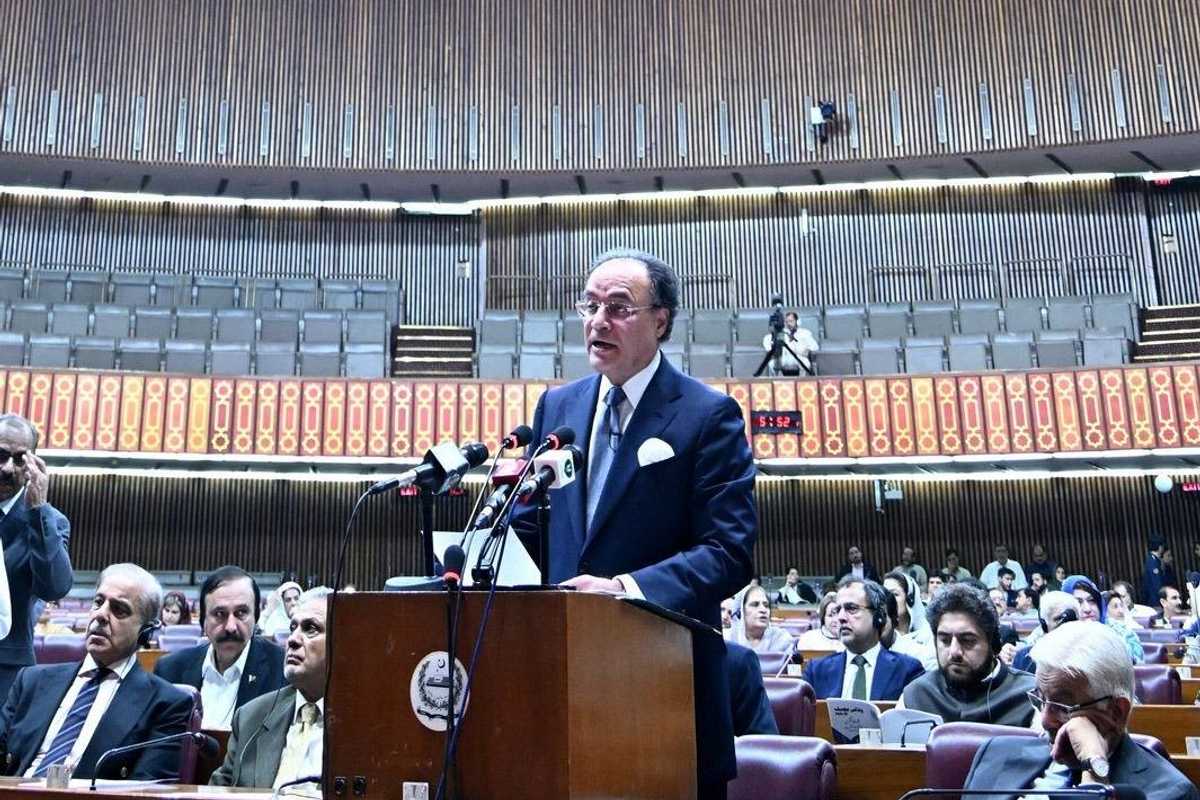
Pakistan has set an economic growth target of 4% for the fiscal year 2026-27 and proposed a national development outlay of PKR 3.67 trillion, with infrastructure, transport, and energy projects receiving the largest share of spending, according to official documents presented at a meeting of the National Economic Council (NEC) on Tuesday.
What are Pakistan's key economic targets for FY2026-27?
Pakistan is targeting 4% GDP growth in FY2026-27, with nominal GDP projected to rise to PKR 143.6 trillion from PKR 126.9 trillion in the outgoing year.
The government has set an inflation target of 8.2%, up from an estimated 6.7% in FY2025-26. Sectoral targets are 3.6% for agriculture, 4.5% for industry and 4.2% for services.
Who approved the annual development plan and when?
The NEC, chaired by Prime Minister Shehbaz Sharif, reviewed and approved the Annual Plan for FY2026-27 at a meeting on Tuesday.
The council examined macroeconomic targets and federal and provincial development programmes ahead of the presentation of the federal budget.
How is the PKR 3.67 trillion development outlay structured?
The proposed National Development Outlay totals PKR 3.669 trillion. It includes a federal Public Sector Development Programme (PSDP) of PKR 1 trillion, provincial Annual Development Programmes of PKR 2.218 trillion, and development spending by federal state-owned enterprises of PKR 451 billion.
Infrastructure received the largest federal allocation at PKR 602.5 billion, accounting for more than 60% of the federal PSDP. Within that, transport and communications received PKR 355.9 billion, energy schemes PKR 116.2 billion, water resources PKR 75.8 billion, and physical planning and housing PKR 54.6 billion.
Which major projects have been allocated funding?
The government plans to allocate PKR 100 billion for the Karachi-Quetta-Chaman N-25 Highway and PKR 30 billion for the Sukkur-Hyderabad Motorway (M-6).
Other major allocations include PKR 26 billion for Mohmand Dam, PKR 25 billion for the Main Line-1 railway modernisation project, PKR 25 billion for the Sindh Coastal Highway, and PKR 21 billion for the Dasu Hydropower Project.
The social sector received PKR 180.6 billion, covering PKR 74.5 billion for education and higher education, PKR 22.1 billion for health, and PKR 63 billion under the SDGs Achievement Programme.
The plan also proposes PKR 22 billion for Daanish Schools and PKR 17 billion for flood resilience projects.
How much will provinces and special areas receive?
Provincial development spending is projected at PKR 2.218 trillion. Punjab receives the largest share at PKR 749 billion, followed by Sindh at PKR 706 billion, Khyber Pakhtunkhwa at PKR 455 billion, and Balochistan at PKR 308 billion.
Special areas, including Azad Jammu and Kashmir and Gilgit-Baltistan, are allocated PKR 88.8 billion, while the merged districts of Khyber Pakhtunkhwa receive PKR 56.1 billion.
How will faster growth affect Pakistan's external account?
The current account deficit is projected to widen to USD 3.599 billion, or 0.7% of GDP, in FY2026-27, from an estimated USD 1.082 billion, or 0.2% of GDP, in the outgoing year. Goods imports are expected to rise to USD 70.02 billion as economic activity picks up, while goods exports are targeted to reach USD 32.85 billion.
Workers' remittances are projected to grow to USD 42.39 billion from an estimated USD 41.28 billion.




Comments
See what people are discussing