

Pakistan’s high taxes stifle growth, investment and jobs
Kamran Khan says Pakistan’s tax system discourages earning itself, leaving little room for savings, reinvestment, or business growth

News Desk
The News Desk provides timely and factual coverage of national and international events, with an emphasis on accuracy and clarity.
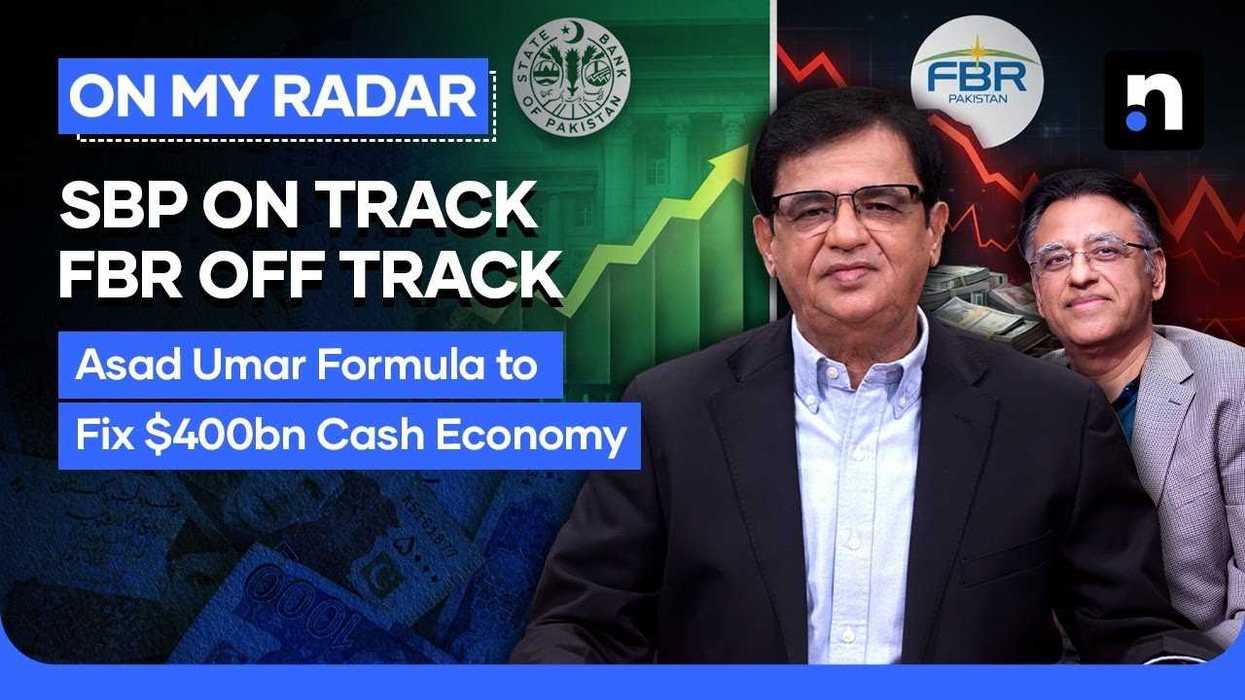
Pakistan’s tax system is increasingly being seen as a structural barrier to economic growth, investment, and job creation, with experts warning that persistently high tax rates are choking productive activity instead of broadening the revenue base.
Despite sluggish GDP growth, tax collection has surged sharply in recent years, intensifying pressure on businesses and salaried individuals while failing to attract new domestic or foreign investment.
In the latest episode of On My Radar, Kamran Khan said Pakistan’s tax structure has reached a point where it discourages income generation itself, leaving little incentive for savings, reinvestment, or business expansion. He noted that both industrialists and salaried workers share the same concern: when most earnings are absorbed by taxes, economic activity inevitably slows.
The assessment aligns with recent observations by the Special Investment Facilitation Council (SIFC), which has identified Pakistan’s soaring tax rates as one of the biggest obstacles to local and international investment. Addressing the Pakistan Business Council’s Dialogue on Economy seminar, SIFC National Coordinator Lieutenant General Sarfraz Ahmed outlined why both domestic investment and foreign direct investment (FDI) have remained subdued. He said meaningful investment in the manufacturing sector is unlikely unless income tax rates are reduced and the “super tax” on the corporate sector is withdrawn.
The disconnect between economic growth and tax collection has become increasingly stark. Over the past three years, Pakistan’s GDP grew at an average rate of just 1.8%, yet tax revenues nearly doubled. Tax collection rose from Rs6.8 trillion in 2022 to Rs13.9 trillion last year, while the government has set a target of Rs16.9 trillion for the current fiscal year. Analysts argue this surge has come not from widening the tax net, but from extracting more from already-registered businesses, industries, and salaried taxpayers.
A global comparison further underscores Pakistan’s predicament. Salaried individuals face income tax rates of up to 35%, while companies pay 29% corporate tax, an additional 10% super tax, along with advance, withholding, welfare, and provincial levies—pushing the total tax burden on corporations to around 58%. By contrast, corporate tax rates in major economies such as the United States, the United Kingdom, Canada, Norway, and Saudi Arabia range between 20% and 25%. In the UAE, just a 90-minute flight from Pakistan, corporate tax stands at only 9%.
This reality, analysts say, raises a fundamental question: not why foreign investors are staying away, but why they would come at all. Investors naturally prefer markets with ease of doing business, streamlined regulations, one-window operations, effective dispute resolution, and significantly lower taxes. As a result, Pakistan’s FDI has stagnated between $1.5 billion and $2 billion for the past four years, while multinational companies exit, local investors scale back, and overseas relocation becomes an aspiration for many Pakistanis.
The International Monetary Fund echoed these concerns in its recent Governance and Corruption Diagnostic Assessment, effectively issuing a strong indictment of institutionalized corruption. The IMF urged the government to free businesses from excessive FBR regulations, SROs, and NOCs, and recommended restructuring, tighter monitoring, audits of PRAL, and full digitization of tax administration.
While much of the world operates modern, integrated digital tax systems, Pakistan continues to struggle with fragmented platforms such as IRIS, PRAL, POS invoicing, and eFBR, which lack coordination and data sharing. This fragmentation forces taxpayers to navigate multiple portals, increasing interaction with tax officials—an environment that critics say fuels corruption, invoice manipulation, and refund delays.
The IMF has emphasized that meaningful reform requires simplifying the system, eliminating corruption, expanding the tax base, and lowering tax rates. However, successive governments since 2008—across the PPP, PML-N, and PTI tenures—have focused on raising tax rates rather than widening the base. This approach has allowed Pakistan’s undocumented economy to flourish, now estimated at around $400 billion, roughly equal to the country’s formal GDP.
Evidence of this shadow economy is visible in the sharp rise in cash circulation, which has reached Rs10.97 trillion—about 28% of Pakistan’s broad money supply (M2). In comparison, cash in circulation accounts for about 11% in India and 8% in Bangladesh. In the European Union, strict limits cap cash transactions at €10,000 per month, while Pakistan’s high-denomination currency notes continue to facilitate large-scale undocumented transactions.
Kamran Khan said that Pakistan’s economic recovery hinges on deep tax reforms, digitization, lower tax rates, and a broader tax base.
The current system, he said, has become the biggest obstacle to investment, manufacturing, market competition and employment. With confidence in the Federal Board of Revenue eroded - among citizens, investors, the IMF, and even state institutions - targets of 4–5% GDP growth in the coming years risk remaining little more than optimistic projections.




Comments
See what people are discussing