

Pakistan ranks among top global AI services suppliers: World Bank
Pakistan is positioning itself as an AI services exporter, backed by 75,000 IT graduates annually and $4.6 billion in ICT exports in FY2025/26
Haris Zamir
Business Editor
Experience of almost 33 years where started the journey of financial journalism from Business Recorder in 1992. From 2006 onwards attached with Television Media worked at Sun Tv, Dawn Tv, Geo Tv and Dunya Tv. During the period also worked as a stringer for Bloomberg for seven years and Dow Jones for five years. Also wrote articles for several highly acclaimed periodicals like the Newsline, Pakistan Gulf Economist and Money Matters (The News publications)
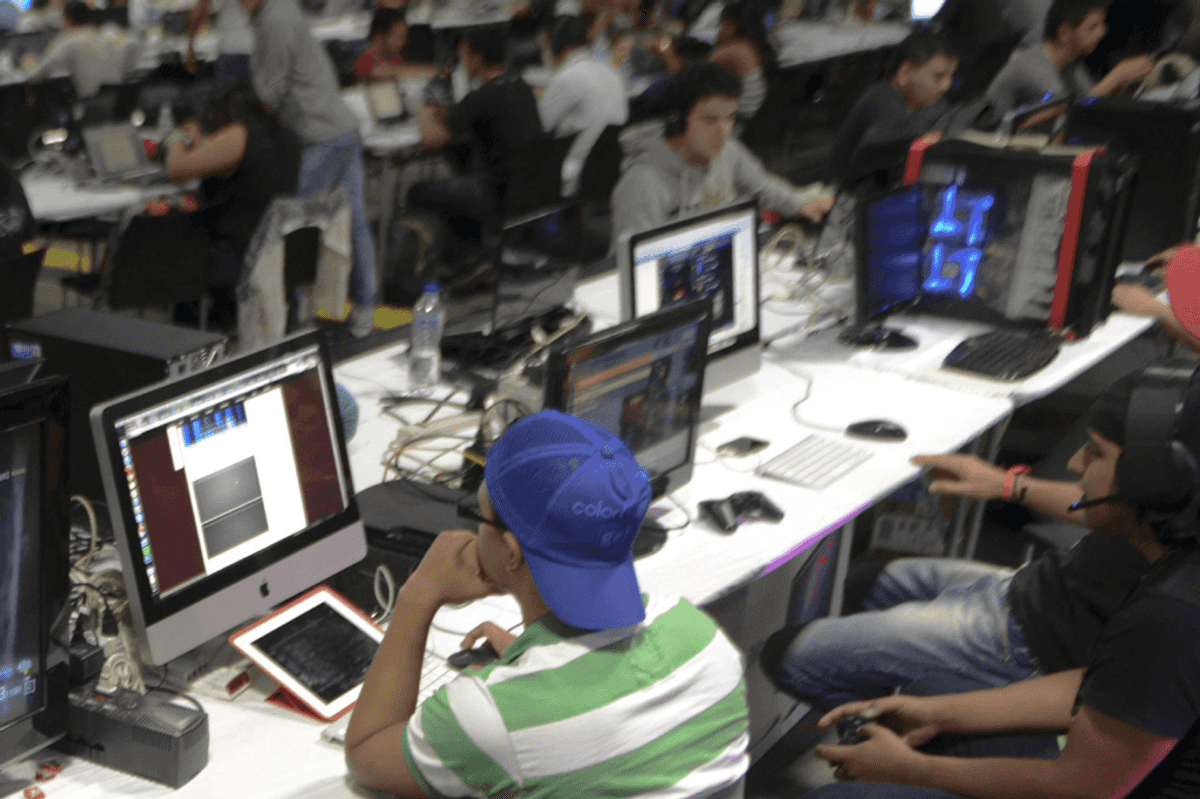
Pakistan and Egypt rank among the top five global suppliers of services on major online platforms.
Reuters/File
Pakistan is emerging as a major artificial intelligence services provider in the Middle East, North Africa, Afghanistan and Pakistan region, ranking among the top five global suppliers of services across more than 2,700 skill areas while building a domestic ecosystem to expand AI adoption, the World Bank said.
The country is positioning itself as a talent-led AI services exporter, supported by about 75,000 IT graduates annually and record ICT services exports of $4.6 billion in fiscal 2025/26. Pakistan is also developing “small AI” solutions designed to deliver digital services tailored to local contexts and languages.
Pakistan among top AI services suppliers
Pakistan and Egypt rank among the top five global suppliers of services on major online platforms across more than 2,700 skill areas, according to the World Bank.
Integration into global online service markets offers significant opportunities for Pakistan’s workforce but also exposes workers to shifts in demand as AI begins replacing some outsourced tasks.
Pakistan is also emerging as one of the region’s major data-center hosts. Saudi Arabia and the UAE lead MENAAP in data-center capacity, while Pakistan has the largest number of data centers in the region alongside the two Gulf economies, the World Bank said.
$1 billion push for AI development
Pakistan’s AI ambitions extend beyond digital services exports. The country is pursuing what the World Bank describes as “AI sovereignty” — building a domestic ecosystem in which AI supports national priorities.
A $1 billion program through 2030 aims to support shared GPU infrastructure, a sovereign multilingual AI model, 1,000 AI PhD scholarships and training for one million non-IT professionals.
Pakistan is among 14 of 21 MENAAP economies that have published national AI strategy documents.
Its strategy identifies agriculture as a key area for AI applications, including pesticide and fertilizer management, irrigation, yield estimation, trade decisions and food security.
The strategy also addresses potential social risks, including gender bias, the digital gender divide and wage gaps. Data privacy and regulatory gaps are identified as other key concerns.
Pakistan has also set a target of training 200,000 people annually in AI and providing 3,000 postgraduate scholarships, according to the World Bank.
AI adoption faces innovation and regulatory gaps
“Pakistan illustrates the former pattern, performing strongly on digital infrastructure relative to its income peers but weakly on innovation and economic integration,” the World Bank said.
The report said Pakistan’s AI transition reflects a broader divide across MENAAP, where economies are adopting the technology at very different speeds.
Saudi Arabia and the UAE rank among the world’s top 25 economies for both AI model development and high-performance computing, while fragile economies continue to face basic infrastructure and institutional constraints.
Middle-income economies such as Pakistan occupy an intermediate position, combining growing technical capacity and national ambition with significant implementation gaps, the World Bank said.
The region’s biggest readiness gap is in regulation and institutional capacity, with MENAAP economies trailing income peers in adaptable legal frameworks, enforcement and accountability. Limited private-sector dynamism is another major constraint on AI adoption.
Only about 24% of firms in MENAAP economies invest in physical capital, compared with 37% in other emerging-market and developing economies outside the region. Just 19% provide formal training, compared with 30% outside MENAAP, according to the World Bank.
The bank said private-sector reform would be essential to an effective AI-led growth strategy.
AI creates opportunities and risks for Pakistani workers
For Pakistan, growing AI adoption presents both opportunities and risks because of its large services workforce and reliance on global freelance and outsourcing markets.
Pakistan recorded the highest absolute number of AI-related conversations in MENAAP, although usage is concentrated in arts and media, including graphic design, content creation and translation, rather than software development.
The World Bank said this could reflect Pakistan’s large presence on international freelance platforms, where these services are in demand.
Demand for digital and AI skills has also increased sharply. The share of job postings requiring digital skills rose substantially across MENAAP between 2021 and 2025, with Pakistan among the countries recording double-digit percentage-point gains.
The World Bank said AI’s potential to augment workers is greater than its immediate risk of automation across MENAAP.
Automation, where AI substitutes for rather than complements human work, affects about 0% to 10% of jobs in the region, with the lowest shares in Afghanistan and Pakistan.
By contrast, 13% to 20% of jobs have potential for AI-driven augmentation, where technology complements workers rather than replaces them.
Graduates face higher AI exposure
Pakistan has relatively high AI exposure among tertiary-educated workers, with university graduates concentrated in cognitive occupations that are more exposed to AI, according to the report.
Women in Pakistan have lower overall AI exposure because they are disproportionately employed in occupations that are comparatively protected from AI, including craft and related trades, elementary occupations, and skilled agricultural, forestry and fishery work.
AI-exposed occupations are also concentrated in government and public enterprises in Pakistan and several other MENAAP economies. Clerical, ICT and professional roles with relatively high AI exposure are heavily represented in the public sector, the World Bank said.
Self-employed workers and employers in Pakistan also face relatively high AI exposure, reflecting their concentration in clerical, professional, ICT, business administration and managerial roles. Exposure is lower in craft, elementary and agricultural occupations.
AI could reshape Pakistan’s growth prospects
The World Bank said AI is rapidly moving from a frontier technology to a general-purpose tool affecting businesses, workers, governments and individuals.
For developing economies such as Pakistan, the key questions are how quickly AI will spread, who will be able to use it productively and whether it will narrow or widen existing gaps in productivity and opportunity.
Pakistan’s large digitally oriented workforce, expanding data-center infrastructure, growing online services exports and government-backed $1 billion AI program position it among the MENAAP economies seeking to turn AI adoption into a broader source of economic growth.
The country still faces significant gaps in innovation, regulation and private-sector capacity, however, which could determine how effectively it converts its AI ambitions into economic gains.




Comments
See what people are discussing