

Pakistan warns ‘selective’ use of international law is undermining global peace
Pakistan’s UN envoy warns unilateral actions and double standards are weakening global justice and stability

Aamir Abbasi
Editor, Islamabad
Aamir; a journalist with 15 years of experience, working in Newspaper, TV and Digital Media. Worked in Field, covered Big Legal Constitutional and Political Events in Pakistan since 2009 with Pakistan’s Top Media Organizations. Graduate of Quaid I Azam University Islamabad.
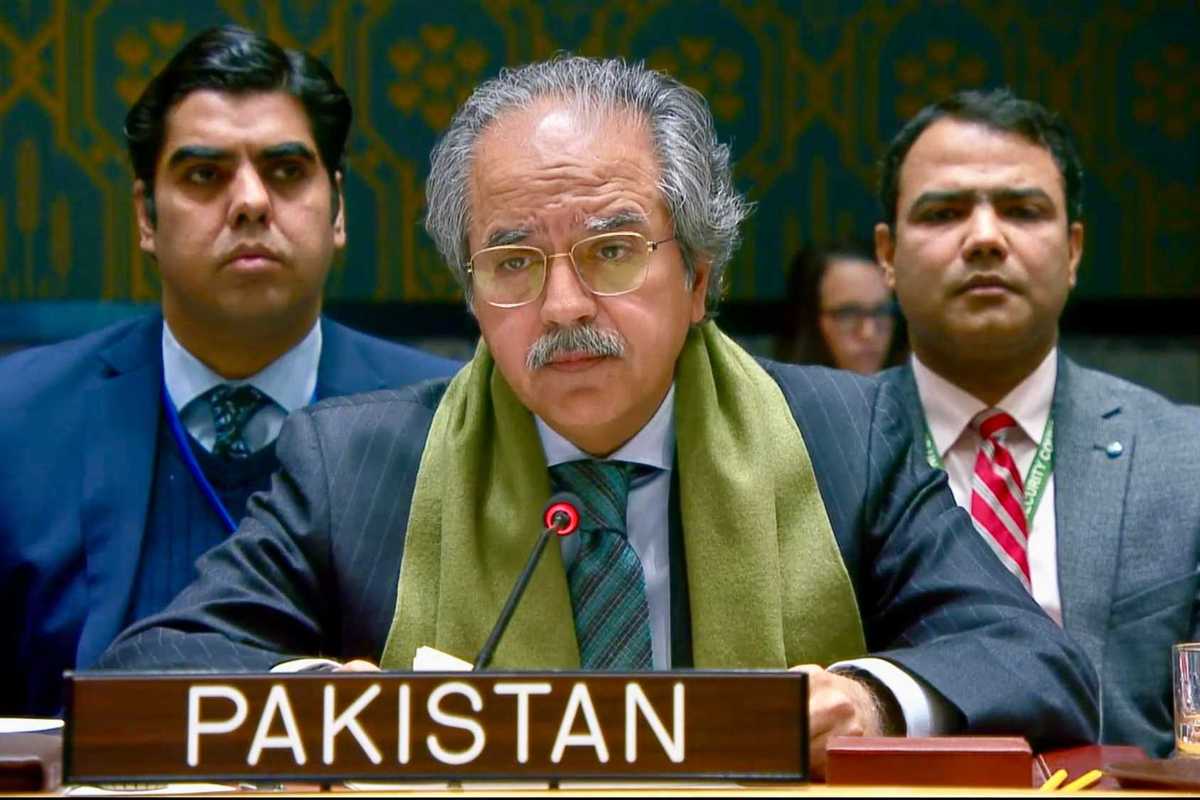
Pakistan’s Permanent Representative to the United Nations, Ambassador Asim Iftikhar Ahmad cautions the erosion of legal norms is increasingly contributing to conflicts, humanitarian crises, and weakened international cooperation.
Courtesy: Pakistan's Foreign Ministry
Pakistan called on Monday for the equal and consistent application of international law, warning that selective enforcement and unilateral actions are undermining global peace, justice, and multilateralism.
Pakistan’s Permanent Representative to the United Nations, Ambassador Asim Iftikhar Ahmad, delivered the remarks during a High-Level Open Debate of the UN Security Council titled “Reaffirming International Rule of Law: Pathways to Reinvigorating Peace, Justice, and Multilateralism.”
He congratulated Somalia on assuming the presidency of the Security Council and for convening the debate.
Ambassador Asim described the rule of law as a foundational pillar of the UN Charter, echoing remarks by UN Secretary-General António Guterres and other speakers who stressed that respect for international law is essential for global stability.
He cautioned that the erosion of legal norms is increasingly contributing to conflicts, humanitarian crises, and weakened international cooperation.
“The purpose of international law is to bring predictability and stability to inter-state conduct,” he said, adding that a peaceful international order can only be sustained if the rule of law is applied equitably, consistently, and without discrimination.
Highlighting what he termed a growing crisis of confidence in multilateralism, the ambassador pointed to selective compliance with treaties, unilateral actions, and disregard for core UN Charter principles, including sovereign equality, territorial integrity, and the prohibition of the use of force.
Referring to regional developments, Ambassador Asim said Pakistan itself had faced violations of international law.
He cited what he described as India’s military aggression in May 2025, stating that Pakistan exercised its right to self-defense under Article 51 of the UN Charter in a restrained and proportionate manner.
He emphasized that coercion and impunity could not be accepted as a “new normal” in international relations.
The ambassador said the unresolved Jammu and Kashmir dispute remains the core source of instability in South Asia, describing India’s presence there as an illegal occupation in violation of UN Security Council resolutions.
He also criticized India’s unilateral suspension of the Indus Waters Treaty, calling it a breach of international obligations that threatens regional peace and the livelihoods of millions.
Reaffirming Pakistan’s commitment to peaceful settlement of disputes, Ambassador Asim recalled the Security Council’s unanimous adoption of Resolution 2788 in July 2025, which was led by Pakistan.
He said the resolution reaffirmed dialogue, mediation, and judicial settlement as the primary means of resolving conflicts.
Addressing broader systemic issues, the ambassador said double standards have limited the benefits of the international system for many countries, particularly in the Global South.
He stressed that ongoing UN reforms must prioritize equality, democracy, and accountability rather than power and privilege.
Despite current challenges, Ambassador Asim expressed confidence in the resilience of international law.
He welcomed developments such as the entry into force of the Biodiversity Beyond National Jurisdiction Agreement and the International Court of Justice’s advisory opinions on Palestine and climate change.
However, he warned that selective acceptance of ICJ rulings would undermine the court’s authority.
The ambassador highlighted the situation in Palestine as a stark example of selective adherence to international law, citing continued violations of international humanitarian law and denial of the Palestinian people’s right to self-determination.
To strengthen compliance with international law, he proposed that the Security Council establish mechanisms to monitor implementation of its resolutions, engage the International Court of Justice more systematically, institutionalize legal briefings by the UN Office of Legal Affairs, and make greater use of ICJ advisory opinions.
Concluding his remarks, Ambassador Asim said the international rule of law must be upheld through consistent conduct and credible accountability.
“Pakistan remains committed to a UN Charter-inspired rules-based international order,” he said, “where disputes are resolved peacefully, obligations are honored, and the United Nations serves as a true guarantor of peace, justice, and dignity for all.”





Comments
See what people are discussing